The Indian Army Uniform has always been a symbol of discipline, honour, courage and national service. It is not just a dress worn by soldiers; it represents the pride of the force and the identity of the nation. In 2026, the Indian Army introduced important changes through the Army Uniforms–2026 manual. These changes are related to formal dress, winter dress, ceremonial traditions, grooming rules and appearance standards.
The latest Indian Army Uniform update is important because it shows how the Army is balancing tradition with modern needs. The focus is not only on looking smart, but also on making the dress code clearer, practical and more connected with Indian identity. Additions like the Bandi jacket, battle jacket and revised winter dress show a shift towards a modern yet culturally rooted military appearance.
This update is not mainly about changing the combat camouflage pattern. Instead, it explains how personnel should dress for formal, official and ceremonial occasions. The Indian Army Uniform 2026 changes also reduce unnecessary colonial-era practices and bring more clarity to grooming, tattoo and personal appearance rules.
What Is the Army Uniforms–2026 Manual?
The Army Uniforms–2026 manual is a revised dress regulation document for Indian Army personnel. It explains different dress combinations and the correct way to wear them. The manual covers formal wear, winter uniforms, ceremonial dress, grooming standards and appearance guidelines.
A clear manual is necessary because the Indian Army Uniform is worn in many situations, including official duties, parades, ceremonies, formal events and mess functions. Without proper rules, there can be confusion about the correct military look.
Major Changes at a Glance
| Change | What It Means? |
|---|---|
| New winter dress | Updated winter clothing for a smarter and practical look |
| Bandi jacket | Indian-style formal jacket added to dress regulations |
| Battle jacket | Modern jacket included in selected dress combinations |
| Sword use limited | Ceremonial swords to be used only in specific roles |
| Grooming rules | Clearer standards for tattoos, moustaches, hair and appearance |
| Colonial terms reduced | Old British-era customs and terminology reduced gradually |
These changes make the Indian Army Uniform more organised, professional and culturally relevant.
New Winter Uniform for Indian Army Personnel
One main update is the revised winter dress. Winter uniforms matter because Army personnel serve in different weather conditions, including cold regions and high-altitude areas. A proper winter dress must provide comfort, warmth and a neat military appearance.
The new winter dress improves the Indian Army Uniform system. It helps personnel follow a common dress standard during winter duties and formal occasions. This also improves uniformity across the force.
The change is not just about warm clothing. It is about making winter dress smarter, better defined and suitable for present-day military requirements.
Bandi Jackets Added to Formal Dress Code
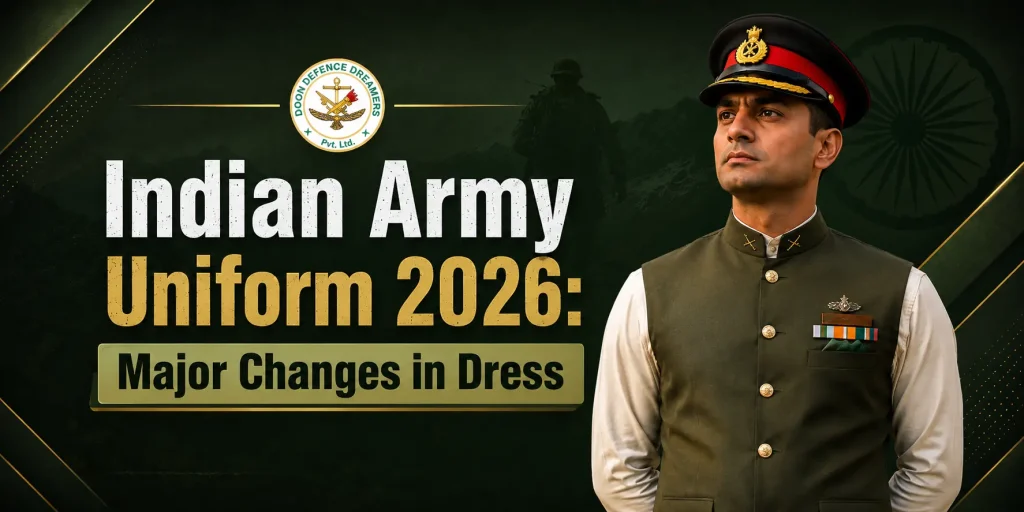
The inclusion of Bandi jackets is one of the most discussed changes in the 2026 update. A Bandi jacket is a closed-neck Indian-style formal jacket. It gives the dress code a more Indian look while keeping it dignified and professional.
Earlier, many formal military dress practices followed Western or colonial-style patterns. With this change, the Indian Army Uniform now includes a formal option that reflects Indian culture. The Bandi jacket is expected to be worn with sober colours, matching formal trousers and closed footwear.
This change shows that Indian tradition can be included in military dressing without reducing discipline.
Changes in Ceremonial Dress and Sword Use
Ceremonial dress is an important part of the Army’s public image. It is seen during parades, passing out ceremonies, guard duties and official functions. However, some ceremonial practices were linked with colonial-era traditions. The Indian Army Uniform update focuses on reducing such practices in a balanced way.
One major change is the limited use of ceremonial swords. Swords have historic value, but their use will now be more specific and controlled. This makes ceremonies more relevant to present-day India while still respecting military tradition.
The Indian Army Uniform update also reduces old British-era terms and unnecessary ceremonial items. This gives the Army’s dress code a stronger national identity and a cleaner modern appearance.
Updated Grooming, Tattoo and Appearance Rules
A uniform looks complete only when personal appearance is also disciplined. The Army Uniforms–2026 manual gives clearer rules for grooming and appearance. These include guidance on hairstyles, moustaches, tattoos, body piercings, cosmetics, bracelets and other visible personal items.
The purpose of these rules is to maintain equality, discipline and a professional military image. In the Army, appearance is connected with order and responsibility. When everyone follows the same standard, it strengthens unity.
For defence aspirants, wearing the Indian Army Uniform is not only about the cloth. It is also about cleanliness, behaviour, confidence and respect for military standards.
Battle Jackets and Modern Dress Additions
The 2026 update also highlights battle jackets as part of the modern dress system. Battle jackets are practical, smart and comfortable. They can be used where a professional yet functional look is required.
Modern military dress must support movement, comfort and duty. The Indian Army Uniform needs to look sharp, but it should also be useful in real working conditions. Battle jackets help achieve this balance.
This addition shows that the Army is updating its dress system according to present needs while keeping discipline and tradition intact. Overall, Indian Army Uniform reforms show a careful move towards modernisation.
Key Takeaways
- The Army Uniforms–2026 manual brings major updates to dress regulations.
- The Indian Army Uniform now includes Bandi jackets for formal occasions.
- A revised winter dress has been introduced for better appearance and uniformity.
- Ceremonial sword use has been limited to specific roles and events.
- Grooming, tattoo and appearance rules are now clearer.
- The update focuses on modernisation, discipline and Indian identity.
Conclusion
The Indian Army Uniform 2026 update is a meaningful step towards a more modern and culturally rooted dress system. It does not change the core values of the Army. Instead, it strengthens discipline, improves clarity and gives the dress code a stronger Indian identity.
From Bandi jackets to winter dress, from grooming rules to ceremonial changes, every update has a clear purpose. The Indian Army Uniform continues to represent pride, service and national honour, while the 2026 changes make it more suitable for today’s India. In short, Indian Army Uniform changes are about identity, discipline and modernisation.
Frequently Asked Questions (FAQs)?
1. What is the Indian Army Uniform 2026 update?
It refers to new dress regulations introduced through the Army Uniforms–2026 manual. The update covers formal dress, winter dress, ceremonial rules and grooming standards.
2. Has the combat camouflage changed in 2026?
No major 2026 update is focused on combat camouflage. The latest changes are mainly related to dress code, formal wear, winter uniform and appearance rules.
3. What is the Bandi jacket in the Army dress code?
The Bandi jacket is an Indian-style closed-neck formal jacket added as an authorised formal dress option.
4. Why has ceremonial sword use been limited?
Sword use has been limited to reduce unnecessary colonial-era practices and make ceremonial dress more relevant to modern Indian identity.
5. Why are grooming rules important in the Army?
Grooming rules maintain discipline, uniformity and a professional appearance among Army personnel.