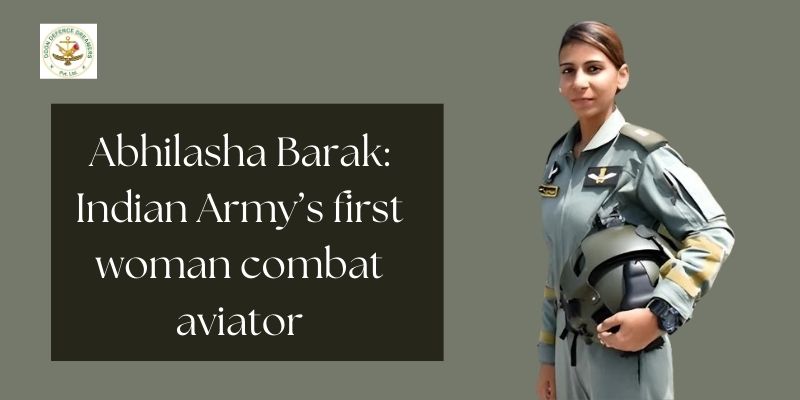
The story of Captain Abhilasha Barak is not just about flying helicopters or wearing the olive green uniform of the Indian Army; it is a story of courage, perseverance, and breaking barriers in one of the most demanding professions in the country. By becoming the Indian Army’s first woman combat aviator, Captain Abhilasha Barak etched her name in history and inspired millions of young women across India to dream beyond traditional limitations. Her journey reflects the gradual but powerful transformation of the Indian Armed Forces towards inclusivity, merit, and equal opportunity.
In a field long dominated by men, combat aviation is among the toughest roles, requiring exceptional physical endurance, mental resilience, and technical excellence. Captain Abhilasha Barak’s achievement symbolizes not only personal success but also institutional progress.
Early Life and Background
Captain Abhilasha Barak hails from Haryana, a state known for producing outstanding athletes, soldiers, and officers who serve the nation with pride. Growing up in a disciplined environment, she was exposed early to the values of hard work, resilience, and patriotism. Haryana has a strong military tradition, and this cultural backdrop played a significant role in shaping her aspirations.
From a young age, Abhilasha displayed a keen interest in academics as well as physical activities. Like many defence aspirants, she admired the Armed Forces and was inspired by stories of bravery and service. However, choosing a career in the military—especially aiming for a combat role—was not a conventional path for women when she was growing up. Despite societal expectations and limited precedents, she remained determined to pursue her ambition.
Her family’s support proved crucial in her journey. Encouragement at home allowed her to aim high and stay focused on her goals. This strong foundation helped her face future challenges with confidence and determination.
Educational Journey and Entry into the Indian Army
Captain Abhilasha Barak pursued her higher education with dedication and clarity of purpose. She completed her graduation in Engineering, a field that demands analytical thinking, discipline, and technical proficiency—qualities highly valued in the Armed Forces. Her academic background later proved beneficial in understanding the complex systems and technologies involved in military aviation.
Her entry into the Indian Army was through the Short Service Commission (SSC), a respected route for both men and women officers. Clearing the rigorous selection process, including written examinations, SSB interviews, and medical tests, required months of preparation and unwavering focus. The SSB interview, in particular, evaluates an aspirant’s leadership qualities, psychological strength, and officer-like qualities, making it one of the most challenging stages.
After successfully clearing all stages, she was commissioned into the Indian Army as an officer. At this stage, her journey had already set her apart, but an even greater challenge lay ahead—earning her wings as a combat aviator.
Training as an Army Aviator
Training to become an Army aviator is among the most demanding courses in the Indian Armed Forces. It involves intense physical conditioning, technical learning, simulator training, and actual flying under diverse and challenging conditions. For Captain Abhilasha Barak, this phase was a test of endurance, adaptability, and mental strength.
She underwent training at the Combat Army Aviation Training School (CAATS) in Nashik, Maharashtra. This institution is responsible for training pilots who operate helicopters in combat and operational environments. The training covers a wide range of skills, including navigation, tactical flying, handling emergencies, and operating in high-altitude and hostile terrains.
Throughout the training, candidates are evaluated continuously. Only those who meet the highest standards are awarded the coveted flying wings. Captain Abhilasha Barak successfully completed this rigorous training, becoming the first woman officer in the Indian Army to qualify as a combat aviator. This achievement marked a historic milestone, not just for her, but for the Army as a whole.
Becoming India’s First Woman Combat Pilot
In 2021, Captain Abhilasha Barak officially became the Indian Army’s first woman combat pilot. She was assigned to fly the Advanced Light Helicopter (ALH) Dhruv, a versatile and indigenously developed helicopter used for a variety of missions. These missions include reconnaissance, troop transport, casualty evacuation, supply drops, and operations in difficult terrains.
Flying a combat helicopter requires split-second decision-making, precision, and the ability to operate under extreme pressure. Army aviation pilots often fly at low altitudes, in adverse weather conditions, and in high-risk zones, including border areas and mountainous regions. Captain Abhilasha Barak’s role placed her at the forefront of operational readiness.
Her achievement challenged long-held perceptions about women’s roles in combat. It demonstrated that with proper training and opportunity, women can perform equally well in the most demanding combat roles. The Indian Army’s decision to induct women into combat aviation roles reflected a progressive shift in policy and mindset, with Captain Barak becoming its most visible symbol.
Challenges Faced and Barriers Broken
Captain Abhilasha Barak’s journey was not without challenges. Being the first woman in a combat aviation role meant dealing with heightened expectations, scrutiny, and pressure to perform flawlessly. Any mistake could be unfairly generalized, making her path even more demanding than her male counterparts.
Physical endurance, long hours of training, and operational stress tested her resilience. Additionally, societal stereotypes and doubts about women in combat roles posed indirect challenges. However, she addressed these obstacles with professionalism and competence, proving her abilities through performance rather than words.
By excelling in her role, she broke multiple barriers at once—gender stereotypes, institutional hesitations, and cultural assumptions. Her success paved the way for more women officers to aspire to and achieve similar combat roles in the future.
Impact on the Indian Armed Forces and Society
The significance of Captain Abhilasha Barak’s achievement extends far beyond her individual career. For the Indian Army, it marked an important step towards gender integration in combat roles. Her success provided tangible proof that women can meet the physical and operational demands of frontline military aviation.
For young women across India, especially defence aspirants, her journey serves as a powerful source of inspiration. She became a role model for girls who dream of wearing the uniform and serving the nation in challenging roles. Her story encourages aspirants to prepare with confidence, discipline, and self-belief.
At a societal level, her achievement contributed to changing perceptions about women’s capabilities in high-risk professions. It reinforced the idea that talent, dedication, and training—not gender—should determine one’s role and potential.
Message for Defence Aspirants
Captain Abhilasha Barak’s journey offers valuable lessons for defence aspirants. Discipline, consistency, and mental toughness are as important as academic preparation. Her success highlights the importance of physical fitness, adaptability, and leadership qualities in military life.
For women aspirants, her story is a reminder that barriers are meant to be challenged. With focused preparation, confidence, and the right guidance, even the most ambitious goals are achievable. For male aspirants, her journey reinforces the importance of teamwork, mutual respect, and professionalism in the Armed Forces.
Conclusion
Captain Abhilasha Barak’s historic achievement as the Indian Army’s first woman combat pilot stands as a testament to courage, determination, and progressive change. Her journey from a determined young student in Haryana to a combat aviator flying military helicopters represents the power of perseverance and institutional evolution.
As the Indian Armed Forces continue to modernize and adapt, stories like hers highlight the importance of equal opportunity and merit-based selection. Captain Abhilasha Barak has not only earned her wings but has also uplifted the aspirations of countless young Indians. Her legacy will continue to inspire future generations of officers who dare to dream big and serve the nation with honour and pride.