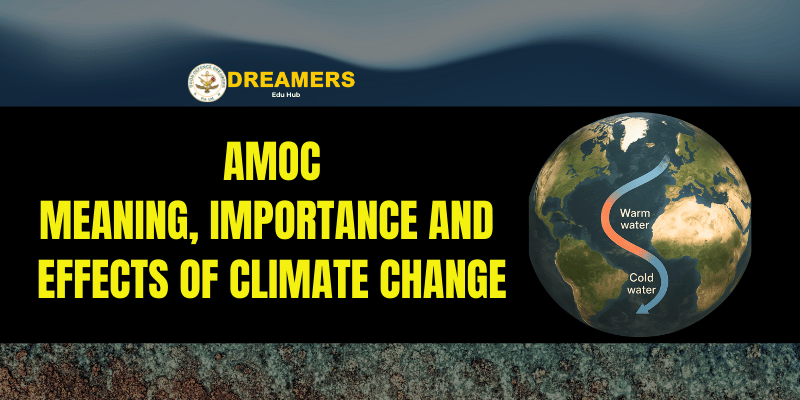
The Atlantic Meridional Overturning Circulation (AMOC) is an important system of ocean currents in the Atlantic Ocean. It works like a large conveyor belt that moves warm water from the equator toward the North Atlantic and brings cold water back toward the south at deep ocean levels. AMOC plays a major role in controlling Earth’s climate, especially the climate of Europe and North America. By transporting heat over long distances, it helps keep temperatures stable and prevents extreme climatic conditions.
This circulation also supports marine ecosystems by spreading nutrients and oxygen across the ocean. Many coastal regions depend on AMOC for balanced weather and healthy fisheries. Even small changes in its strength can lead to noticeable shifts in climate patterns. Because of its wide influence, AMOC is considered a key component of Earth’s climate system. In recent years, scientists have observed changes in AMOC due to global warming and melting ice. These changes can affect weather, sea levels, and marine life. This blog explains AMOC in simple language, making it easy for school-level students to understand.
Meaning of Atlantic Meridional Overturning Circulation
The word Atlantic refers to the Atlantic Ocean. Meridional means north to south, and overturning means the sinking and rising of water. Together, AMOC means the large movement of ocean water from north to south and from the surface to deep layers of the Atlantic Ocean. This movement happens continuously and connects different parts of the ocean into one system. It helps in transferring heat, energy, and nutrients across long distances.
AMOC is a part of the global ocean circulation system that controls the movement of water across the world’s oceans. It is driven by differences in temperature and salinity (salt content) of seawater. Warm water is lighter and remains near the ocean surface, while cold and salty water becomes heavier and sinks to deeper layers. This difference in density creates a natural flow of water, which keeps the ocean circulation active and balanced.
How AMOC Works
AMOC works in a continuous cycle:
- Warm and salty water moves from the tropical Atlantic toward the North Atlantic at the ocean surface.
- As this water reaches colder regions near Greenland and Iceland, it cools down.
- Cold water becomes dense and sinks into the deep ocean.
- This deep, cold water then flows southward back toward the equator.
This movement keeps repeating and helps distribute heat across the planet.
Major Parts of AMOC
The Atlantic Meridional Overturning Circulation is made up of different parts that work together to move ocean water. These parts include surface currents that carry warm water and deep currents that return cold water back toward the south.
Surface Currents
The surface currents carry warm water northward. The Gulf Stream is the most famous surface current and is responsible for keeping Europe warmer than other regions at similar latitudes.
Deep Water Currents
After cooling, the water sinks and forms deep ocean currents. These deep currents carry cold water back toward the south.
Importance of AMOC
AMOC is very important for Earth’s climate and environment. It helps in distributing heat from warmer regions to colder regions of the world. Because of this, many places experience moderate and stable weather conditions. AMOC also plays an important role in maintaining ocean ecosystems and supporting marine life. Any major change in this system can disturb the natural balance of the Earth’s climate.
Climate Control
Atlantic Meridional Overturning Circulation transfers heat from warm regions to cold regions. Because of this, Europe experiences mild winters. Without AMOC, Europe would be much colder. This heat transfer also helps in maintaining seasonal balance and reduces extreme cold conditions. Many European countries depend on this system for stable agriculture and comfortable living conditions. AMOC influences wind patterns and snowfall in the region. Any weakening of AMOC could lead to longer and harsher winters in Europe.
Weather and Rainfall
AMOC affects wind patterns and rainfall. Changes in AMOC can lead to extreme weather such as heavy rainfall, droughts, or storms. When the circulation becomes weak, weather systems may shift from their normal paths. This can disturb monsoon patterns and seasonal rainfall in many regions. Some areas may receive too much rain, while others may face long dry periods. Such changes can negatively affect agriculture, water resources, and human life.
Marine Life
Ocean currents carry nutrients that support marine life. A healthy AMOC helps maintain fish populations and ocean biodiversity. It also helps in spreading oxygen-rich water to deeper parts of the ocean. Many marine plants and animals depend on this circulation for food and survival. If AMOC weakens, the availability of nutrients can decrease. This may lead to a decline in fish stocks and disturb the marine food chain.
Sea Level
If AMOC slows down, sea levels along the eastern coast of North America may rise, increasing the risk of flooding. This happens because weaker ocean currents allow water to accumulate near the coastline. Coastal cities and low-lying areas may face frequent flooding events. Such changes can damage infrastructure, homes, and local ecosystems. It can also increase the economic burden on affected regions.
AMOC and Climate Change
Climate change is one of the biggest threats to AMOC. Rising global temperatures are melting glaciers and ice sheets, especially in Greenland. The melted ice adds freshwater to the ocean, which reduces salinity.
Freshwater is lighter than salty water, so it does not sink easily. This slows down the sinking process of AMOC and weakens the entire circulation system.
Evidence from the Past
Scientists study ice cores, ocean sediments, and fossils to understand past climate changes. These studies show that AMOC has weakened or stopped in the past, leading to sudden cooling events.
These historical examples prove that AMOC is sensitive and can change quickly if environmental conditions are disturbed.
Present-Day Observations
Modern instruments and satellites are used to monitor Atlantic Meridional Overturning Circulation. Scientists have found that Atlantic Meridional Overturning Circulation has weakened slightly over the last few decades.
Although natural changes also occur, many scientists believe that human activities, especially greenhouse gas emissions, are the main reason for the current weakening trend.
Possible Effects of AMOC Weakening
If AMOC continues to weaken, the following effects may occur:
- Colder climate in Europe
- Changes in rainfall patterns across the world
- Disturbance to marine ecosystems
- Rise in sea levels in some coastal areas
A complete collapse is unlikely soon, but even small changes can have serious effects.
Global Importance of AMOC
AMOC is connected to other oceans and affects the global climate system. Oceans absorb heat and carbon dioxide from the atmosphere. A weaker Atlantic Meridional Overturning Circulation may reduce this ability, leading to faster global warming.
Role of Education and Awareness
Understanding topics like AMOC helps students become aware of climate change and environmental protection. Knowledge of Earth systems is important for future leaders, scientists, and defence personnel who will protect national and global security.
Why in News?
The Atlantic Meridional Overturning Circulation (AMOC) has been in the news recently due to growing scientific concern about its weakening as a result of climate change. Recent studies published by climate scientists indicate that rising global temperatures and rapid melting of the Greenland ice sheet are adding large amounts of freshwater to the North Atlantic Ocean. This reduces the salinity and density of seawater, which slows down the sinking process that drives AMOC.
Observational data suggest that AMOC is currently at its weakest state in over a thousand years. Scientists warn that continued weakening could lead to serious impacts such as colder winters in Europe, changes in global rainfall patterns, rising sea levels along the eastern coast of North America, and disruption of marine ecosystems. Because of its potential to cause large-scale and long-term climate changes, AMOC has become a major focus of current climate research and global environmental discussions.
Doon Defence Dreamers – Inspiring Future Leaders
Doon Defence Dreamers is one of the best NDA coaching institutes in Dehradun, dedicated to shaping disciplined, confident, and knowledgeable future defence officers. Along with physical training and academic preparation, the institute emphasizes awareness of important topics like climate change, geography, and environmental science, which are essential for NDA and other defence examinations. By encouraging students to understand global issues such as AMOC, Doon Defence Dreamers helps aspirants develop a broad perspective and strong analytical skills required for a successful career in the armed forces.
Conclusion
he Atlantic Meridional Overturning Circulation is a vital part of Earth’s climate system. It helps regulate temperature, weather, sea levels, and marine life. Climate change poses a serious threat to Atlantic Meridional Overturning Circulation, mainly due to rising temperatures and melting ice. If this system weakens, it can disturb the climate balance of many regions across the world. Scientists are continuously studying Atlantic Meridional Overturning Circulation to better understand its future behaviour and possible impacts. Protecting this circulation system is important for long-term environmental stability.
By reducing pollution, saving energy, and spreading awareness, we can help protect the environment and maintain the balance of natural systems like AMOC. Small actions taken by individuals can collectively make a big difference. Students also play an important role by learning about environmental issues and promoting sustainable habits. Understanding such topics at the school level is the first step toward building a responsible and informed generation.