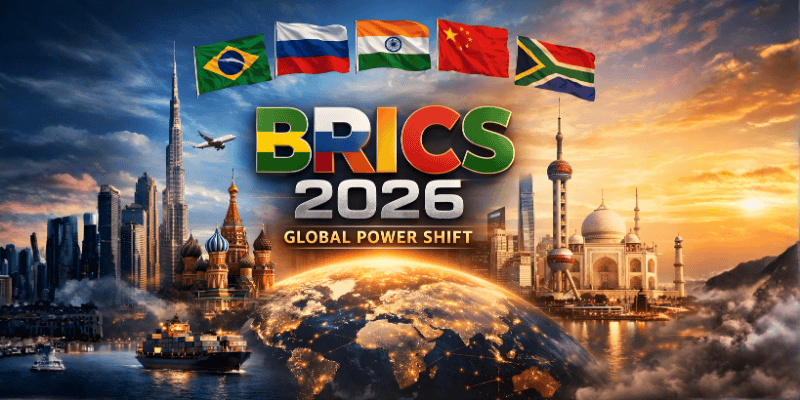
BRICS expansion continues to alter the map of global economics rapidly. The eleven BRICS nations now make up more than a quarter of the world’s economy and represent almost half of its population. The next wave of BRICS expansion in 2026 signals a fundamental change in international power dynamics that we can’t ignore.
This coalition wields massive influence. BRICS countries represent about 45 percent of the world’s population and generate more than 35 percent of global GDP (measured in purchasing power parity). These member nations produce 30 percent of the world’s oil, which gives them considerable control over energy markets. New additions to BRICS countries will likely accelerate the global power balance away from the West.
This piece will get into why the 2026 BRICS expansion matters. We’ll explore what drives potential new members and analyze how this evolving alliance could change international economic systems. The US dollar’s dominance in 88 percent of international trades might face its biggest challenge yet.
The origins and evolution of BRICS
The BRICS story goes back many years. A look at its roots helps us understand how it all started and led to the BRICS expansion 2026 we see today.
How BRICS was formed and why
Goldman Sachs economist Jim O’Neill created the term “BRIC” in 2001 through his paper “Building Better Global Economic BRICs.” He spotted four emerging economies that could challenge the G7 nations. These economies were:
- Brazil
- Russia
- India
- China
O’Neill might have coined the term, but the idea behind BRICS came from the Russian Ministry of Foreign Affairs between 1996 and 1998. Russian Foreign Minister Yevgeny Primakov wanted to broaden Russia’s foreign policy. He suggested creating a strategic Eurasian triangle of Russia, India, and China during his India visit in 1998.
BRIC foreign ministers first met informally in September 2006 at the UN General Assembly. Russia hosted the first official BRIC summit in Yekaterinburg in 2009. President Putin pushed for this summit as he wanted to create a balance against Western influence. The leaders came together and backed a multipolar world order and global non-interventionism.
From BRIC to BRICS: South Africa’s entry
BRIC became BRICS in December 2010 after South Africa joined. The third BRICS Summit in Sanya, China, saw President Jacob Zuma attend in March 2011, making South Africa’s membership official. This early growth set the path for the broader BRICS expansion 2026 we’re watching now.
Economic experts questioned South Africa’s inclusion. The country’s GDP was just one-sixteenth of China’s, with only 50 million people – quite different from other BRICS member countries. All the same, this addition made strategic sense.
Diplomatic reasons outweighed economic factors in South Africa’s selection. The country brought vast non-energy mineral resources to the table – it ranks as the world’s richest country in mineral reserves worth USD 168.76 trillion. It also opened doors to Africa for other BRICS member nations, especially China, which became South Africa’s biggest trading partner in 2009.
The role of BRICS member countries in shaping the bloc
Each BRICS member has shaped the group’s direction uniquely since its start. The BRICS expansion 2026 builds on these shared achievements.
The group created nearly 60 intragroup institutions and a network of think tanks and dialogs in its first 15 years. Members take turns leading BRICS through one-year chairmanships to set priorities and host summits.
BRICS works without a formal secretariat but has launched several projects to reform global finance. The New Development Bank and BRICS Contingent Reserve Arrangement stand out. These institutions pave the way for the BRICS expansion 2026 goal to create alternatives to Western-dominated financial systems.
The BRICS countries list grew larger in 2023 with Egypt, Ethiopia, Iran, and the United Arab Emirates becoming new members of BRICS. Indonesia joined as a full member on January 6, 2025. This growth shows how BRICS has evolved from its economic beginnings into a wider political group speaking for the developing world – ready for the BRICS expansion 2026.
BRICS Expansion 2026: What’s new this time?
The predicted BRICS expansion 2026 marks a turning point as the bloc aims to become a global counterweight to Western-dominated institutions. This latest expansion phase brings new innovations that could reshape the group’s global influence, building on previous growth rounds.
List of new members of BRICS in 2026
The BRICS expansion 2026 brings several strategic additions to its ranks. Diplomatic sources indicate these frontrunners for full membership:
- Nigeria – Africa’s largest economy and most populous nation
- Turkey – A NATO member looking to vary its alliances
- Malaysia – A key Southeast Asian economic powerhouse
- Kazakhstan – A Central Asian nation with major natural resources
- Argentina – South America’s second-largest economy (potentially rejoining after earlier withdrawal)
- Thailand – A growing Southeast Asian economy
These potential new members of BRICS would create what analysts call “BRICS Plus” or “BRICS 2.0” – a much larger coalition that represents over 50% of the global population.
Why these countries were chosen
The BRICS expansion 2026 selection criteria balances economic and geopolitical factors. Each candidate nation has major regional influence and shows interest in reducing dependency on Western financial systems.
The BRICS member selection committee looks for countries with:
- Strong natural resource portfolios
- Strategic geographic positioning
- Growing domestic markets
- Interest in challenging dollar hegemony
- Historical ties with existing BRICS countries
The BRICS expansion 2026 targets nations that fill important regional gaps. Turkey’s inclusion would boost the bloc’s Eurasian presence, while Nigeria would strengthen African representation beyond South Africa.
How the expansion changes the BRICS countries list
The BRICS expansion 2026 would turn the BRICS countries list into a complete global alliance across every major continent except North America. The larger bloc would represent:
- 45% of global oil production
- Over 50% of the world’s population
- More than 40% of global GDP (PPP)
- 35% of global merchandise exports
This expanded BRICS countries list would change voting dynamics in international forums like the UN. The BRICS expansion 2026 would create a trade zone that rivals both the EU and NAFTA in scale and variety.
The bloc moves away from its original economic focus (from Jim O’Neill’s concept) toward a more political coalition that aims to reshape global governance structures.
The new ‘partner countries’ model
The BRICS expansion 2026 brings a new tiered membership system. The bloc now includes:
- Core members – Original and established BRICS member countries
- Full members – Nations with voting rights on all matters
- Partner countries – Nations with limited participation rights
- Observer states – Nations learning about potential membership
This “partner countries” model lets the BRICS expansion 2026 include nations that might not meet all economic criteria but provide strategic value. Several smaller African economies fit this category.
Partner status adds flexibility to the BRICS expansion 2026 process. Nations can integrate gradually without affecting the bloc’s decision-making efficiency. Countries hesitant about full commitment due to Western alliances now have a pathway to join.
This innovative approach helps the BRICS expansion 2026 create a framework that could welcome dozens more nations in various roles. The result could be a truly global network of countries seeking alternatives to Western-dominated international structures.
Why countries are joining: Motivations behind BRICS expansion 2026
Nations are lining up to join the BRICS expansion 2026, and their reasons show a mix of economic hopes and geopolitical planning. The rush of membership applications proves that countries beyond the founding members see clear benefits in joining this growing bloc.
Desire for multipolarity and reduced Western dominance
The BRICS expansion 2026 stands against Western-dominated global institutions. BRICS member countries support multipolarity and question the one-sided decisions often linked to G7 or NATO-led actions. They want to speak for the Global South and balance Western-led institutions.
This expansion lets developing countries find their way through global financial and trade systems that Western nations have long controlled. The bloc now holds about 42% of global central bank foreign exchange reserves. This gives BRICS new members real power to reshape international financial systems.
Access to development financing and trade alternatives
Many countries see the BRICS expansion 2026 as their path to different funding sources. The New Development Bank (NDB), which is USINR 8438.05 billion old, gives funds without the strict rules common to the IMF or World Bank.
brics member countries get these benefits from NDB:
- Financing for infrastructure and sustainable development projects
- Loans in local currencies that cut exchange rate risks
- Support with no political strings attached
Take Pakistan as an example. It sees the BRICS expansion 2026 as a way out of IMF dependence and its strict conditions.
Geopolitical hedging and strategic autonomy
The BRICS expansion 2026 lets nations vary their political alliances. Countries want membership to protect themselves from Western sanctions or economic pressure in today’s changing global scene.
The BRICS expansion 2026 draws countries that want to shield themselves from external economic shocks outside the US-led alliance. Iran, which has faced US sanctions before, finds this especially appealing.
Case studies: Egypt, Indonesia, Iran
Egypt wants to join the BRICS expansion 2026 for three reasons. It needs financial help beyond Western sources, more trade in national currencies (mainly with China), and different partnerships beyond the US and Europe.
Indonesia joined BRICS and saw the BRICS expansion 2026 as “a strategic step to improve collaborations with developing nations, based on equality, mutual respect, and sustainable development”.
Iran owns about a quarter of the Middle East’s oil reserves and sees the BRICS expansion 2026 as shelter from Western isolation. US sanctions have hit Iran hard, so joining the BRICS countries list is vital for its economic survival and international standing.
Economic and financial shifts driven by BRICS expansion 2026
The BRICS expansion 2026 drives major economic and financial changes that could transform the global financial system forever. Member states work together to reduce their dependence on Western finance. This creates new economic frameworks.
Push for de-dollarization and local currency trade
The BRICS expansion 2026 speeds up efforts to reduce dollar usage in cross-border deals. BRICS member countries have pushed for de-dollarization and local currency trade over the last decade. Russia now conducts 90% of its BRICS trade in national currencies instead of dollars. China and India’s new rupee-yuan trade deals show growing support for trading in multiple currencies.
The role of the New Development Bank
The New Development Bank (NDB) remains the life-blood of the BRICS expansion 2026 strategy. The bank now has 11 member countries after Colombia and Uzbekistan joined in early 2026. The NDB plans to increase local currency financing from 22% to 30% despite its downgrade after stopping Russian transactions in 2022. The bank’s financial strength grew under President Dilma Rousseff’s leadership, raising INR 1358.53 billion in 2024 alone.
Impact on global trade flows
The BRICS expansion 2026 transforms global trade patterns, especially in energy markets. New members of BRICS help the bloc control nearly half the world’s oil supply. Many BRICS member countries now sell oil in Chinese yuan and UAE dirham rather than dollars. This move weakens the traditional link between U.S. dollar value and oil prices.
Challenges in creating a BRICS currency
Creating a unified BRICS currency faces major hurdles. This would need big political compromises, a banking union, fiscal union, and matching economic policies. BRICS member countries develop a practical gold-based payment system as a backup plan rather than rushing to replace dollar-based systems.
Internal tensions and global reactions
The BRICS expansion 2026 reveals a complex web of competing interests and internal tensions that might limit its role as a global counterweight to Western influence.
India-China rivalry and leadership struggles
The India-China rivalry represents the deepest fault line within the BRICS framework. Their decades-old border dispute led to deadly clashes in 2020 and created deep diplomatic rifts. A breakthrough border agreement paved the way for Xi Jinping and Modi’s first meeting in five years before a recent summit.
The nations still face fundamental strategic differences. China and Russia want BRICS to oppose the West, while India prefers to reform existing international institutions rather than replace them. Both powerhouses compete intensely to influence the Global South, each with distinct visions for the BRICS expansion 2026.
Western skepticism and U.S. policy responses
The Biden administration has minimized the importance of BRICS expansion 2026 and doesn’t consider BRICS a geopolitical rival. Trump took a more aggressive stance and threatened 100% tariffs on BRICS member countries if they moved away from the dollar.
European nations have responded differently. German Foreign Minister Baerbock stressed cooperation with all but one of these new members of BRICS – Iran. Some European officials caution that the bloc’s anti-West sentiment grows more confrontational. Norway’s Aftenposten described BRICS as “a global club for authoritarian and reactionary leaders”.
Balancing anti-West sentiment with cooperation
The BRICS expansion 2026 shows more nuance than simple anti-Western sentiment. Brazilian Ambassador Celso Amorim stated clearly: “We are not ‘anti’. We are pro-development, pro-multilateralism and pro-social justice”. South Africa emphasized it was “completely wrong” to view BRICS as an anti-Western platform.
The BRICS countries list features nations like India, Brazil, and the UAE that maintain strong Western partnerships. These BRICS member countries often resist initiatives that clash with their foreign policies. Most BRICS finance ministers skipped a Russian-hosted meeting about IMF alternatives.
How BRICS new members affect internal dynamics
New regional rivalries emerge as BRICS expansion 2026 welcomes new members of BRICS. Saudi Arabia and Iran’s tensions, along with Egypt and Ethiopia’s conflicts, create new challenges. Recent growth makes it harder for China to guide the group without seeming dominant.
The expansion brings structural challenges. The BRICS expansion 2026 created a tiered membership system that could undermine sovereign equality. The growing number of BRICS member countries makes consensus difficult, especially with their diverse interests and opposing geopolitical alignments.
Conclusion
BRICS expansion 2026 represents a crucial moment in global economic and geopolitical dynamics. This coalition will shape international financial systems, trade relationships, and political alignments like never before. Major powers like India and China face internal tensions, but their shared vision of multipolarity brings the expanding membership together.
The 2026 BRICS expansion signals a complete reshaping of global power structures. BRICS member countries want greater representation and autonomy within international systems rather than creating an anti-Western bloc. This fundamental change shows a world with competing power centers instead of one dominant force.
The 4-year old partner countries model provides a flexible framework that works with different commitment levels. Member countries can grow strategically while maintaining their unity and efficiency.
Financial innovation is the life-blood of the 2026 BRICS agenda. De-dollarization efforts combine with local currency trade agreements and a stronger New Development Bank to create real alternatives to Western-dominated financial institutions. Member states can protect themselves against sanctions and economic pressure while gaining more financial independence.
BRICS expansion goes beyond adding new members to the roster. Economic influence is shifting eastward in a big way. Countries in Africa, Asia, the Middle East, and Latin America see BRICS membership as their path to strategic freedom and economic growth on their terms.
The expanded coalition’s success depends on how well it handles internal rivalries while staying focused on common goals. Western powers may be skeptical, but they cannot ignore this group’s growing economic might. A bloc that controls nearly half the world’s oil production, represents over half its population, and generates 40% of global GDP has real power to shape the future global order.
BRICS expansion 2026 mirrors existing power shifts and drives further changes. This evolving coalition will define international relations for decades through its alternative financial systems and new diplomatic approaches.
Frequently Asked Questions (FAQs)
1. What is BRICS and why is the BRICS Expansion 2026 important?
BRICS is a group of major emerging economies—Brazil, Russia, India, China, and South Africa—formed to promote a multipolar global order. The BRICS Expansion 2026 is important because it significantly increases the bloc’s economic, political, and energy influence, shifting global power away from Western-dominated institutions.
2. Which countries are expected to join BRICS in the 2026 expansion?
Countries likely to join or deepen participation during BRICS Expansion 2026 include Nigeria, Turkey, Malaysia, Kazakhstan, Thailand, and Argentina. Some may join as full members, while others may enter through the new partner countries model.
3. How does BRICS Expansion 2026 affect the US dollar’s global dominance?
The expansion strengthens de-dollarization efforts by promoting trade in local currencies and increasing the role of the New Development Bank. While the US dollar will not disappear, BRICS Expansion 2026 poses the most serious long-term challenge to its dominance in global trade and finance.
4. What is the ‘partner countries’ model introduced in BRICS Expansion 2026?
The partner countries model allows nations to engage with BRICS without full membership. These countries can participate in trade, finance, and dialogue while gradually integrating into the bloc. This model increases flexibility and allows BRICS to expand without slowing decision-making.
5. Is BRICS becoming an anti-Western alliance?
No. While BRICS Expansion 2026 challenges Western dominance, most member countries emphasize multipolarity, development, and strategic autonomy, not confrontation. Nations like India, Brazil, and the UAE maintain strong ties with the West while also supporting BRICS-led reforms.