The CDS interview process tests your Officer-Like Qualities (OLQs) thoroughly, and leadership stands as a significant attribute. Military officers must lead teams through high-stakes operations and make quick, accurate decisions under intense pressure. Multiple phases make up the SSB interview’s complete assessment – psychological tests, group discussions, team activities, and personal interviews. Strong leadership skills become vital to succeed.
This piece outlines practical ways to develop the leadership capabilities that SSB interviewers seek. You’ll learn to showcase your leadership potential effectively, from handling pressure-filled decisions to building emotional resilience.
Why Leadership Skills Matter for the CDS Interview
Leadership is the life-blood of military service. The Indian Defense Forces look for officers who can lead troops, stay calm under extreme pressure, and make sound decisions in tough situations. Military leadership carries life-or-death consequences, making it the core duty of all Armed Forces officers.
Understanding the role of officers in the armed forces
Military officers command their subordinates through their rank and position in the hierarchy. They lead from the front and inspire others to complete missions by giving them purpose, direction, and motivation. Military leadership goes beyond rank—officers must put their nation’s, military’s, and unit’s needs before their own.
Officers need to make quick and effective decisions, even with limited information. They also take care of their subordinates’ personal needs—physical, mental, and spiritual—and to a large extent, their families’ needs. This leadership aspect holds such importance that Sections 3583, 5947, and 85831 of Title 10 U.S. Code spell it out clearly.
How leadership is evaluated in the SSB interview
The 5-day SSB interview gives a detailed assessment of leadership potential from multiple angles. A psychologist, Group Testing Officer (GTO), and interviewing officer evaluate each candidate. Assessors watch how candidates handle various tasks that reveal their leadership capabilities.
Day 3 puts the spotlight on group dynamics to review leadership qualities, teamwork, communication skills, and decision-making abilities. The GTO tasks mix physical and mental challenges that test a candidate’s ability to lead or work in a team. These tasks don’t just test who takes charge—they also show who knows when to listen and delegate.
Connection between OLQs and leadership traits
The SSB looks at 15 Officer-Like Qualities (OLQs) that are the foundations of military leadership. These qualities fall into four main factors:
- Planning and Organizing (Factor 1): Has reasoning and organizing ability
- Social Adjustment (Factor 2): Focuses on group influence
- Social Effectiveness (Factor 3): Covers leadership qualities like initiative, self-confidence, speed of decisions, ability to influence the group, and liveliness
- Dynamic (Factor 4): Has courage and determination
These OLQs aren’t fixed traits—anyone can learn, strengthen, and show them through disciplined, conscious effort. So, leadership in the SSB context means guiding a group toward a shared goal, not dominating it.
Core Leadership Traits to Develop
Military assessors look for specific leadership traits that need practice and focused attention. The CDS interview process tests these qualities through challenges that show your potential as a future officer.
Decision-making under pressure
Military leaders must make sound decisions with limited information and time. Leaders often fall back on automatic behavior patterns under pressure, which might not suit every situation. You should create mental space between stimulus and response. Ask yourself “Who do I want to be right now?” before taking action. You should review multiple options instead of going with your first instinct. The Decision Control Process framework highlights three vital elements: the main goal, risk versus benefit analysis, and what it all means.
Effective communication and public speaking
Clear communication saves lives during military operations. Good communicators follow simple principles: clarity, brevity, and active listening. You should listen 90% of the time and talk only 10% in high-stakes situations. Military leaders must share critical information to ensure everyone understands issues and solutions. Put your “Bottom Line Up Front” (BLUF) to convey your point immediately. Your body language and tone affect how others receive your message by a lot.
Teamwork and collaboration
Teamwork can mean life or death in military contexts. Strong teams have members who complement each other’s skills, watch performance, and catch errors. The military values teamwork as one of its three core principles along with integrity and professionalism. Military teamwork strengthens individual excellence by using personal strengths within a unified unit. Ask questions that help you know if team members understand their tasks without micromanaging.
Adaptability in uncertain situations
The military defines adaptability as knowing how to spot environmental changes, identify key elements of new situations, and make changes to meet new requirements. Forces must adapt to unpredictable threats that constantly review opponents’ strengths and weaknesses. Military adaptability balances efficiency with flexibility—a vital trade-off. Forces that failed to adapt paid heavy costs in lives and resources throughout history. You develop this trait by taking on Type III adaptive challenges where problems lack clarity and have no “correct” solution.
Emotional resilience and stress handling
Military operations create intense physical, mental, and emotional strain that can affect psychological health. Building emotional resilience means understanding how thoughts shape actions, accepting stress, and changing pressure responses. Military personnel use stress inoculation techniques. These include emotion control, physical reaction management, repetitive training, task visualization, effective prioritization, and team skill development. SSB assessors watch your facial composure under stress, voice tone, and responses to challenging questions. Officers feel nervous or scared too—their strength comes from accepting emotions while acting rationally.
Practical Ways to Build Leadership Skills
Leadership skills needed for the CDS interview come from regular practice and activities that simulate military scenarios. Here are practical ways to develop your leadership abilities.
Join group activities and take initiative
Group activities help you develop teamwork, communication, and problem-solving abilities. Command tasks—group exercises used by cadets—promote valuable skills like cooperation, giving instructions, and resource management. These activities put you in unique scenarios where you must plan, assess risks, and make quick decisions for your team. Campus organizations, volunteer groups, and sports teams give you chances to take charge. Military assessors look for candidates who show initiative and motivate others to achieve common goals.
Practice mock interviews and group discussions
Mock sessions are vital to prepare for CDS interviews. These simulations create a realistic interview environment and help you get useful feedback. Your speed and spontaneity will improve when you practice with friends or mentors who understand the SSB process. Group discussions let you display teamwork and leadership without dominating others. Good listening skills matter as much as speaking abilities. They show team spirit and knowing how to handle critical situations together.
Involve in physical training and outdoor tasks
Outdoor activities like hiking, camping, and team sports build core leadership skills. These activities test how well you communicate, make decisions, and adapt under pressure. Adventure sports build trust among team members while you learn something new and challenging. Hiking teaches decision-making and teamwork effectively. Physical fitness builds your confidence and shows discipline and determination—qualities that armed forces officers need.
Read biographies of military leaders
Military leaders’ biographies are a great way to get knowledge about strategic thinking and decision-making. Books like “How to Win Friends and Influence People” help boost your communication and interpersonal skills—vital for the SSB interview. “Leadership in the Indian Army: Biographies of Twelve Soldiers” gives a full picture of 12 Indian military leaders who led by example. These biographies show the human side of leadership beyond tactical knowledge. Your practical experience combined with this theoretical foundation creates the well-rounded leadership profile that CDS assessors want.
How CDS Coaching Helps You Prepare
Quality coaching goes beyond just helping candidates clear the CDS written exam. The best coaching centers focus on overall development instead of just academic preparation for the tough SSB interview.
Role of mock SSB interviews and feedback
Top CDS coaching centers run mock SSB interviews that feel just like the real thing. These practice sessions boost confidence and help candidates think quickly during interviews. Experienced assessors give customized feedback after each session. They help candidates understand what they’re good at and where they need work. Regular practice makes candidates comfortable with the interview format and reduces their stress during the actual CDS interview.
Outdoor leadership exercises and obstacle training
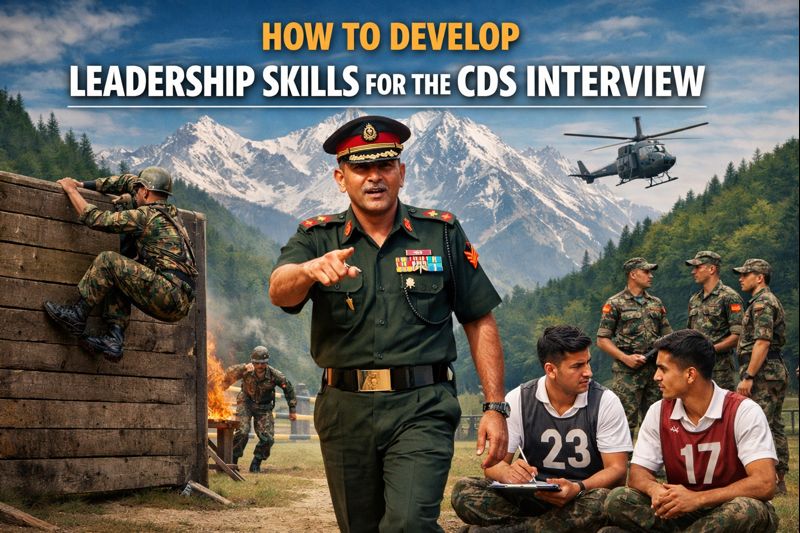
Good coaching institutes have training grounds that look exactly like actual SSB centers. Candidates get hands-on experience with obstacles like commando walks, tarzan swings, and balance walks. Physical training builds endurance and teaches obstacle course navigation. These outdoor activities test how well candidates handle pressure, show courage, and maintain stamina.
Mentorship from retired defense personnel
Learning from veterans who worked as GTOs, psychologists, or interviewing officers at SSB boards is a great way to get an edge. These mentors explain what real military leadership looks like. Retired officers share ground experiences that you won’t find in any book. Many leading institutes have former defense personnel as full-time teachers.
Psychological tests and personality development
The coaching covers all four psychological tests: Thematic Apperception Test (TAT), Word Association Test (WAT), Situation Reaction Test (SRT), and Self Description Test (SDT). These tests check how candidates react to different situations based on Officer-Like Qualities. Good coaching helps build the 15 OLQs through practice and personal feedback rather than just teaching theory. Personality development classes help improve communication skills, boost confidence, and develop an officer-like presence.
Doon Defence Dreamers Institute – Best NDA Coaching in Dehradun for CDS & NDA Aspirants
Doon Defence Dreamers Institute is a premier academy offering expert CDS and NDA coaching, dedicated to shaping future officers through disciplined training, experienced faculty, and focused SSB preparation. With a strong emphasis on leadership skills, academic excellence, and personality development, Doon Defence Dreamers (best NDA coaching in Dehradun) provides aspirants with comprehensive guidance, regular mock tests, and a motivating defence-oriented environment to help them achieve success in their defence career goals.
Conclusion
Leadership skills are essential for success in the CDS interview process. This isn’t just an optional qualification – it’s a fundamental requirement. The selection process tests candidates on their decision-making abilities under pressure, communication skills, teamwork, adaptability, and emotional resilience. SSB assessors look for these core qualities in potential officers.
Aspiring officers shouldn’t wait until the interview approaches. They should build these capabilities through focused practice now. Group activities, team sports, mock interviews, and studying military leaders’ biographies help develop leadership skills. On top of that, specialized CDS coaching creates an environment where candidates get professional guidance, constructive feedback, and exposure to realistic SSB scenarios.
Military leadership is different from civilian leadership. Military officers lead from the front while they look after their subordinates’ welfare and ensure mission success. Your preparation needs to reflect this dual focus on personal excellence and team effectiveness.
The leadership skills you show during the SSB interview must come naturally, not appear rehearsed. The assessment board seeks candidates who naturally display Officer-Like Qualities consistently across different testing scenarios. By doing this and being methodical in your approach to continuous self-improvement, you can discover the full potential of your leadership abilities and boost your chances of clearing the CDS interview process.
The goal goes beyond just passing an interview. It’s about becoming someone worthy of leading India’s finest men and women in service to the nation. Your leadership experience starts now, well before you step into the SSB interview room.