Introduction: A Critical Turning Point for Earth
The Earth Summit 2025 is not just another global meeting — it’s a deadline for nations to prove whether humanity can reverse planetary damage before it becomes irreversible. With disasters intensifying due to climate change, rising sea levels, mass species extinction, and record CO₂ emissions, this summit will determine how the world shapes sustainability for the next generation.
Hosted by Brazil in Rio de Janeiro, it marks the return to the iconic venue of Earth Summit 1992 — where world leaders first committed to environmental treaties. Now, over 190 countries are expected to attend Earth Summit 2025, carrying a massive responsibility: accelerating global climate action before time runs out.
Why Earth Summit 2025 Matters More Than Ever
The United Nations warns that:
-
We have already crossed 7 out of 8 critical planetary boundaries
-
Global warming is on track to exceed 1.5°C by 2030
-
Climate change may displace 1.2 billion people by 2050
Earth Summit 2025 will define binding decisions impacting:
- Renewable energy transition
- Fossil fuel phase-out
- Ocean and rainforest protection
- Climate finance and loss-and-damage funds
- Sustainable food and water systems
- AI + Green technology innovation
This summit is humanity’s last major checkpoint to realign with the Paris Agreement targets.
Historical Background of Earth Global Summits
The idea of Earth Summits originated from the United Nations Conference on Environment and Development (UNCED).
Important milestones:
| Year | Place | Outcome |
|---|---|---|
| 1992 | Rio de Janeiro | Sustainable development goals introduced |
| 2002 | Johannesburg | Focus on water and energy |
| 2012 | Rio+20 | Green economy agenda |
| 2021-2024 | Multiple climate summits | Paris Agreement implementation |
EarthSummit2024 continues these missions with stronger international commitments.
Major Themes of Earth Summit 2025
Net-Zero Future & Decarbonization
Nations must present revised Net-Zero Roadmaps.
Expected commitments:
| Sector | Target | Technology Focus |
|---|---|---|
| Energy | 70% renewable by 2040 | Solar, wind, green hydrogen |
| Transport | 60% EV adoption by 2035 | Battery storage, charging infrastructure |
| Industry | Zero coal by 2030 | Carbon capture, circular manufacturing |
The challenge? Many economies still rely heavily on fossil fuels, worsening climate change impacts.
Biodiversity Rescue & Ecosystem Protection
-
Save the Amazon Rainforest from reaching a “tipping point”
-
Achieve the 30×30 goal: 30% land + ocean protection by 2030
-
Ban harmful single-use plastics globally
Scientists warn 1 million species risk extinction without urgent action — a major priority in Earth Summit 2025.
AI & Tech Solutions for the Planet
Earth Summit 2025 will highlight:
- AI for early disaster prediction
- Satellites for methane leak tracking
- Gene editing for climate-resilient crops
Tech giants like Google, Tesla, and IBM will join policy dialogues to ensure advanced systems are aligned with green ethics.
Green Finance for Developing Nations
Transition requires money — huge money.
Key proposals:
| Fund Type | Goal | Potential Impact |
|---|---|---|
| Global Loss & Damage Fund | $200 bn yearly | Help countries hit by climate change |
| Just Energy Transition Fund | $1 trillion | Support coal-dependent regions |
| Nature Restoration Credits | $100 bn | Incentivize reforestation |
Rich nations must deliver funding promises without loopholes.
Climate Justice & Indigenous Rights
Indigenous communities protect 80% of global biodiversity yet suffer the most from climate change.
Earth Summit 2025 will demand:
-
Legally enforceable land rights
-
Direct funding to tribal conservation programs
-
Inclusion in every climate policy decision
Expected Outcomes of Earth Summit 2025
- Global Fossil Fuel Phase-Out Treaty
- Accountability Framework for Emission Defaulters
- Mandatory Nature Restoration Plans
- Education & Youth Mobilization Pact
- Water Security & Clean River Mission
If executed, these could limit warming to below 2°C, supporting a safer future for humanity.
Key Countries & Their Roles
| Country | Position | Strategy at Earth Summit 2025 |
|---|---|---|
| USA | Push global methane cuts | $500B climate investment |
| China | Green tech leadership | Largest solar + EV producer |
| India | Sustainable development balance | Lead Global South coalition |
| Brazil | Amazon protection | Halt illegal deforestation by 2028 |
| EU | Strict climate laws | Carbon border tax expansion |
The success of Earth Summit 2025 depends on cooperation, not competition.
Youth & Global Citizen Movement
Gen Z is the loudest climate voice today:
-
75% of young people feel climate change threatens their future
-
Massive student strikes are expected during Earth Summit 2025
UN reports say 1 in 5 youth is actively involved in climate volunteering — a hopeful sign.
Challenges & Political Barriers
Even with ambitious goals, dangerous obstacles remain:
- Oil politics vs renewable transition
- Slow climate finance payouts
- Greenwashing by corporations
- Unequal technology access
- Conflicts in resource-rich regions
Earth Summit 2025 must build trust mechanisms to verify delivery of promises.
Timeline: What Happens Next?
| Phase | Duration | Purpose |
|---|---|---|
| Pre-Summit Negotiations | Jan–Sep 2025 | Draft action plans, funding deals |
| Main Conference | Oct 2025 | Final decisions, global treaties |
| Implementation Cycle | 2026–2035 | Practical on-ground climate action |
This timeline aligns with critical climate tipping-point deadlines.
The Hope Ahead
The world stands at a crossroads.
- If Earth Summit 2025 succeeds — we secure the path to stability, sustainability, and a thriving green economy.
- If it fails — climate change could push humanity toward irreversible catastrophe.
The responsibility lies in the decisions made in Rio — a moment history will remember.
FAQs
Q1: What is Earth Summit 2025?
Earth Summit 2025 is a major UN global conference focused on climate policy, sustainability, biodiversity, and future green development.
Q2: Where will Earth Summit 2025 take place?
In Rio de Janeiro, Brazil — the same location as Earth Summit 1992.
Q3: Why is Earth Summit 2025 important?
It could finalize binding climate rules to control global warming and protect ecosystems.
Q4: Who will participate?
Leaders from 190+ countries, scientists, NGOs, youth activists, and tech innovators.
Q5: What is the main agenda?
Net-zero emissions, climate finance, biodiversity protection, and climate justice.
Exam Point of View
-
Earth Summit 2025 = UN global environmental conference in Rio
-
Focus: climate action, biodiversity, green finance, technology
-
Connects goals with Paris Agreement + 2030 Sustainable Development Agenda
-
190+ countries involved
-
Expected outcomes: Fossil Fuel Treaty, Loss & Damage Fund expansion
-
Strong emphasis on climate justice & indigenous rights
-
Considered a last chance before irreversible climate tipping points
Introduction: Football Beyond Borders
Football is the world’s most loved sport — but its influence goes far beyond stadiums and championships. It has the power to unite people divided by conflict, culture, and politics. Recognizing this transformative role, FIFA Peace Prize was introduced as a global honor celebrating individuals, organizations, and teams that actively promote peace through football.
In the modern era where wars, discrimination, and political conflicts continue to escalate, this award stands as a reminder that the universal language of football can build bridges even where dialogue fails. The FIFA Peace Prize is now one of the most respected awards linking humanitarian service with global sport.
Origins of the FIFA Peace Prize
The concept was inspired by several historic events where football created unexpected unity:
-
The Christmas Truce Football Match (1914) during World War I
-
Nelson Mandela’s reconciliation efforts through sports
-
Peace-building projects in the Middle East using youth football
Realizing these powerful impacts, FIFA formally began awarding the FIFA Peace Prize to encourage a structured approach to peace building.
Its primary mission:
- Promote non-violence
- Support equality and human rights
- Encourage cultural and ethnic unity
- Empower youth affected by conflicts
Football becomes a peace tool, not just a game.
Why the FIFA Peace Prize Matters in Today’s World
The 21st century faces:
| Global issue | Connection to Football |
|---|---|
| War & displacement | Football programs aid psychological healing for children |
| Racism & discrimination | Campaigns promote inclusion and equal respect |
| Youth radicalization | Football offers safe community engagement |
| Gender inequality | Women’s football breaks stereotypes globally |
Here, sports diplomacy plays a critical role — turning stadiums into platforms for tolerance and mutual understanding.
The FIFA Peace Prize helps redirect global attention from competition to compassion.
How the FIFA Peace Prize Award Works
The evaluation committee consists of:
-
FIFA humanitarian programs division
-
UN peace representatives
-
Sociologists and global leaders
-
Former award recipients
Criteria for Nomination
A nominee must:
-
Use football for social harmony
-
Show measurable peace-building outcomes
-
Demonstrate long-lasting community impact
Candidates include:
-
Football clubs
-
NGOs
-
Coaches and players
-
Activist groups
-
Youth organizations
The FIFA Peace Prize is awarded annually in a dedicated ceremony separate from the Ballon d’Or celebrations.
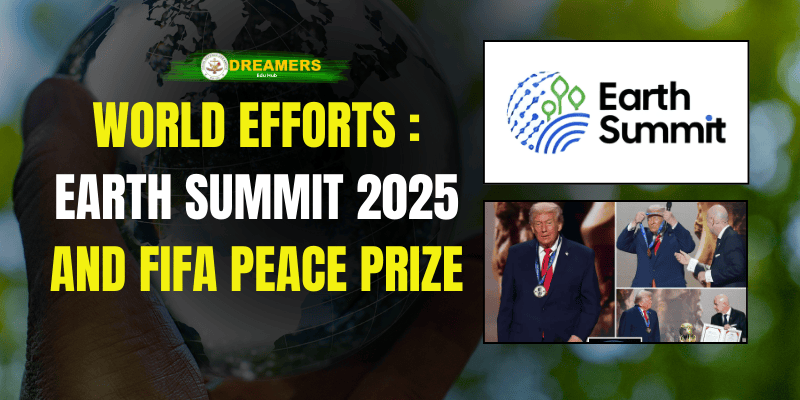
Donald Trump Receives FIFA Peace Prize: A New Era of Sports Diplomacy
In a historic and highly debated decision, FIFA has awarded its first-ever FIFA Peace Prize to former U.S. President Donald Trump, marking a significant expansion of the organization’s role beyond football. The award was presented during the World Cup draw ceremony, symbolizing FIFA’s effort to promote global peace initiatives through international recognition.
Why Trump Was Honored
FIFA President Gianni Infantino emphasized that Trump has played a major role in several diplomatic engagements during and after his presidency, particularly in relation to the Abraham Accords, which normalized relations between Israel, the UAE, Bahrain, and Morocco. Supporters argue that Trump’s involvement in the Middle Eastern peace efforts showcased how political leadership can reduce long-standing tensions — aligning with the award’s new mission to acknowledge global peace contributions.
Beyond diplomacy, FIFA credits Trump for:
-
Encouraging international sports cooperation
-
Advocating for unified bids in global football events, such as the 2026 World Cup co-hosted by the U.S., Canada, and Mexico
-
Supporting youth sports development programs as a tool for cultural exchange
Controversy and Global Criticism
Despite the ceremonial celebration, the decision sparked intense criticism from human rights organizations, football analysts, and political commentators. Critics argue that the award historically focused on grassroots peace-building through sport, and shifting the narrative toward political leaders may undermine the credibility of the cause.
Media reactions highlighted concerns:
| Concern | Reason |
|---|---|
| FIFA’s neutrality | Fear of growing political influence in sports |
| Selective recognition | Many long-standing football peace programs overlooked |
| Public polarization | Trump remains a divisive global figure |
Al Jazeera and European media questioned whether this move reflects strategic politics rather than humanitarian merit, while memes and social commentary flooded social platforms — turning the announcement into a viral debate.
A Turning Point for the Prize
Supporters view the decision as a powerful message: peace can be achieved not only on the pitch but also through international diplomacy. Critics warn that recognition of political figures could shift the focus away from grassroots organizations working directly in conflict zones.
Future Implications
The award raises major questions:
-
Will future Peace Prizes honor more political figures?
-
Will funding and attention shift away from community-driven football peace programs?
-
Can sports diplomacy remain unbiased?
Regardless of divided opinions, the 2025 FIFA Peace Prize has placed the award — and sports diplomacy — firmly at the center of global conversation. What remains to be seen is whether this bold step strengthens the mission of peace or leads to deeper controversy within international sports governance.
Famous Laureates and Their Contributions
Some of the most impactful winners include:
| Laureate | Country | Reason |
|---|---|---|
| FC Barcelona Foundation | Spain | Educational peace programs in conflict areas |
| Special Olympics Football | Global | Inclusion and empowerment of disabled athletes |
| Unity for Africa Initiative | Kenya | Used football to rehabilitate youth from violence |
| Women’s Football Freedom Project | Afghanistan | Supported women’s right to play despite threats |
Each example proves that football can trigger social transformation, strengthen democracy, and reduce prejudice.
The Role of Sports Diplomacy in the Award
The secondary focus of the award is sports diplomacy — using sports as a negotiation channel between nations and cultures.
Its influence can be seen in:
-
Peace matches between rival countries
-
Joint football academies in border regions
-
Refugee representation in football tournaments
Sports diplomacy helps political leaders open conversations indirectly through sports solidarity — especially where formal peace talks are impossible.
This philosophy is what makes the FIFA Peace Prize deeply significant for current and future peace processes.
FIFA Peace Prize 2025 – What to Expect?
The upcoming 2025 award will be special due to several global factors:
- Rise in international conflict zones
- Refugee crises involving millions
- Rapid growth in humanitarian football projects
- Women’s football empowerment movements
Possible expected focus areas:
| Focus | Reason |
|---|---|
| Mental health of war-affected children | Football therapy programs increasing |
| Refugee inclusion leagues | Major growth in Europe & Middle East |
| Gender equality initiatives | Women’s teams gaining global voice |
| Anti-racism global outreach | Social pressure for reforms |
Experts believe that youth-led sports diplomacy efforts may dominate the nominations list.
How Football Shapes Peace in Conflict Zones
Football offers a neutral ground where all backgrounds merge under a shared goal.
Peace outcomes achieved:
- Emotional healing through teamwork
- Reduced violence among rival groups
- Increased trust between communities
- Youth diversion from terrorism or crime
- Safe environments encouraging hope
When a ball is kicked, differences are forgotten — unity becomes the winning team.
Challenges Facing the FIFA Peace Prize
Despite great achievements, several obstacles remain:
- Limited funding in war-torn regions
- Political interference in sports programs
- Threats to activists promoting equality
- Inconsistent long-term monitoring
- Media focusing more on celebrities than humanitarian heroes
FIFA aims to address these challenges through stronger partnerships with:
-
United Nations
-
Global peace organizations
-
Local communities
Sustained collaboration is essential for greater progress.
Future of Peace Award Through Football
The next decade could redefine the prize with technologies like:
-
Virtual football leagues for refugee camps
-
AI-driven peace analytics
-
Global youth leadership tournaments
-
Better digital storytelling of humanitarian achievements
The FIFA Peace Prize is evolving into a movement, not just an honor — encouraging anyone with a football to become a peace champion.
FAQs
Q1: What is the FIFA Peace Prize?
It is an award presented by FIFA to individuals or organizations promoting peace through football.
Q2: Who can receive the FIFA Peace Prize?
Players, clubs, NGOs, and activism groups that support conflict resolution, equality, and humanitarian development.
Q3: Why is the prize important?
It highlights how football can reduce violence, break discrimination, and strengthen sports diplomacy globally.
Q4: When is the award given?
Annually during a special humanitarian ceremony hosted by FIFA.
Q5: What makes the prize different from other awards?
It recognizes humanitarian contribution, not athletic performance or trophies.
Conclusion: A Kick Toward a Peaceful Future
Every pass, goal, cheer, and handshake has the power to rewrite history. The FIFA Peace Prize honors those who use that power to end hostility instead of igniting rivalry. With increasing efforts of sports diplomacy, football continues to prove that the world can unite — if we choose peace over conflict.