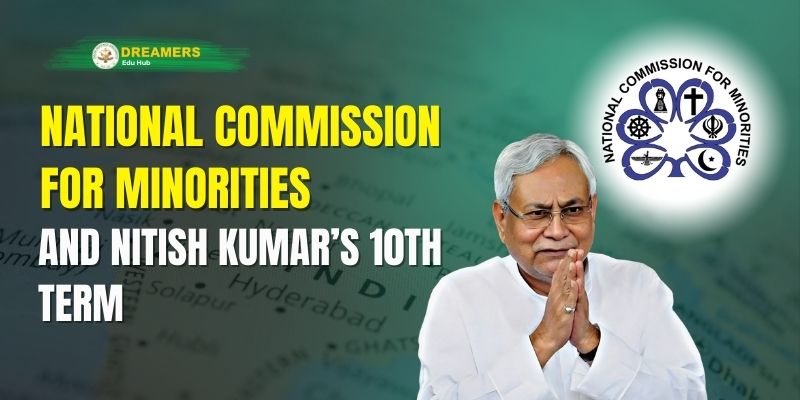
India’s social and political landscape continues to evolve through institutions that safeguard inclusivity and leaders who shape regional and national governance. Two developments that hold significant relevance today are the role of the National Commission for Minorities (NCM) in protecting minority rights and the political milestone achieved as Nitish Kumar became Chief Minister of Bihar for the tenth time.
Both topics reflect different yet interconnected aspects of India’s functioning—one representing institutional commitment to equality and the other highlighting dynamic democratic leadership. The National Commission for Minorities (NCM) stands as a vital statutory body dedicated to upholding the rights and dignity of minority communities, while Nitish Kumar’s repeated leadership demonstrates the political adaptability and shifting alliances that define state politics. Together, these subjects showcase how governance, representation, and social justice continue to shape India’s overall progress.
The National Commission for Minorities (NCM) plays an essential role in ensuring that India’s diverse communities receive equal treatment under the law. Established with the purpose of preventing discrimination and ensuring equitable access to opportunities, the commission strengthens the nation’s secular character. Meanwhile, Nitish Kumar’s tenth oath-taking as Chief Minister highlights a rare political journey marked by consistency, strategic decision-making, and alliances that shift the balance of power in Bihar. His leadership trajectory provides insight into the complexities of state politics and how experienced figures influence policy directions and governance stability. Together, these themes underline the continuous effort required to maintain harmony in a diverse democracy while navigating the realities of political transitions.
Introduction to the National Commission for Minorities (NCM)
What the NCM Is: Purpose, Formation Year, and Constitutional/Legal Status
The National Commission for Minorities (NCM) was established to safeguard the rights and welfare of India’s religious and linguistic minority communities. Formed under the National Commission for Minorities Act, 1992, this statutory body was granted the authority to monitor issues related to discrimination, deprivation, and violation of constitutional protections. Its creation marked a significant step towards ensuring that equality and justice are upheld for all citizens, regardless of their community identity. Over time, the National Commission for Minorities (NCM) has become a watchdog organisation that evaluates government efforts in addressing minority concerns.
The commission’s legal standing empowers it to intervene in cases where minority rights may be compromised. It reviews existing laws, monitors welfare schemes, and presents reports to the central government for corrective actions. With a mandate rooted in the Constitution’s vision of secularism, the National Commission for Minorities (NCM) plays a bridge-like role, ensuring that government institutions remain accountable and sensitive to the needs of minorities. Through inquiries, recommendations, and policy assessments, the commission ensures that development reaches marginalised communities without discrimination.
Why It Was Created: Need for Minority Rights Protection in India
The establishment of the National Commission for Minorities (NCM) was driven by the need to address challenges faced by minorities in accessing education, employment, housing, and social justice. India’s diversity demands strong institutional frameworks to prevent exclusion and promote equal participation. The commission was introduced to fill a crucial gap in ensuring that minority concerns receive attention at the highest administrative levels. Its formation reflects India’s commitment to protecting vulnerable groups and maintaining social harmony across regions.
Minority rights protection is essential for maintaining national unity. The National Commission for Minorities (NCM) provides a structured system for resolving grievances and ensures that welfare schemes reach intended beneficiaries. Without such an institution, minority communities may struggle to voice their concerns or find redressal in cases of discrimination. The commission’s responsibilities therefore play a vital role in securing trust between communities and the government.
Structure, Functions & Powers of the NCM
How the Commission Works: Chairperson, Members, and Organisation
The National Commission for Minorities (NCM) consists of a Chairperson, Vice-Chairperson, and Members appointed by the central government. These members represent various minority communities, creating a balanced and inclusive leadership structure. This organisational design ensures that diverse perspectives guide the commission’s decisions, strengthening its ability to address multifaceted issues. The administrative staff supports the commission in conducting research, handling complaints, and coordinating with government departments.
The commission’s internal structure allows it to function with efficiency and objectivity. Meetings, field visits, consultations, and report compilation form a routine part of its working mechanism. Through this system, the National Commission for Minorities (NCM) gathers ground-level insights and translates them into actionable recommendations.
Key Functions and Responsibilities
The National Commission for Minorities (NCM) performs multiple functions aimed at protecting minority rights and promoting welfare. It investigates complaints of discrimination, monitors government programs targeting minorities, and reviews progress made in implementing constitutional safeguards. Its role extends to advisory responsibilities, where it proposes reforms to strengthen inclusivity in public institutions.
The commission also evaluates educational and economic development initiatives for minority communities and ensures that their cultural rights remain protected. By tracking the progress of minority-focused schemes, the National Commission for Minorities (NCM) helps bridge gaps between policy and implementation.
Powers of the Commission
The statutory powers of the National Commission for Minorities (NCM) include conducting inquiries, summoning individuals, requesting documents, and making recommendations to the government. These powers give it quasi-judicial authority, enabling it to address violations effectively. Its ability to demand explanations from government departments enhances accountability and ensures that minority issues receive adequate attention.
The commission’s reports influence policy decisions and highlight areas requiring urgent reforms. Through these interventions, the National Commission for Minorities (NCM) supports the nation’s broader goal of achieving equitable governance.
Importance, Challenges & Recent Initiatives
Why the NCM Matters Today
In today’s socio-political climate, the National Commission for Minorities (NCM) is vital for promoting social harmony, safeguarding constitutional rights, and ensuring equal access to development opportunities. Its interventions help maintain trust among diverse communities and uphold India’s secular values. By standing as a guardian of minority rights, the commission plays a crucial role in preventing marginalisation and fostering national unity.
Major Challenges Faced
Despite its importance, the National Commission for Minorities (NCM) faces challenges such as limited awareness among minority communities, implementation gaps in welfare schemes, and delays in addressing grievances. Coordination between central and state agencies also remains a consistent challenge. These obstacles highlight the need for stronger outreach programs, more resources, and faster response mechanisms to improve the commission’s effectiveness.
Recent Actions & Notable Initiatives
Recent initiatives by the National Commission for Minorities (NCM) include studies on educational access, monitoring of infrastructure schemes, and awareness programs promoting legal rights. The commission has also emphasised digital grievance redressal and collaborated with various ministries to enhance the impact of minority welfare programs. Such steps indicate an evolving approach focused on transparency, data-driven assessment, and improved service delivery.
Nitish Kumar Becomes Chief Minister for the 10th Time
Early Political Career: Background and Rise
Nitish Kumar’s political journey spans several decades, marked by determination, strategic thinking, and administrative capability. Beginning his career in the JP Movement, he rose steadily through political ranks and became known for his governance-oriented approach. His early contributions to Bihar’s development earned him recognition as a leader capable of driving change in a state facing multiple socio-economic challenges.
Key Milestones in Bihar Politics
Nitish Kumar has held multiple terms as Chief Minister and has implemented several reforms in infrastructure, education, healthcare, and governance. His role in transforming Bihar’s roads and improving law and order is widely acknowledged. These milestones laid the foundation for his long-lasting political influence and helped reshape Bihar’s administrative landscape.
How Nitish Kumar Became CM for the 10th Time?
Political Developments Leading to the New Term
Nitish Kumar’s tenth term as Chief Minister resulted from a series of political shifts, alliance changes, and strategic decisions. His ability to navigate Bihar’s coalition politics has allowed him to maintain leadership through changing political environments. These developments highlight the dynamic nature of state politics and the significance of coalition-building in determining government formation.
Oath-Taking & Government Formation
During this term, Nitish Kumar, along with selected cabinet members, took oath in a ceremony that marked another turning point in Bihar’s political journey. The new government formation involved negotiations between alliance partners and the selection of leaders expected to contribute to stability and governance. The event reflects the continuation of his long-standing presence in Bihar’s political sphere.
Impact of the 10th Term on Bihar’s Politics & Future
What It Means for Bihar
Nitish Kumar’s tenth term indicates continuity in governance, potential policy stability, and possible new initiatives in development, social welfare, and infrastructure. It also highlights the state’s preference for experienced leadership during times of uncertainty. His political strategies and administrative focus will influence Bihar’s progress in the coming years.
Reactions and Political Implications
The political reactions to his tenth term have been diverse, with supporters praising his experience and critics questioning alliance choices. National implications include shifts in political equations and potential impacts on future elections. These developments demonstrate how state-level leadership changes contribute to the broader political landscape.
Challenges Ahead
Despite his experience, Nitish Kumar faces challenges related to employment, education, industrial growth, and law-and-order concerns. Bihar’s development requires long-term strategies and efficient implementation. These issues will define the success and direction of his latest term.