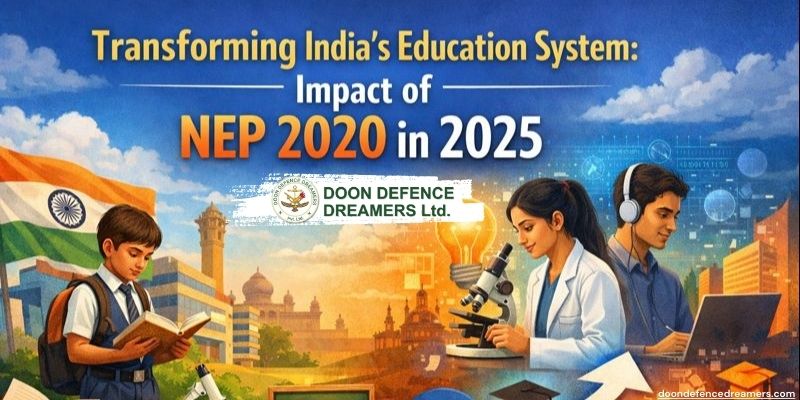
Education is the backbone of a nation’s progress. With rapid global changes, technological disruption, and evolving societal needs, education systems must continually adapt. India took a historic step by introducing NEP 2020 (National Education Policy) — the most transformational reform in the country’s education sector in more than three decades. This policy promises to reshape how children learn, how teachers teach, and how higher education institutions function.
In this blog, we’ll explore NEP 2020 (National Education Policy) in depth — from its origin and objectives to its implementation timelines, the role of committees, and what it means for India’s Education System in 2025 and beyond.
What Is NEP 2020 (National Education Policy)?
The NEP 2020 (National Education Policy) is India’s first education policy of the 21st century — replacing the previous policy from 1986. It was approved by the Union Cabinet on 29 July 2020 after extensive consultations with educators, policymakers, students, and diverse stakeholders nationwide. This policy lays out a transformative vision for the future of education in India — aiming to make education more holistic, flexible, multidisciplinary, and aligned with the needs of the 21st century global economy.
The policy emphasizes five core pillars:
-
Access
-
Equity
-
Quality
-
Affordability
-
Accountability
These pillars work together to ensure everyone — regardless of their socio-economic background — gets access to a high-quality education that prepares them for life, not just examinations.
Why Was NEP Introduced? A Brief History
India had two major education policies in the past: one in 1968 and another in 1986. Although the 1986 policy underwent modifications later, rapid changes in technology, globalization, and workforce demands made a long overdue overhaul essential.
The journey toward NEP 2020 (National Education Policy) began with preliminary consultations in 2015 led by a high-level group under the former Cabinet Secretary. Following this, in June 2017, a committee chaired by Dr. K. Kasturirangan — a prominent scientist — was formed to draft the new policy. The committee submitted its detailed recommendations in May 2019, which formed the basis of the new policy that the government finalized in July 2020.
This extensive consultative process gathered over two lakh suggestions from across the country, making the policy highly inclusive and reflective of ground realities.
Vision and Objectives of NEP 2020
The NEP 2020 (National Education Policy) sets an ambitious vision:
To create an education system rooted in Indian culture and ethos, which also enables India to become a global knowledge superpower.
It aims to bridge gaps between traditional academic learning and real-world skills, encourage analytical thinking, and nurture creativity.
Key objectives include:
-
Universal access to education at all levels, from early childhood to higher education.
-
Foundational Literacy and Numeracy (FLN) by Grade 3.
-
A transformative curriculum focusing on critical thinking and life skills.
-
A shift from rote learning to holistic, activity-based learning.
-
Greater focus on research, technology, and innovation.
-
Integration of vocational education and real-life skill development.
-
Stronger emphasis on multilingual learning across stages.
Structural Changes Under NEP 2020
One of the most significant shifts under NEP 2020 is restructuring the school education system.
Old Structure:
Previously, India followed the 10+2 model — 10 years of basic schooling followed by 2 years of higher secondary education.
New Structure: 5+3+3+4 Model
This new structure aligns with stages of child development:
-
5 years – Foundational Stage (ages 3–8; includes pre-school)
-
3 years – Preparatory Stage (ages 8–11)
-
3 years – Middle Stage (ages 11–14)
-
4 years – Secondary Stage (ages 14–18)
This change brings pre-school education into the formal schooling fold, which was absent earlier. The goal is to ensure every child, from as early as age three, gets foundational learning and development opportunities.
Key Transformative Reforms of NEP 2020
a. Early Childhood Care and Education (ECCE)
NEP 2020 recognizes the importance of early years in shaping a child’s cognitive and emotional growth. It aims to provide:
-
Universal access to quality early learning
-
Play-based and activity-centered pedagogies
This foundation becomes crucial in later learning stages and lifelong success.
b. Holistic and Multidisciplinary Higher Education
NEP 2020 abolishes rigid streams like science, arts, and commerce. Instead, students will pursue multidisciplinary education where multiple fields are blended — giving more freedom and flexibility.
Universities will offer:
-
Multiple exit and entry options
-
Academic Bank of Credits (ABC)
-
Research-integrated learning
c. Focus on Vocational Education
Vocational learning — like AI, robotics, carpentry, arts, financial literacy, and more — will be integrated from Grade 6 onwards, ensuring students graduate with both academic and practical world-ready skills.
d. Assessment Reforms
Traditional high-stakes exams are being reformed. The PARAKH framework (Performance Assessment, Review, and Analysis of Knowledge for Holistic Development) emphasizes continuous, competency-based assessment rather than rote memorization.
e. Teacher Training and Professional Development
Teachers are central to this transformation. NEP 2020 emphasizes:
-
Continuous professional training
-
National Professional Standards for Teachers (NPST)
-
Use of digital tools and pedagogies
Implementation Timeline of NEP 2020
The NEP 2020 (National Education Policy) envisions systematic implementation across multiple phases.
Short-Term Goals: 2020–2023
-
Rollout of the 5+3+3+4 structure
-
Foundational literacy initiatives under the NIPUN Bharat mission
-
Release of new drafts of the National Curriculum Framework
Medium-Term Goals: 2023–2026
-
Full adoption of the Academic Bank of Credits
-
Implementation of multiple exit/entry options in higher education
-
Expansion of vocational education and credit systems
Long-Term Goals: 2026–2040
-
Universal access to quality early childhood education
-
Full transformation of curricula according to the new framework
-
Establishment of Higher Education Commission of India (HECI) replacing previous bodies
-
A more multilingual education system
These phases make NEP not just a policy, but a long-term roadmap for change that will shape India’s education future for decades.
Committees and Bodies Driving NEP 2020 Implementation
Successful implementation requires careful planning, oversight, and collaboration across organizations and states.
a. National Steering Committee
An expert committee led by eminent educationists oversees the national rollout, planning policy strategies and providing guidance on implementation.
b. State Curriculum and Pedagogy Committees
Each state government is required to form its own committees to adapt NEP goals to local contexts and ensure smooth implementation on the ground.
c. Institutional Implementation Teams
Schools, universities, and educational boards are forming internal teams to ensure compliance with NEP guidelines — including curriculum revision teams, digital learning units, and skill integration cells.
d. Advisory Panels
Many universities and states have established expert panels to oversee specific areas like examinations, credit systems, and vocational training.
These committees ensure the policy doesn’t stay on paper but becomes real action.
Current Status: India’s Education System in 2025
As of 2025, India’s Education System in 2025 reflects visible shifts thanks to NEP 2020:
ECCE and School Reforms
Efforts to integrate early childhood education into mainstream schooling and implement the 5+3+3+4 structure are underway in many states.
Digital and Tech-Enabled Classrooms
Digital platforms like DIKSHA and SWAYAM are expanding, enabling remote and interactive learning with personalized resources.
Higher Education Transformation
Many universities have introduced:
-
4-year multidisciplinary degrees
-
Flexible credit systems
-
Vocational elements integrated into bachelor programs
Assessment Overhaul
Schools are increasingly using formative, competency-based assessments rather than traditional pass/fail exams.
Greater Language Inclusion
More schools are teaching in regional languages during early years — a core objective of NEP 2020 to celebrate cultural diversity.
These changes are part of the evolving educational landscape that positions India for a globally competitive future.
Potential Challenges Ahead
Despite its promise, full implementation of NEP 2020 faces obstacles:
-
Teacher shortages and need for intensive training
-
Infrastructure gaps in rural and remote regions
-
Resource allocation issues
-
Ensuring uniform implementation across states
Experts caution it will take years for the true impact to appear — potentially a decade or more as students progress through the full continuum of reforms.
How NEP 2020 Will Shape the Future
The holistic vision of NEP 2020 (National Education Policy) promises to change education at every stage — from preschool to postgraduate study and research. Its long-term aim is to create a system where education:
Is learner-centric
Encourages innovation and creativity
Integrates vocational and academic skills
Prepares students for both life and work
By the time India’s education system fully evolves under this policy, it will not just produce graduates — it will produce thinkers, creators, and problem-solvers for both local and global challenges.
Conclusion
NEP 2020 (National Education Policy) is more than a reform — it is a new educational philosophy. It aims to transform the way children learn, how teachers teach, and how institutions operate. From foundational learning to higher education and lifelong skill development, this policy charts a bold roadmap for India’s future.
In India’s Education System in 2025, we already see important transformations — from curriculum restructuring to digital classrooms and vocational integration. The journey ahead is long, but the destination is clear: a vibrant, inclusive, future-ready education ecosystem that empowers every learner.
About Doon Defence Dreamers
Doon Defence Dreamers is a reputed defence coaching institute dedicated to shaping future officers of the Indian Armed Forces. Located in the heart of Dehradun, the institute is widely recognised as the Best NDA Coaching in Dehradun for its disciplined environment and result-oriented teaching approach. With experienced faculty and a structured curriculum, Doon Defence Dreamers ensures strong conceptual clarity and exam-focused preparation.
The academy also stands out as the Best CDS Coaching institute in Dehardun, offering specialised guidance for written exams and SSB interviews. Regular tests, doubt sessions, and personality development programs help students build confidence and competence. The institute focuses on overall development, including physical fitness, leadership skills, and communication. Doon Defence Dreamers continues to inspire and guide defence aspirants towards achieving their dreams with dedication and excellence.