1. Introduction: The Architecture of Recognition in a Resurgent India
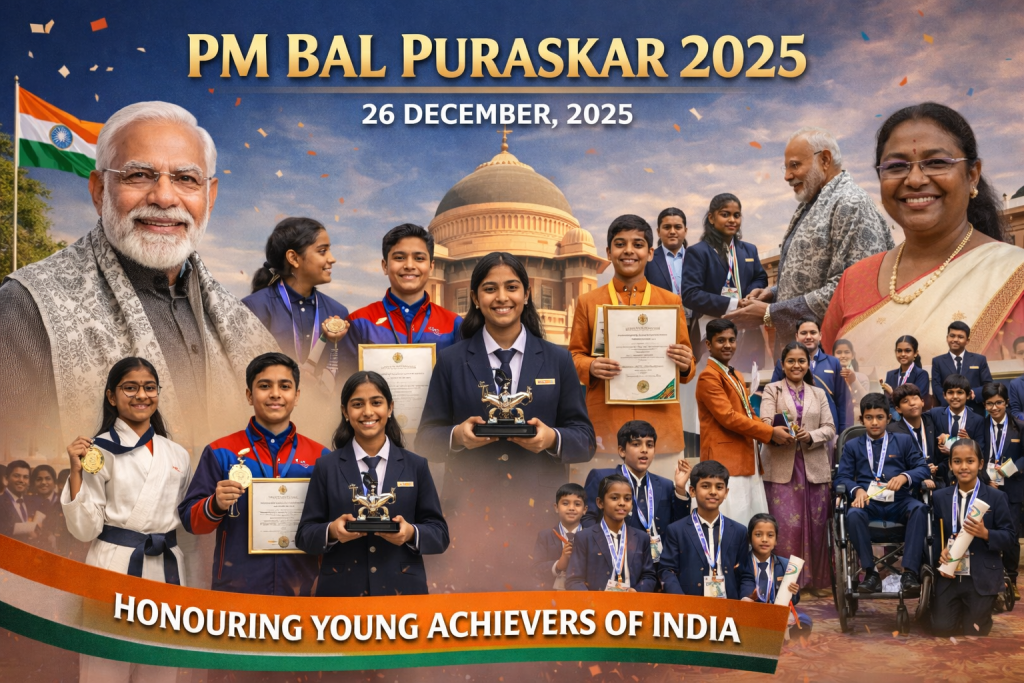
The Republic of India, home to one of the largest young populations in the world, stands at a pivotal moment of transformation. In the broader journey of nation-building, identifying and honoring young talent is not merely a ceremonial gesture but a strategic necessity. PM Bal Puraskar 2025, officially known as the Pradhan Mantri Rashtriya Bal Puraskar (PMRBP), represents the highest national recognition for exceptional achievements by children. Popularly searched by millions as the Rashtriya Bal Puraskar, this prestigious honor is far more than a medal—it is a powerful national acknowledgment of the immense potential, innovation, courage, and leadership that India’s children possess to shape the future of the nation and the world.
Administered by the Ministry of Women and Child Development, the Pradhan Mantri Rashtriya Bal Puraskar serves as the highest civilian honor for Indian citizens under the age of 18. It is a curated celebration of excellence that spans the spectrum of human endeavor—from the adrenaline of bravery to the quiet discipline of innovation, from the rigorous demands of scholastic achievement to the altruistic spirit of social service. The conferment of this award is a declaration by the state that age is no barrier to impact, and that the architects of Viksit Bharat (Developed India) are already at work in our classrooms, playgrounds, and communities.
In December 2025, the narrative of the Rastriya Baal Purushkar underwent a profound symbolic evolution. The ceremony, traditionally associated with the Republic Day week in January, was aligned with the solemn observance of ‘Veer Bal Diwas’ on December 26. This shift is not merely logistical but deeply ideological, tethering the modern achievements of India’s children to the historical saga of the Sahibzades—the sons of Guru Gobind Singh Ji—whose martyrdom represents the zenith of courage and sacrifice. This report provides an exhaustive, granular, and expert-level analysis of the Pradhan Mantri Rashtriya Bal Puraskar, detailing its history, its rigorous selection mechanics, the profiles of the illustrious 2025 cohort, and the broader socio-political implications of this prestigious honor.
2. Historical Evolution: From National Child Award to PMRBP
To understand the current prestige of the Rastriya Baal Purushkar, one must traverse the trajectory of its evolution. The award has metamorphosed over decades, reflecting the changing priorities of the Indian governance structure regarding child welfare and youth empowerment.
2.1 The Genesis: National Child Award for Exceptional Achievement (1996–2017)
The roots of the current award lie in the National Child Award for Exceptional Achievement, instituted in 1996. For over two decades, this award operated with a primary focus on recognizing children with exceptional abilities in fields such as academics, arts, culture, and sports. During this era, the awards were typically conferred on Children’s Day (November 14), coinciding with the birthday of India’s first Prime Minister, Jawaharlal Nehru. The scope, while broad, was often viewed through the lens of scholastic and artistic merit, and the public awareness of the award was relatively contained within educational and bureaucratic circles.
2.2 The Strategic Restructuring (2018–2021)
In 2018, the Ministry of Women and Child Development, recognizing the need to modernize the framework of recognition, undertook a comprehensive review. The result was a rebranding and restructuring exercise that gave birth to the Pradhan Mantri Rashtriya Bal Puraskar as an umbrella title. Under this new identity, the awards were bifurcated into two distinct categories to ensure that both individual brilliance and institutional support were honored:
Bal Shakti Puraskar: This category subsumed the erstwhile National Child Award. It was dedicated exclusively to individual children who exhibited outstanding achievements in innovation, scholastic achievements, social service, arts & culture, bravery, and sports.
Bal Kalyan Puraskar: Previously known as the National Child Welfare Awards (instituted in 1979), this category was designed to recognize individuals and institutions that had made significant contributions to the field of child development, child protection, and child welfare.
This period marked a significant escalation in the visibility of the Rastriya Baal Purushkar. The ceremony was moved to the week preceding Republic Day, and the awardees began to feature prominently in the Republic Day Parade, riding in open jeeps and receiving accolades from the masses, thereby integrating their achievements into the narrative of the republic’s sovereignty and strength.
2.3 The Unification and Current Avatar (2022–Present)
From the year 2022 onwards, the government further streamlined the award ecosystem. The Bal Kalyan Puraskar (both Individual and Institution) was closed, and the focus was consolidated entirely on the Bal Shakti Puraskar, which is now universally referred to as the Pradhan Mantri Rashtriya Bal Puraskar. This strategic consolidation was aimed at creating a singular, high-impact brand for children’s awards in India. By focusing the spotlight solely on the children, the Rastriya Baal Purushkar has emerged as a powerful aspirational tool.
The eligibility criteria were refined, the categories were crystallized into six (Bravery, Art & Culture, Environment, Innovation, Science & Technology, Social Service, and Sports), and the nomination process was digitized to ensure transparency and reach. The inclusion of ‘Environment’ as a distinct category in recent guidelines reflects the global urgency of climate action and the role of the younger generation in spearheading sustainability.
3. The 2025 Paradigm Shift: Veer Bal Diwas and National Memory
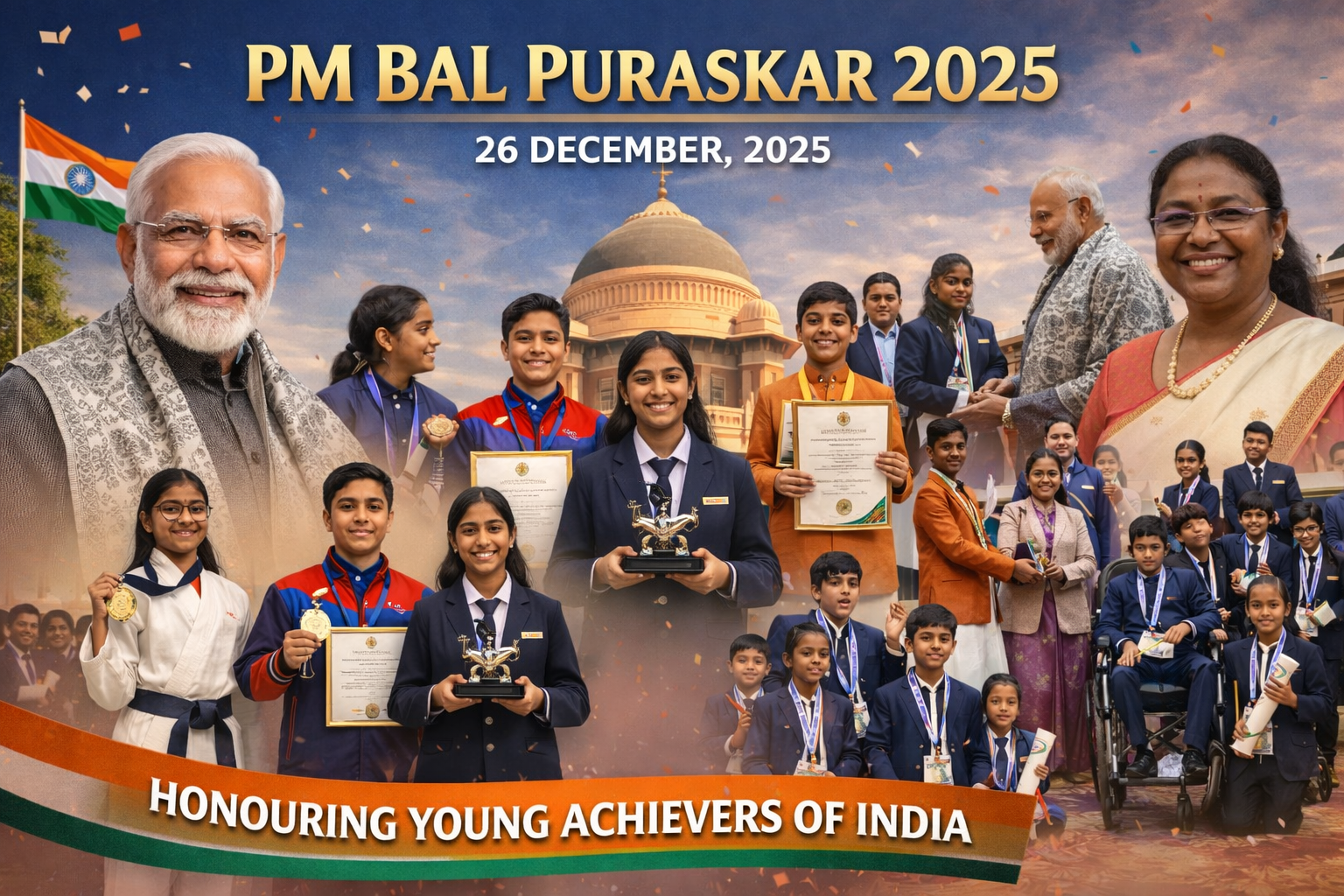
The conferment of the Pradhan Mantri Rashtriya Bal Puraskar in 2025 represents a paradigm shift in how the nation contextualizes bravery and excellence. The ceremony was held on December 26, 2025, at Vigyan Bhawan, New Delhi, presided over by the Hon’ble President of India, Smt. Droupadi Murmu. This date is of immense historical and emotional significance as it marks Veer Bal Diwas.
3.1 The Historical Context of Veer Bal Diwas
Veer Bal Diwas commemorates the martyrdom of the younger Sahibzades—Sahibzada Zorawar Singh (9 years old) and Sahibzada Fateh Singh (6 years old)—the sons of the tenth Sikh Guru, Sri Guru Gobind Singh Ji. In 1705, these young souls were bricked alive by the Mughal governor of Sirhind for refusing to renounce their faith. Their sacrifice stands as one of the most poignant examples of courage, resilience, and adherence to principles in Indian history.
3.2 Synergizing History with Modern Excellence
By aligning the Rastriya Baal Purushkar ceremony with Veer Bal Diwas, the Government of India has created a powerful bridge between the past and the present. President Murmu, in her address, explicitly drew parallels between the supreme sacrifice of the Sahibzades and the modern-day bravery and achievements of the awardees. She noted that the courage of the Sahibzades continues to inspire generations and that the Pradhan Mantri Rashtriya Bal Puraskar awardees are the torchbearers of this legacy of fearlessness and dedication.
This synchronization elevates the Rastriya Baal Purushkar from a mere annual function to a solemn national observance. It frames the achievements of the 2025 cohort not just as personal victories but as contributions to the nation’s civilizational strength. Whether it is a child saving a life or a teenager breaking a world record in sports, their actions are viewed through the lens of national character, reinforcing the ethos that India’s children are the custodians of its dharma and its development.
4. The 2025 Cohort: Profiles in Courage and Genius
The 2025 edition of the Pradhan Mantri Rashtriya Bal Puraskar recognized 20 children from 18 States and Union Territories. This geographically diverse group represents the myriad talents flourishing in every corner of the country, from the remote tribal belts of Odisha to the bustling metropolises of Maharashtra and Delhi. The following detailed profiles of the known awardees illustrate the depth and breadth of talent honored this year.
4.1 The Bravery Laureates: Valor Beyond Years
The bravery category in 2025 was particularly evocative, honoring children who displayed primal courage in the face of death.
Vyoma Priya (Posthumous): Hailing from a residential complex where danger lurked unseen, 9-year-old Vyoma Priya made the ultimate sacrifice. When she saw a 6-year-old boy fall onto an electrified slide in a park, she instinctively rushed to save him. In the process of rescuing the younger child, she was caught in the lethal current herself. Her award was received by her mother, Archana Sivaramakrishnan, in a moment that moved the nation. Vyoma’s act epitomizes the highest human virtue—placing the life of another above one’s own.
Kamlesh Kumar (Posthumous): Another young hero, 11-year-old Kamlesh Kumar, lost his life while saving others from a life-threatening situation. His story serves as a somber reminder of the risks that often accompany acts of extreme bravery. His citation acknowledges his fearlessness and the tragic loss of a young life dedicated to the protection of others.
Ajay Raj: A 9-year-old from Uttar Pradesh, Ajay Raj’s story reads like a scene from an adventure novel, yet it is starkly real. When a crocodile attacked his father in a river, Ajay did not flee. Instead, he displayed immense presence of mind and courage to save his father from the jaws of the predator. His quick thinking and refusal to abandon his father in a moment of terror earned him the Rastriya Baal Purushkar.
Mohammed Sidan P: Recognized for his intelligence and bravery in saving lives, Mohammed’s specific act of valor contributes to the rich tradition of children from Kerala and surrounding regions displaying exemplary courage in crisis situations.
4.2 The Sporting Phenoms: Breaking Global Barriers
India’s rising dominance in the global sporting arena was reflected in the 2025 cohort, which featured athletes who are already world-beaters.
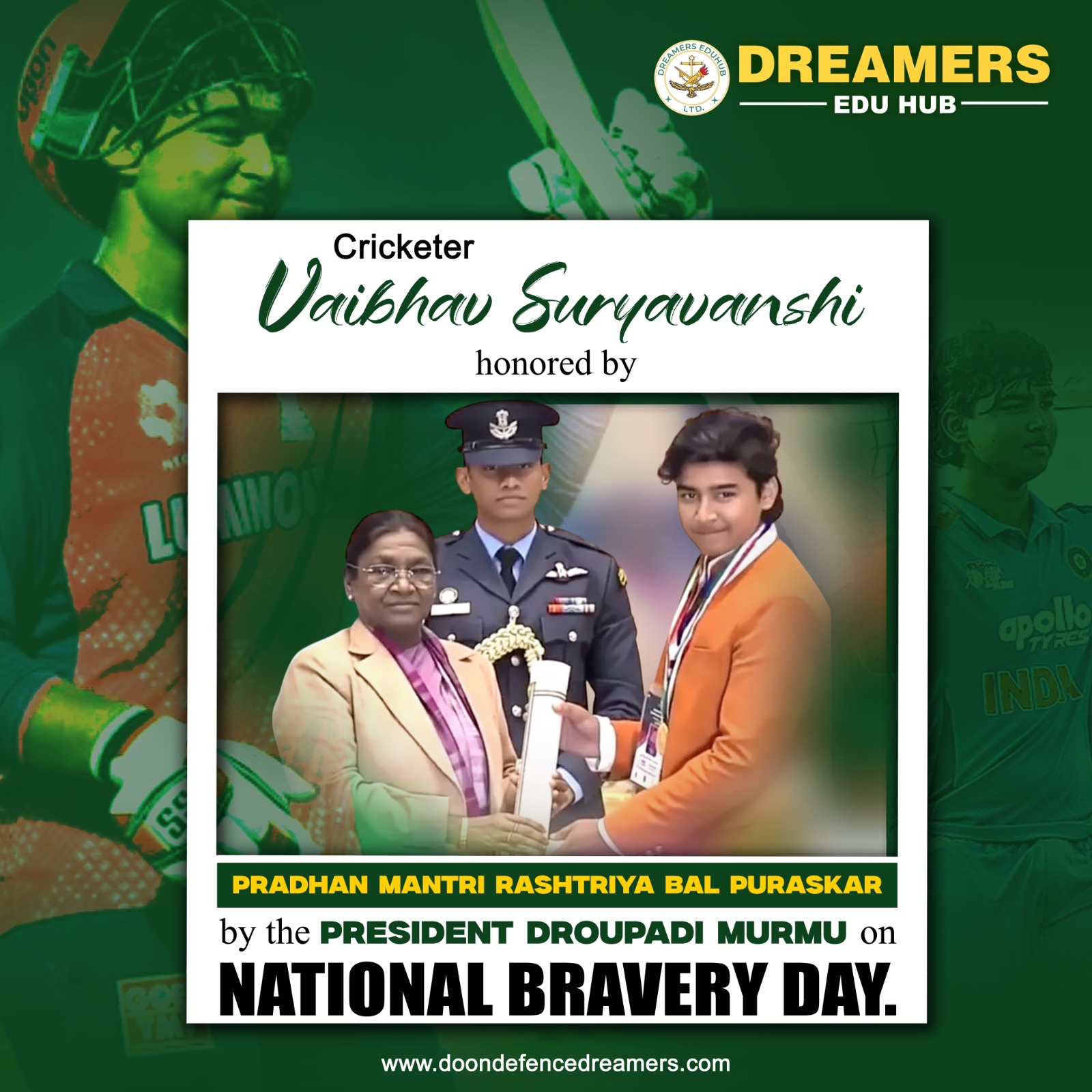
Vaibhav Suryavanshi (Cricket – Bihar): At just 14 years of age, Vaibhav Suryavanshi has become a sensation in the cricketing world. Hailing from Bihar, a state rapidly emerging on the cricket map, Vaibhav shattered records by scoring the fastest century in U19 ODI history and a blistering 58-ball century against Australia U19. His prodigious talent was further validated when he became the youngest player to earn an Indian Premier League (IPL) contract, signed by the Rajasthan Royals for Rs 1.1 crore. His award acknowledges not just his statistical achievements but his role as an inspiration for millions of aspiring cricketers in India’s hinterlands.
Jyoshna Sabar (Weightlifting – Odisha): Jyoshna’s journey is a powerful narrative of resilience. A 17-year-old from a tribal community in the Gajapati district of Odisha, she is the daughter of a farm laborer. Despite significant economic constraints, she rose to become a world champion, winning the gold medal at the International Junior Weightlifting Championship in Peru (2025). She also set a new national record for lifting the heaviest weight in her category. Her Rastriya Baal Purushkar highlights the government’s focus on identifying and nurturing talent from tribal and rural areas.
Dhinidhi Desinghu (Swimming – Karnataka): At 14, Dhinidhi Desinghu achieved what most athletes dream of for a lifetime—representing her country at the Olympics. As the youngest Indian athlete at the 2024 Paris Olympics, she showcased exceptional talent in swimming. She currently holds three national records and has secured 42 international medals. Her recognition emphasizes the importance of supporting young athletes in high-performance sports like swimming.
Shivani Hosuru Uppara (Sports): A differently-abled athlete, Shivani achieved extraordinary success in sports, overcoming both physical and economic limitations. Her award is a testament to the inclusive nature of the PM Bal Puraskar 2025, celebrating determination that transcends physical barriers.
4.3 The Innovators and Scholars: Architects of Tomorrow
The categories of Innovation and Social Service highlighted children who are solving complex problems and serving the nation.
Risheek Kumar (Innovation – Jammu & Kashmir): In a region often dominating headlines for geopolitical reasons, 17-year-old Risheek represents a new narrative of technological prowess. He founded ‘Hackers Pathshala’, a cybersecurity firm dedicated to educating peers and organizations about digital safety. Additionally, he developed an app called ‘Prarthana’ to promote cultural practices. His entrepreneurial spirit and technical acumen make him a role model for the digital generation.
Shravan Singh (Social Service – Punjab): 10-year-old Shravan Singh from Ferozepur, Punjab, was honored for his exemplary patriotism. During “Operation Sindoor,” a period of heightened military activity, Shravan voluntarily organized the supply of essential refreshments—water, tea, milk, and lassi—to Indian Army soldiers stationed near his village. Ignoring the risks associated with a conflict zone, his actions boosted the morale of the troops and demonstrated a profound sense of civic duty at a tender age.
Anish Sarkar (Sports/Mind Sports – West Bengal): The youngest in the cohort, Anish Sarkar, is a chess prodigy who became the youngest FIDE-rated player in history at the age of three years and eight months. His inclusion underscores the selection committee’s willingness to recognize cognitive brilliance even in toddlers, acknowledging that genius has no minimum age.
Vaka Lakshmi Pragnika (Sports/Chess – Telangana): A seven-year-old chess sensation, Vaka Lakshmi Pragnika has contributed significantly to India’s reputation as a rising chess powerhouse. Her consistent performance on the global stage earned her this national recognition.
5. The Seven Pillars of Excellence: Analyzing the Award Categories
The PM Bal Puraskar 2025 is structured around seven distinct categories, each designed to capture a specific facet of juvenile excellence. The definitions and expectations for each category are rigorous, ensuring that the Rastriya Baal Purushkar remains an accolade of the highest order.
5.1 Bravery
This category is perhaps the most revered. It honors children who display selfless bravery in the face of imminent danger. Unlike other awards where one prepares and trains, bravery is often spontaneous—a reaction to a crisis. The Rastriya Baal Purushkar in this category is unique because it often acknowledges acts that saved lives, sometimes at the cost of the awardee’s own. The evaluation metrics involve assessing the risk level, the age of the child, and the impact of the act.
5.2 Art & Culture
India is a civilizational state with a deep cultural repository. This category recognizes children who demonstrate mastery in music, dance, painting, sculpture, and other traditional or contemporary art forms. The committee looks for consistent achievement at national or international festivals and a contribution to the preservation or evolution of the art form. Winners often include prodigies in Carnatic or Hindustani music, or young artists whose works have been exhibited globally.
5.3 Environment
A relatively recent addition to the focus areas, the Environment category reflects the global climate crisis. It rewards children who are not just aware of environmental issues but are actively working to mitigate them. Achievements in this category might include massive plantation drives, innovations in waste management, advocacy that led to policy changes at the local level, or conservation of biodiversity. The inclusion of this category signals the government’s intent to empower ‘Green Warriors’.
5.4 Innovation
In the age of startups and ‘Atmanirbhar Bharat’ (Self-Reliant India), innovation is a key priority. This category seeks out young inventors who have created patentable devices, cost-effective solutions for social problems, or breakthrough software. The metrics for the Rastriya Baal Purushkar here include the novelty of the idea, its scalability, and its potential social impact. Examples include assistive devices for the disabled or agricultural tools for farmers.
5.5 Science & Technology
Distinct from innovation, which often focuses on applied solutions, this category honors academic and research-oriented brilliance in science. It recognizes children who perform exceptionally well in international science Olympiads, publish research papers, or demonstrate a deep theoretical understanding of complex scientific principles. It encourages the pursuit of pure science among the youth.
5.6 Social Service
This category honors the spirit of altruism. It recognizes children who have taken up leadership roles in motivating society against social evils like child marriage, sexual abuse, or substance abuse. It also covers selfless service during disasters or crises. Shravan Singh’s 2025 award for serving soldiers falls squarely into this noble category, highlighting that social service can also be an expression of patriotism.
5.7 Sports
Perhaps the most quantifiable of all categories, Sports rewards consistent high performance. The criteria typically involve winning medals at recognized National Games, Commonwealth Games, Asian Games, World Championships, or the Olympics. With India’s sporting infrastructure improving (Khelo India), the competition in this category for the Rastriya Baal Purushkar has become intensely fierce, as evidenced by the inclusion of Olympians and World Record holders in the 2025 list.
6. The Nomination and Selection Ecosystem
The credibility of the PM Bal Puraskar 2025 rests on its robust and democratic nomination process. The government has leveraged digital public infrastructure to ensure that the award is accessible to every deserving child, regardless of their socio-economic background or geographic location.
6.1 Eligibility Criteria
The criteria for the Rastriya Baal Purushkar are stringent to maintain its exclusivity :
Citizenship: The applicant must be an Indian citizen residing in India.
Age: The child must be above 5 years and not exceeding 18 years of age as of July 31st of the award year (e.g., July 31, 2025, for the 2025 awards).
Recency: The achievement must have occurred within two years of the application deadline, ensuring the award recognizes current relevance.
Exclusivity: Previous recipients of the award are not eligible to apply again, preventing the monopolization of the honor by a few individuals.
6.2 The Digital Nomination Process
The entire process is managed through the Rashtriya Puraskar Portal , a centralized platform for all national awards. This transparency eliminates the need for physical files and “middlemen” in the nomination process.
Who Can Nominate: Nominations can be submitted by State Governments, Union Territory Administrations, District Collectors, Central Ministries, School Boards (like CBSE), and specialized bodies like the Sports Authority of India. Crucially, the portal allows for Self-Nomination, empowering parents and children to apply directly if they believe their achievements warrant national recognition.
Timeline: The portal is typically open for nominations from April to July/August of the preceding year. For the 2025 awards, nominations were received until July 31, 2025.
6.3 The Selection Committee
The selection process is multi-tiered. Initially, applications are scrutinized by a Screening Committee to verify the authenticity of the claims and documents. The final selection is made by the National Selection Committee, which is headed by the Union Minister for Women and Child Development. This high-level committee often includes subject matter experts from various fields (science, arts, sports) to accurately assess the caliber of the achievements. The committee has the discretion to relax the maximum count of 25 awardees if the quality of applications is exceptionally high.
7. Benefits, Decorations, and Impact
The Pradhan Mantri Rashtriya Bal Puraskar is more than just a certificate; it carries substantial benefits designed to support the child’s future growth.
7.1 Tangible Awards
Medal and Citation: Each awardee receives a specially designed medal and a citation booklet detailing their achievements.
Cash Prize: A significant cash award of ₹1,00,000 (One Lakh Rupees) is transferred directly to the awardee. For children from humble backgrounds, like weightlifter Jyoshna Sabar, this financial support can be pivotal for training and nutrition.
Book Vouchers: To encourage continued learning, book vouchers worth ₹10,000 are also provided.
7.2 Intangible Honors
Republic Day Parade: The awardees are treated as state guests during the Republic Day celebrations. They participate in the parade on January 26th, often riding in open jeeps or designated tableaus, receiving the applause of the nation on Rajpath (Kartavya Path).
Interaction with Leadership: The awardees have the rare privilege of meeting the Hon’ble Prime Minister of India and the President of India. These interactions often involve personal words of encouragement, which can be life-changing for a young impressionable mind.
Career Impact: The “Rastriya Baal Purushkar” serves as a gold standard on a CV. It opens doors for scholarships, and in some years, specific quotas or reservations in medical or engineering seats have been allocated for awardees, although this policy is subject to annual review by the relevant ministries.
8. Strategic Analysis: State-Wise Trends and Future Outlook
An analysis of the Rastriya Baal Purushkar recipients over the years, including the 2025 cohort, reveals interesting trends. States like Maharashtra, Uttar Pradesh, and Punjab consistently produce a high number of awardees, reflecting strong state-level infrastructure for sports and arts, or in the case of bravery, a culture of community service. However, the 2025 list is notable for the strong showing from Odisha (Sports/Weightlifting) and Bihar (Cricket), indicating that talent is becoming more decentralized.
The integration of the award with Veer Bal Diwas suggests a future trajectory where the award will focus heavily on “nation-building” traits. We can expect future cohorts to feature more children working in areas like Swachh Bharat (Environment), Digital India (Innovation), and national security (Bravery/Social Service).
9. Conclusion
The PM Bal Puraskar 2025 stands as a testament to the vibrancy and capability of India’s youth. It is a meticulously designed institution that identifies, validates, and elevates the country’s most promising children. From the snow-capped peaks of Jammu & Kashmir where Risheek Kumar codes for a safer internet, to the cricket fields of Bihar where Vaibhav Suryavanshi rewrites history, the Rastriya Baal Purushkar weaves these disparate threads into a single narrative of excellence.
As the 2025 cohort takes its place in history, marching down the Kartavya Path, they carry with them not just a medal, but the collective aspirations of a billion people. They are the living proof that in the New India, age is no barrier to greatness, and every child has the potential to be a ‘Veer’ (Braveheart) in their own chosen field. The award, in its essence, is a promise from the state to its children: If you dare to dream and have the courage to excel, the nation will stand and applaud.