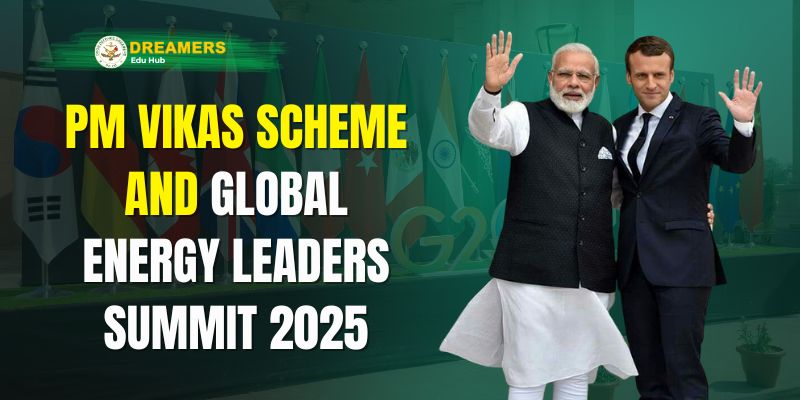
The foundation of a prosperous nation rests on two pillars: the preservation of its rich cultural heritage and the progressive adoption of sustainable practices for its future. India, a country woven with diverse traditions and faced with global imperatives, addresses this dual challenge through ambitious national schemes and proactive engagement in international forums. The Pradhan Mantri Virasat Ka Samvardhan (PM-VIKAS) scheme is a monumental national commitment designed to revitalize the livelihoods of traditional artisans and craftspeople, ensuring that their skills and legacy not only survive but thrive in the modern economy.
Simultaneously, the nation’s participation in major global events, such as the recent Global Energy Leaders Summit, underscores its pivotal role in shaping a resilient and sustainable planetary energy infrastructure. Both initiatives reflect a cohesive national strategy: nurturing indigenous talent and securing a cleaner, more equitable future for all citizens. This comprehensive overview examines the structure and impact of the transformative PM Vikas scheme and the critical takeaways from the 2025 Global Energy Leaders Summit.
PM-VIKAS (Pradhan Mantri Virasat Ka Samvardhan): A Cultural and Economic Renaissance
The PM Vikas scheme is fundamentally an initiative to preserve and promote the heritage of traditional artisans and craftspeople by providing them with comprehensive skill development, financial assistance, and market linkages. It is a targeted, integrated program designed to uplift the socio-economic status of communities engaged in ancestral arts and crafts.
What PM-VIKAS is and Who It Helps?
-
Short description: The scheme provides integrated support to traditional artisans and craftspeople, encompassing skill training, credit access, and market integration to boost the sustainability of their heritage-based livelihoods.
-
Target groups: The scheme is meticulously designed to benefit a wide spectrum of traditional communities, focusing heavily on those from the minority communities and other backward classes who form the core of India’s artisan population.
-
Artisans and Craftspeople: Individuals and families working in traditional trades, often passed down through generations, such as pottery, weaving, metalwork, and embroidery.
-
Youth: New entrants or second-generation artisans are provided with modernized skill training to make their crafts contemporary and globally marketable. This focus ensures the skills are not lost to migration or lack of economic opportunity.
-
Women: A significant focus of PM Vikas is the economic empowerment of women artisans, who constitute a large part of the unorganized workforce in craft sectors. The scheme provides them with access to microcredit and direct market platforms, enhancing their financial independence and decision-making power.
-
Vulnerable Communities: Groups involved in occupations with declining market demand or those facing socio-economic disadvantages are prioritized to ensure cultural preservation alongside financial upliftment.
-
-
Why it matters: The scheme delivers multi-layered benefits crucial for national development and cultural integrity.
-
Jobs (Employment Generation): By formalizing the skill sets and providing tools and working capital, PM Vikas transforms traditional, often subsistence, work into stable, income-generating employment, especially in rural and semi-urban areas.
-
Culture (Heritage Preservation): It ensures the continued practice of unique, often endangered, traditional arts and crafts. The scheme acts as a powerful barrier against the homogenization of culture, safeguarding the tangible and intangible heritage of India.
-
Local Income (Economic Multiplier): By linking local artisans directly to national and international markets, the scheme boosts the revenue of local economies. This influx of income strengthens the local supply chains for raw materials and services, creating a significant economic multiplier effect at the grassroots level. This focus on local enterprise is a cornerstone of the broader national economic strategy.
-
Main Programs and How They Work?
The PM Vikas program operates through a strategic blend of five interconnected components, aimed at comprehensive capacity building and market integration for the artisan community.
Skill Training: Types of Training (Traditional Crafts, Modern Skills)
The training under the scheme is dual-focused, ensuring relevance in the contemporary market while preserving authenticity.
-
Traditional Crafts: This segment focuses on enhancing and standardizing the inherited skills of the artisans. Training is often provided by master craftspeople, ensuring the fidelity of the craft techniques. Examples include advanced handloom weaving techniques, traditional jewelry making, and specialized metal forging.
-
Modern Skills (Up-skilling and Reskilling): This critical component integrates contemporary tools and market demands. Artisans are trained in areas such as:
-
Digital Marketing and E-commerce: To enable direct sales and broaden their customer base beyond local fairs.
-
Product Packaging and Design: To meet modern consumer aesthetics and international standards.
-
Financial Literacy: Essential skills for managing micro-enterprises, including bookkeeping and inventory management.
-
Support Services: Market Access, Microcredit, Certification and Mentorship
Comprehensive support services ensure that the artisans can transition from mere production to successful entrepreneurship.
-
Market Access: The scheme actively facilitates participation in national and international exhibitions, trade fairs, and provides dedicated space on e-commerce platforms. This ensures artisans bypass intermediaries, securing a higher share of the final product price.
-
Microcredit and Financial Assistance: Access to formal credit is crucial for purchasing raw materials and necessary tools. PM Vikas facilitates easy access to microcredit through institutional finance partners, often with subsidized interest rates. Assistance is provided for the procurement of modern tools and kits, significantly improving efficiency and quality.
-
Certification and Branding: Products are often certified for quality and authenticity (e.g., GI tagging or craft-specific certification). This enhances consumer trust and allows artisans to command premium prices for their handcrafted goods.
-
Mentorship: Experienced business professionals and successful craft entrepreneurs mentor the beneficiaries, providing guidance on business strategy, quality control, and scaling operations.
The execution of these services is often mapped out systematically:
| Service Component | Primary Goal | Delivery Mechanism |
| Skill Development | Technical proficiency and market relevance | Master Trainers, certified training centres |
| Credit Support | Working capital and tool procurement | Bank linkages, Mudra loans facilitation |
| Market Linkage | Direct producer-to-consumer sales | Dedicated e-Haats, trade fair sponsorship |
| Branding | Quality assurance and premium pricing | Craft-specific certification, design support |
Who Runs the Programs (Ministries, NGOs, Training Partners)?
The implementation of PM Vikas is a multi-stakeholder effort, ensuring both administrative efficiency and deep local penetration.
-
Nodal Ministry: The scheme is typically overseen by the Ministry of Minority Affairs, which coordinates the broader policy framework and budgetary allocations.
-
Training Partners: A network of accredited training institutes, sector skill councils, and experienced NGOs are engaged to deliver the specialized skill development components. The selection criteria prioritize partners with a proven track record in vocational training and community engagement.
-
NGOs and Community Bodies: Local Non-Governmental Organizations (NGOs) and community-based organizations play a vital role in identifying genuine beneficiaries, mobilizing artisans, and providing last-mile support for application and scheme utilization.
-
Financial Institutions: Banks and Micro-Finance Institutions (MFIs) are critical partners in the direct delivery of financial assistance and microcredit components to the beneficiaries.
How People Can Join and Benefit?
Accessibility and transparency are key features in the uptake of the PM Vikas scheme, ensuring that deserving artisans can easily enroll and reap the benefits.
Eligibility and Simple Steps to Apply
-
Eligibility: Generally, the scheme targets individuals who are either currently engaged in traditional arts or crafts, or those from communities traditionally associated with such work. Specific criteria might include age limits for youth-focused programs and belonging to notified communities. Proof of being a practicing artisan, often through local craft society registration or verification, is a common requirement.
-
Simple Steps to Apply: The application process is streamlined, increasingly relying on digital platforms to enhance accessibility, even in remote areas.
-
Registration: Interested individuals register on the dedicated online portal or at district-level resource centres.
-
Skill Mapping and Verification: Local committees or specialized agencies verify the applicant’s existing skill set and status as a traditional artisan.
-
Program Selection: Based on the verification, applicants are mapped to the most relevant skill training or support program (e.g., up-skilling, microcredit application).
-
Enrollment: After selection, the beneficiary is formally enrolled and begins the training or receives the targeted support.
-
What Beneficiaries Get (Training, Tools, Market Links)?
The tangible benefits provided to the beneficiaries are designed to immediately improve their productive capacity and earning potential.
-
Training and Certification: High-quality, subsidized or free training programs leading to nationally recognized certification, validating their skills.
-
Modern Tool Kits: Provision of contemporary, often subsidized, tools and equipment relevant to their craft, which increases efficiency, quality, and reduces physical labor.
-
Financial Assistance: Direct credit and grants for working capital, allowing them to purchase raw materials in bulk and manage their micro-enterprise effectively.
-
Market Linkages: Direct access to national and international markets through government-sponsored platforms, exhibitions, and digital infrastructure. The sustained support provided by the PM Vikas framework fosters long-term business viability.
Local Success Ideas: Small Examples of Income from Craft or Tourism
The scheme’s true impact is visible in the ground-level transformation of livelihoods.
-
Craft-to-E-commerce: A women’s self-help group in a remote area, after receiving training under PM Vikas in digital photography and e-commerce listing, began selling their traditional hand-embroidered textiles online. Their average monthly income saw a tenfold increase within one year, shifting them from subsistence to sustainable prosperity.
-
Artisan Tourism Clusters: In several locations, the scheme has supported the development of ‘artisan villages’ where tourists can witness the craft process. For example, a village specializing in terracotta pottery used their PM Vikas support to set up a demonstration studio and an online booking system for workshops, creating income not just from sales but also from experiential tourism. This demonstrates the powerful synergy between culture and commerce, an enduring promise of PM Vikas.
Global Energy Leaders Summit 2025: Charting a Sustainable Future
The Global Energy Leaders Summit 2025 served as a crucial global convening point for policymakers, industry titans, and investors, focused on accelerating the transition to a low-carbon energy system. The discussions centered on both the immense challenge and the unprecedented opportunity presented by the need for rapid energy decarbonization.
What the Summit Focused On?
The Summit, held at a critical juncture in the global climate action timeline, aimed to solidify national and corporate commitments and translate them into actionable, collaborative projects.
-
Purpose: Countries and companies met in 2025 to align global energy transition strategies, mobilize the necessary trillions of dollars in private and public finance, and share technological breakthroughs required to meet the mid-century net-zero commitments. The overarching goal was to create a unified framework for energy security, affordability, and sustainability, moving beyond rhetoric to tangible targets.
-
Major Themes: The discussions were highly focused, addressing the core technological and financial hurdles of the transition.
-
Renewables Integration: Strategies for scaling up solar, wind, and geothermal power, and critically, managing their intermittent nature within existing electricity grids.
-
Green Hydrogen: Accelerating the development of green hydrogen as a key decarbonization vector for hard-to-abate sectors like steel, shipping, and heavy transport.
-
Grid Modernization and Storage: The necessity of building resilient, smart grids and deploying large-scale battery and pumped hydro storage solutions to handle massive renewable energy inputs.
-
Finance and Investment: Developing innovative financing mechanisms, de-risking green investments in developing economies, and redirecting capital away from fossil fuels.
-
-
Key Players: The Summit drew participation from the most influential entities shaping global energy policy and markets.
-
Governments: Energy ministers and heads of state from major economies committed to binding national targets and regulatory reforms.
-
CEOs: Leaders from multinational energy companies, technology firms, and automotive manufacturers outlined their corporate transition strategies and investment plans.
-
Investors: Representatives from sovereign wealth funds, pension funds, and major investment banks discussed capital allocation strategies for green infrastructure projects.
-
Experts: Leading climate scientists, economists, and energy analysts provided data-driven insights to inform policy decisions.
-
Important Outcomes and Announcements
The Summit resulted in a series of landmark announcements designed to provide both financial and technological momentum to the global transition.
-
New Commitments: Several nations announced accelerated phase-out timelines for coal-fired power generation, alongside new, ambitious finance commitments. A collective pledge of over $500 billion in blended finance (combining public and private capital) was announced, specifically targeting grid modernization and renewable energy scale-up in emerging markets over the next five years.
-
Partnerships: A key feature was the formation of public–private projects and international cooperation frameworks.
-
Global Green Hydrogen Coalition: A new pact was signed between major industrial nations and energy giants to pool resources for R&D, standardize regulatory frameworks, and establish global green hydrogen supply chains.
-
Just Transition Funds: Partnerships were formalized to establish financial support for communities and workers impacted by the phase-out of fossil fuel industries, ensuring a socially equitable transition.
-
-
Innovation Highlights: The Summit served as a platform for showcasing cutting-edge technological progress.
-
Long-Duration Storage: Breakthrough announcements were made regarding the commercial viability of next-generation long-duration energy storage technologies, crucial for balancing high-penetration renewable grids.
-
Advanced Carbon Capture: Pilot projects were highlighted for direct air capture (DAC) and carbon utilization technologies, which are seen as essential to manage residual emissions from heavy industry. These innovations demonstrated a pathway to addressing the most complex aspects of decarbonization.
-
What It Means for India and Local Communities?
India’s robust participation in the Summit reinforces its leadership role and translates global initiatives into significant opportunities for domestic growth and community upliftment, complementing the efforts of schemes like PM Vikas.
-
Opportunities: Jobs, New Industries and Investment at Local Level: The outcomes of the Summit directly fuel India’s domestic energy goals.
-
New Industries: The focus on hydrogen, batteries, and solar manufacturing will spur the establishment of gigafactories and ancillary industries, creating millions of high-skilled manufacturing and R&D jobs.
-
Investment: The global finance commitments are expected to channel significant foreign direct investment (FDI) into India’s renewable energy sector, particularly in utility-scale projects located in solar-rich and wind-rich states.
-
Decentralized Renewables: Increased global support for decentralized grids promotes the deployment of microgrids and rooftop solar in rural areas, leading to energy independence and lower power costs for local businesses.
-
-
Link to Grassroots: How Summit Ideas Can Reach Artisans and Small Towns: The global energy transition is not confined to large power plants; its benefits must permeate the local economy.
-
Clean Energy for Craft: Reliable, affordable, and clean energy is vital for the workshops of artisans supported by schemes like PM Vikas. Solar-powered kilns, electric looms, and efficient lighting reduce operating costs for craftspeople, making their micro-enterprises more competitive.
-
E-Mobility and Tourism: The global push for electric vehicles (EVs) creates opportunities for small towns to become charging hubs and supports low-emission tourism, benefiting local service providers and artisans selling their craft.
-
Skill Alignment: The massive demand for solar panel installers, EV maintenance technicians, and smart-grid operators requires new vocational training. This mirrors the skill modernization mandate of the PM Vikas scheme, suggesting a dual-focus strategy for training centres on both traditional craft preservation and green economy skills.
-
-
Quick Next Steps: How States, Businesses and Training Groups Can Respond: The domestic response requires swift, coordinated action to capitalize on the Summit’s momentum.
-
States: State governments must expedite regulatory clearances, establish single-window systems for green investment projects, and earmark land for renewable energy zones and manufacturing clusters.
-
Businesses (Local and National): Indian corporations need to accelerate their green procurement and supply chain decarbonization plans. Small and medium enterprises (SMEs) must invest in energy-efficient equipment and rooftop solar to reduce operational expenditures.
-
Training Groups: Skill development agencies must immediately revise their curricula to include specialized courses in battery technology, hydrogen fuel cell maintenance, and advanced power electronics, ensuring the workforce is ready for the new green economy jobs. The ability of India to successfully transition will depend on the simultaneous empowerment of its traditional craft sectors, championed by PM Vikas, and the forward-looking technological adoption spurred by global forums. The enduring legacy of schemes like PM Vikas is a testament to the nation’s commitment to inclusive growth.
-