1. Introduction: The Living Heritage of the Tribes of India
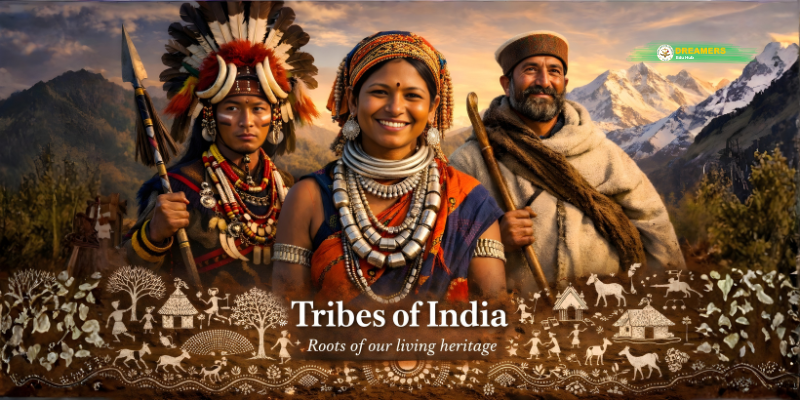
India, a civilization of profound antiquity, is sustained not merely by its urban centers or agrarian plains, but fundamentally by its forest frontiers and hill tracts—the ancestral domains of the tribes of India. These communities, constitutionally designated as Scheduled Tribes (STs), represent the oldest stratum of the subcontinent’s demographic history. As of the latest comprehensive census data and subsequent projections into 2024-25, the tribes of India constitute approximately 8.6% of the nation’s total population, translating to over 104 million individuals who belong to more than 705 distinct ethnic groups.
This staggering diversity makes the tribes of India the largest indigenous population in the world, presenting a complex tapestry of cultures, languages, and livelihoods that ranges from the isolated hunter-gatherers of the Andaman archipelago to the settled, politically autonomous communities of the North East.
The term “Adivasi,” often used in political and social discourse to describe the tribes of India, literally translates to “original inhabitants,” asserting a primordial claim to the land. However, the constitutional mechanism under Article 342 avoids this specific terminology, instead empowering the President of India to notify specific groups as Scheduled Tribes based on criteria such as “primitive” traits, distinctive culture, geographical isolation, “shyness” of contact with the broader community, and socio-economic backwardness. Anthropologically, the tribes of India are far from a monolith; they encompass four major racial stocks—Negrito, Proto-Australoid, Mongoloid, and Caucasoid—and speak languages spanning the Austro-Asiatic, Dravidian, Tibeto-Burman, and Indo-Aryan families.
Understanding the tribes of India requires a departure from viewing them merely as marginalized beneficiaries of state welfare. Instead, they must be recognized as custodians of biodiversity, architects of sustainable living models, and holders of unique knowledge systems that are increasingly relevant in a climate-conscious world. This report provides an exhaustive, state-by-state analysis of the tribes of India, exploring their demographics, cultural nuances, artistic contributions, and the contemporary challenges they navigate in the 21st century.
1.1 Demographic Overview and Regional Distribution
The spatial distribution of the tribes of India is highly uneven, creating distinct tribal zones that influence regional politics and culture. While the central belt of India holds the highest absolute numbers of tribal people, the northeastern states exhibit the highest density relative to their total populations.
Table 1: Regional Distribution Patterns of the Tribes of India
| Region | Predominant Characteristics | Key States | Dominant Tribal Groups |
| North East India | Mongoloid stock; Tibeto-Burman languages; High literacy; Clan-based autonomy. | Mizoram (94.4%), Nagaland (86.5%), Meghalaya (86.1%), Arunachal Pradesh (68.8%) | Adi, Naga, Khasi, Mizo, Bodo |
| Central India | Proto-Australoid stock; Austro-Asiatic & Dravidian languages; Mineral-rich lands; High displacement. | Madhya Pradesh (14.7%), Chhattisgarh (30.6%), Jharkhand (26.2%), Odisha (22.8%) | Gond, Bhil, Santhal, Munda, Oraon |
| Western India | Agropastoral livelihoods; Indo-Aryan languages; Integration with Rajput history. | Rajasthan (13.5%), Gujarat (14.8%), Maharashtra (9.4%) | Bhil, Meena, Warli, Rathwa |
| South India | Pockets of primitive traits in Western/Eastern Ghats; Dravidian languages; Critical ecological roles. | Andhra Pradesh (5.53%), Karnataka (6.95%), Kerala (1.5%), Tamil Nadu (1.1%) | Chenchu, Toda, Kurumba, Koya |
| Islands | Extreme isolation (Andaman) to maritime cultures (Lakshadweep). | Lakshadweep (94.8%), Andaman & Nicobar (7.5%) | Jarawa, Sentinelese, Nicobarese, Minicoy Islanders |
| Northern Himalayas | Trans-Himalayan trade history; Pastoral nomadism. | Himachal Pradesh (5.7%), Uttarakhand (2.9%), J&K (11.9%), Ladakh | Gaddi, Gujjar, Tharu, Changpa |
2. The Seven Sisters and a Brother: Tribes of North East India
The North East Frontier is perhaps the most ethnographically distinct region regarding the tribes of India. Here, tribal communities are not sociological minorities but represent the mainstream, holding political power and determining the cultural ethos of the states.
2.1 Arunachal Pradesh: The Land of the Dawn-Lit Mountains
Arunachal Pradesh serves as a massive ethnographic museum, hosting 26 major tribes and over 100 sub-tribes. The tribes of India residing here are largely of Mongoloid stock and speak Tibeto-Burman languages.
-
Cultural Landscape: The state can be culturally divided into three zones. The western zone (Tawang, West Kameng) is dominated by the Monpa and Sherdukpen tribes, who follow Mahayana Buddhism and have close cultural affinities with Tibet. Their festivals, such as Losar (New Year) and Torgya, involve elaborate mask dances at monasteries like Tawang. The central belt is home to the Tani group of tribes—Adi, Nyishi, Apatani, Galo, and Tagin—who trace their lineage to a mythical ancestor, Abotani. They practice Donyi-Poloism, an indigenous animistic faith centered on the worship of the Sun (Donyi) and Moon (Polo). The eastern zone (Tirap, Changlang) is inhabited by the Wancho and Nocte, who have historically had a chieftainship system and were known for beadwork and tattooing.
-
The Apatani Exception: In the Ziro Valley, the Apatani tribe stands out for their highly sophisticated system of wet-rice cultivation and fish farming, practiced without the use of farm animals or machines. This sustainable landscape is a UNESCO World Heritage tentative site. Culturally, elderly Apatani women are recognizable by their massive nose plugs (yapping hullo) and facial tattoos (tiippe), a practice originally intended to make them undesirable to raiders from other tribes, which has now become a symbol of identity, though the younger generation has abandoned it.
-
Festivals: The Nyokum festival of the Nyishi tribe is a communal prayer for peace and prosperity, involving the sacrifice of mithuns (a semi-domesticated bovine). The Solung festival of the Adis is agricultural, celebrating the harvest and the welfare of domestic animals.
2.2 Nagaland: The Warrior Tradition Transformed
Nagaland is synonymous with the vibrant culture of the tribes of India. It is home to 16 major tribes, including the Angami, Ao, Konyak, Sema (Sumi), Lotha, and Chakhesang.
-
Historical Evolution: The Nagas were historically fierce independent village republics, known for the practice of headhunting, which was prevalent among the Konyaks until the mid-20th century. Taking a head was believed to capture the soul-force of the enemy, bringing prosperity to the village. Today, the Konyak gunsmiths and the tattooed elders of Mon district are living testimonies to this martial past.
-
Social Structure: Each Naga tribe has distinct dialects, often unintelligible to neighbors, leading to the development of ‘Nagamese’ as a lingua franca. The Angami tribe is renowned for the stunning terraced wet-rice fields in Kohima and Khonoma, a departure from the slash-and-burn (Jhum) cultivation common elsewhere.
-
The Hornbill Festival: Celebrated annually from December 1-10, the Hornbill Festival is the “Festival of Festivals” for the tribes of India in the North East. It creates a unified platform where all Naga tribes converge at the Kisama Heritage Village to display their traditional morungs (dormitories), log drums, and colorful shawls. The specific patterns on a Naga shawl are not mere decoration; they serve as a social text, indicating the wearer’s tribe, village, and social standing (e.g., the number of feasts of merit they have hosted).
2.3 Meghalaya: The Matrilineal Stronghold
Meghalaya, the “Abode of Clouds,” offers a unique sociological case study within the tribes of India due to the prevalence of matrilineal systems among its three major tribes: the Khasi, Jaintia (Pnar), and Garo.
-
The Khasi and Jaintia: Inhabiting the central and eastern hills, these tribes follow a system where lineage is traced through the mother. The youngest daughter, Ka Khadduh, inherits the ancestral property and is the custodian of the family, tasked with caring for aging parents. This empowers women significantly compared to other parts of India, though political power in traditional durbars (councils) often remains with men. The Khasis are also famous for their bio-engineering marvels—the Living Root Bridges (Jingkieng Jri)—created by training the aerial roots of the Ficus elastica tree across streams.
-
The Garo: Residing in the western Garo Hills, the Garos call themselves Achik Mande (hill people). Their harvest festival, Wangala, is known as the “100 Drums Festival,” characterized by the rhythmic beating of long oval drums and synchronized dancing to thank the Sun God, Saljong.
2.4 Mizoram: The Stoic Highlanders
Mizoram has the highest concentration of tribal people (94.4%) among all states. The Mizo is a generic term covering several related tribes like the Lushai, Ralte, Hmar, and Pawi.
-
Ethos: The defining feature of Mizo society is Tlawmngaihna, an untranslatable code of ethics implying selfless service, hospitality, and being helpful to others without expecting a reward. This binds the community together, making Mizoram one of the most peaceful and disciplined states.
-
Cultural Arts: The Cheraw or Bamboo Dance is the most iconic cultural export. It involves men clapping bamboo staves in a rhythmic grid while women step in and out of the formations with precision. Historically, it was performed to ensure the safe passage of the soul of a mother who died during childbirth.
-
The Chakma Minority: In the southern fringes, the Chakma tribe resides. Unlike the Christian majority Mizos, Chakmas are largely Buddhist and have a distinct script and culture, often leading to complex socio-political dynamics regarding indigenous rights and citizenship.
2.5 Manipur: The Valley and the Hills
Manipur presents a complex demographic arrangement where the tribes of India (Nagas and Kukis) inhabit the surrounding hills, while the non-tribal Meiteis dominate the central valley.
-
Tribal Diversity: The hill districts are home to Naga tribes (Tangkhul, Mao, Maram, Zeliangrong) and Kuki-Zo tribes (Thadou, Paite, Hmar, Vaiphei). The Tangkhul Nagas of Ukhrul are famous for their black pottery, Longpi Ham, which is crafted from crushed serpentine stone and clay without using a potter’s wheel.
-
Social Fabric: The Kukis have a traditional chieftainship system where the chief owns the land, unlike the more democratic village councils of the Nagas. The Lui-Ngai-Ni is a collective seed-sowing festival for the Nagas of Manipur, while the Kut festival celebrates the harvest for the Kuki-Chin-Mizo groups.
2.6 Tripura: The Changing Demography
Tripura is the only state in the region where the indigenous tribes of India became a minority due to historical migration. However, the 19 tribes, including the Tripuri (Debbarma), Reang (Bru), Jamatia, and Halam, retain a vibrant culture.
-
The Reang (Bru): They are the only Particularly Vulnerable Tribal Group (PVTG) in Tripura. The community has faced significant internal displacement and is currently the focus of a major resettlement agreement. They are known for the Hojagiri dance, where young women balance bottles and lamps on their heads while maneuvering their lower bodies.
-
Tripuri Royalty: The Tripuri tribe has a history of ruling the Manikya dynasty. Their primary festival, Kharchi Puja, involves the worship of 14 deities (Chaturdasha Devata) and symbolizes the synthesis of tribal and Hindu traditions.
2.7 Assam: The Gateway
Assam hosts a mix of “plains tribes” and “hills tribes,” contributing massively to the diversity of the tribes of India.
-
The Bodos: The largest tribal group in Assam, the Bodos have a distinct identity centered in the Bodoland Territorial Region (BTR). They are expert weavers, and the Dokhona (traditional yellow wrap) is a symbol of their culture. Their Bagurumba dance is often called the “Butterfly Dance” due to its graceful movements.
-
The Mishing: Living along the banks of the Brahmaputra, the Mishing people build houses on stilts called Chang Ghar to survive the annual floods. They are culturally close to the Adis of Arunachal Pradesh and celebrate Ali-Aye-Ligang, a spring festival marking the sowing of seeds.
-
Other Groups: The Karbis and Dimasas inhabit the hill districts, maintaining distinct autonomy. The Dimasas have a history of a powerful kingdom, the ruins of which can be seen in Dimapur and Khaspur.
2.8 Sikkim: The Himalayan Blend
Sikkim’s tribal structure includes the indigenous Lepchas, the Bhutias (of Tibetan origin), and the Limbus.
-
The Lepchas: Calling themselves Rongkup (Children of God), the Lepchas are the original inhabitants who worship nature, particularly Mt. Kanchenjunga (Khangchendzonga). They possess deep knowledge of bamboo craft and cane work.
-
The Bhutias: They introduced Vajrayana Buddhism to the state. Their masked dances, performed during the Pang Lhabsol festival, celebrate the blood brotherhood treaty sworn between the Lepcha and Bhutia chiefs centuries ago.
3. The Tribal Heartland: Central and Eastern India
This region, often called the “Tribal Belt,” stretches across the Chota Nagpur Plateau and the Deccan. It is the demographic core of the tribes of India, hosting the largest populations in absolute terms.
3.1 Madhya Pradesh: The Demographic Giant
Madhya Pradesh is home to the largest number of tribal individuals in India, with over 1.53 crore people (Census 2011) belonging to the tribes of India.
-
The Gonds: Numbering over 4 million in MP alone, the Gonds are one of India’s largest tribal groups. They historically established the Gondwana kingdom, ruling large swathes of central India. Today, they are globally acclaimed for Gond Art, a style developed by Jangarh Singh Shyam that uses dots and lines to create intricate patterns of animals and nature. The Gonds are animists who worship Bada Dev and have a rich oral tradition of songs called Karma and Saila.
-
The Bhils: Concentrated in the western districts (Jhabua, Alirajpur), the Bhils are known for the Bhagoria Haat, a vibrant festival held before Holi. It serves as a massive matchmaking market where young men and women choose partners in a carnival atmosphere, blending economic exchange with social courtship.
-
The Baigas: A PVTG found in Mandla and Balaghat, the Baigas are the “sons of the earth.” They traditionally practiced Bewar (shifting cultivation) and refused to plough the land, believing it would tear the breast of Mother Earth. Baiga women are heavily tattooed, a practice that serves as a rite of passage and identity.
3.2 Chhattisgarh: The Forest State
Carved out of Madhya Pradesh, Chhattisgarh has a tribal population exceeding 30%. The tribes of India here are deeply connected to the dense forests of Bastar and Sarguja.
-
Bastar’s Tribal Culture: The Bastar region is the cultural heartland, home to the Maria and Muria Gonds. The Muria are famous for the Ghotul system, a village dormitory where young boys (Cheliks) and girls (Motiaris) live together to learn social duties, arts, and sexual discipline under the guidance of elders. This institution has fascinated anthropologists for decades as a model of socialization.
-
Dhokra Art: The Ghadwa community of Bastar practices Dhokra, a 4,000-year-old lost-wax metal casting technique. Using beeswax, clay, and brass, they create intricate figurines of tribal deities, animals, and daily life, which are now major export items.1
-
Bastar Dussehra: Unlike the North Indian festival celebrating Rama’s victory, Bastar Dussehra is a 75-day event dedicated to the local goddess Danteshwari Devi. It involves the construction of massive wooden chariots by tribal artisans, a tradition that reinforces the symbiotic relationship between the tribes and the erstwhile royal family.
3.3 Jharkhand: The Land of the Sal Tree
Jharkhand was created as a separate state to fulfill the aspirations of the tribes of India in the Chota Nagpur region.
-
The Santhals: The largest tribe in the state, the Santhals have a history of resistance, most notably the Santhal Hool of 1855 against the British and landlords. They have a highly organized social structure with a village headman (Manjhi). Their walls are often adorned with monochromatic paintings, and they are avid lovers of music and dance.
-
The Mundas: Famous for the legendary freedom fighter Birsa Munda, who led the Ulgulan (Great Tumult) against British land policies. The Mundas practiced the Khuntkatti system, a form of joint land ownership that was systematically dismantled by colonial laws.
-
Festivals: Sarhul is the quintessential festival of the region, celebrating the flowering of the Sal tree (Shorea robusta). The Sal tree is sacred to the tribes of India in this belt, providing timber, resin, and leaves. The festival marks the beginning of the agricultural cycle.2 Sohrai is a winter harvest festival famous for the mud-wall paintings done by tribal women to welcome the harvest.
3.4 Odisha: The Diversity Hub
Odisha holds the distinction of having the highest number of notified tribes (62) and the highest number of PVTGs (13) among all states.
-
The Bondos: Residing in the remote Malkangiri hills, the Bondos are a PVTG known for their fierce independence and isolation. Bondo women are distinguishable by their attire—shaved heads adorned with bead bands and heavy metal neck rings, with only a small cloth around the waist. They have traditionally had a high status in their society, often marrying men much younger than themselves.
-
The Dongria Kondhs: Inhabiting the Niyamgiri hills, this tribe gained international attention for their successful legal battle against a mining giant to protect their sacred mountain. They call themselves Jharnia (protectors of streams) and worship Niyam Raja. They are renowned for their intricate embroidery and pineapple cultivation.
-
The Sauras: Known for their Idital paintings, which are similar to Warli art but distinct in their iconography. These paintings are ritualistic, created to appease spirits and ancestors.
3.5 West Bengal: The Eastern Interface
While predominantly Bengali, the state has significant populations of the tribes of India in the western districts (Purulia, Bankura) and the northern tea gardens.
-
The Santhals and Cultural Syncretism: In the Jungle Mahal region, the Santhals perform the Chhau Dance (Purulia style). This martial dance form involves acrobatic movements and elaborate masks depicting mythological characters, representing a fusion of tribal martial traditions and Hindu epics.
-
The Totos: One of the smallest tribes in India, the Totos live in a single enclave called Totopara in Alipurduar district. Numbering fewer than 2,000, they are a PVTG struggling to preserve their unique language and culture against the pressures of modernization.
-
Tusu Parab: A harvest festival celebrated by the tribes of Purulia and Bankura, centered around the deity Tusu. It involves the immersion of colorful paper structures (Chaudal) in rivers and the singing of Tusu songs that reflect the joys and sorrows of tribal life.3
3.6 Bihar: The Remnants
After the bifurcation of Jharkhand, Bihar’s tribal population reduced, but the tribes of India still have a presence in the districts bordering Nepal and Jharkhand.
-
The Tharus: Concentrated in West Champaran, the Tharus have unique physiological resistance to malaria, an evolutionary adaptation to the Terai region. They follow a syncretic religion mixing Hinduism and animism.
-
Festivals: Karma and Jitiya remain popular festivals, where the focus is on nature worship and family well-being.4
4. The Western Frontier: Desert and Coast
4.1 Rajasthan: Warriors of the Sands
The tribes of India in Rajasthan have a martial history, often serving as allies to Rajput kings.
-
The Meenas: The largest tribal group in the state, the Meenas were historically the rulers of the Matsya kingdom before the rise of the Rajputs. Today, they are one of the most politically and economically empowered tribes in India, with high representation in the civil services. They inhabit the eastern districts (Jaipur, Sawai Madhopur).
-
The Bhils: Living in the Aravalli range (Udaipur, Dungarpur), the Bhils were historically excellent archers and guerilla fighters. The Baneshwar Fair, held at the confluence of the Som, Mahi, and Jakham rivers, is considered the “Kumbh of the Tribals.” It is a massive gathering for ancestor worship and cultural celebration.
-
The Garasias: Found in the Sirohi and Pali districts, they are known for their colorful attire and the tradition of live-in relationships (dapa) before marriage, which is formalized only when the couple has sufficient resources.
4.2 Gujarat: The Vibrant West
Gujarat’s eastern belt is a continuous tribal corridor connected to Madhya Pradesh and Maharashtra.
-
The Rathwas: Inhabiting the Chhota Udepur region, the Rathwas are famous for Pithora paintings. These are not merely art but a ritual performed by a Lakhara (painter) to appease the deity Baba Pithora, usually to cure an illness or fulfill a vow. The painting process is accompanied by singing and trance-dancing.
-
The Siddis: A unique Afro-Indian community found in the Gir forest region. They are descendants of Bantu people from East Africa brought to India as soldiers and slaves by Portuguese and Arab traders centuries ago. They retain African musical traditions, specifically the Goma dance and the Malunga instrument, while having assimilated into local Gujarati languages and religions (mostly Sufi Islam).
4.3 Maharashtra: The Sahyadri Dwellers
The Western Ghats (Sahyadris) and the Vidarbha region are the two main habitats for the tribes of India in Maharashtra.
-
The Warlis: Living on the outskirts of Mumbai (Thane, Palghar), the Warlis are globally famous for Warli Art. Traditionally painted by women on mud walls using rice paste, these paintings use basic geometric shapes—the circle (sun/moon), triangle (mountains/trees), and square (sacred enclosure)—to depict social life rather than mythological deities.
-
The Katkaris: A PVTG historically engaged in making catechu (katha). They are often landless and migrate seasonally for brick kiln work, making them one of the most vulnerable groups in the state.
-
The Korkus: Inhabiting the Melghat tiger reserve, they speak a Munda language (isolated from other Munda speakers in the east). Melghat has been a focus area for combating malnutrition among tribal children.
4.4 Goa: The Original Settlers
-
The Kunbis and Gawdas: These are the original inhabitants of Goa, predating the Portuguese colonization. The Kunbi women are distinct in their attire—the Kunbi saree is a red and white checkered cotton drape worn short (knee-length) with a specific knot, designed for ease of work in paddy fields.5
-
Cultural Revival: The Fugdi dance, performed by tribal women during Ganesh Chaturthi and other festivals, is a high-energy dance involving circular movements and blowing air into the cheeks. It is a celebration of their resilience against cultural erasure.5
5. Guardians of the Ghats: South India
The tribes of India in the south are fewer in number but occupy critical ecological niches in the Western and Eastern Ghats. They preserve some of the most ancient cultural traits.
5.1 Andhra Pradesh & Telangana: The River Tribes
-
The Chenchus: A PVTG primarily inhabiting the Nallamala forests (Amrabad and Nagarjunsagar-Srisailam Tiger Reserves). They are one of the few remaining hunter-gatherer groups who continue to collect honey, roots, and tubers. They have a symbiotic relationship with the forest department in tiger conservation.
-
The Lambadas (Banjaras): Once nomadic salt traders and caravan drivers, they are now settled. Their women wear spectacular colorful skirts with mirror work and ivory/bone bangles.
-
Medaram Jatara: Held in Telangana, the Sammakka Saralamma Jatara is a tribal festival that rivals the Kumbh Mela in size. It honors a mother and daughter who died fighting against the Kakatiya rulers over unjust taxation. Millions of devotees (tribal and non-tribal) congregate to offer jaggery (referred to as gold) to the deities.6
5.2 Karnataka: The Forest Diversity
-
The Jenu Kurubas: Their name literally means “Honey Shepherds.” They are expert honey gatherers living in the forests of Kodagu and Mysore. They have a deep traditional knowledge of the forest ecosystem but have faced displacement due to national parks (Nagarhole).
-
The Soligas: Inhabiting the BR Hills, the Soligas are known for their unique relationship with the forest. They practice a form of fire-stick farming (controlled burning) which they claim controls invasive species like Lantana, a claim that has sparked debates with modern conservationists.
5.3 Kerala: The Human Development Paradox
While Kerala has high human development indices, its tribal population (Adivasis) remains the most marginalized section.
-
The Kurichiyas: Found in Wayanad, they were the martial class of the tribes, serving as archers in the army of Pazhassi Raja in his guerilla war against the British. They follow a matrilineal system and have strict notions of purity and pollution.
-
The Cholanaikayans: A PVTG living in the caves of Nilambur. They were considered “cavemen” of Kerala until contact was established in the 1970s. They are one of the most pristine hunter-gatherer groups, though now integrated into government welfare schemes.
5.4 Tamil Nadu: The Nilgiri Heritage
The Nilgiri Biosphere Reserve is a hotspot for the tribes of India.
-
The Todas: A pastoral tribe recognizable by their embroidered shawls (Puthukuli) and distinct half-barrel-shaped huts called dogles. They worship the buffalo and have a unique vegetarian diet centered on dairy. Toda Embroidery holds a Geographical Indication (GI) tag; it is done on white cotton cloth using red and black wool in geometric patterns that look like weaving.7
-
The Irulas: Traditionally snake and rat catchers. With the ban on wildlife trading, they formed the Irula Snake Catchers’ Industrial Cooperative Society. They catch venomous snakes, extract venom for anti-venom production, and release them back into the wild—saving thousands of lives across India annually.
6. The Himalayan North
6.1 Himachal Pradesh: The Transhumant Tribes
-
The Gaddis: Semi-nomadic shepherds found in the Kangra and Chamba districts. They migrate seasonally with their large flocks of sheep and goats between the low hills and the high alpine pastures. They are fervent worshippers of Lord Shiva and wear a distinct woolen coat called Chola.
-
The Kinnauras: Inhabiting the Kinnaur district, they practice a mix of Hinduism and Buddhism. In some pockets, the tradition of fraternal polyandry (brothers sharing a wife) existed, historically linked to the limited arable land and the legend of the Pandavas, though this is rapidly disappearing.
6.2 Uttarakhand: The Land of Gods and Tribes
Uttarakhand, often called Devbhoomi, is home to five major Scheduled Tribes—Tharu, Buksa (Bhoksa), Jaunsari, Bhotia, and Raji (Van Rawat). Each tribe occupies a distinct ecological zone, from the humid Terai plains to the high-altitude snow deserts, and contributes uniquely to the tribes of India narrative.
-
The Jaunsaris: Residing in the Jaunsar-Bawar region of Dehradun (a trans-Yamuna tract), they are the largest tribal group in the Garhwal division.
-
Culture: They claim to be descendants of the Pandavas from the Mahabharata. Historically, they practiced polyandry (where brothers shared a wife), a custom believed to prevent the fragmentation of limited agricultural land, though this is now rare.
-
Religion: Their primary deity is Mahasu Devta, worshipped in the famous Hanol temple. They differ from other Garhwalis by their distinct festivals like Bissu (a harvest festival similar to Baisakhi) and Magh Mela.
-
Attire: Men wear a woolen coat called Thalka or Lohiya, while women wear a Ghagra and a headscarf called Dhantu.
-
-
The Bhotias: A generic term for the ethno-linguistic groups living in the high-altitude border valleys of Pithoragarh, Chamoli, and Uttarkashi (such as the Marchas, Tolchas, and Jadhs).
-
Livelihood: Historically, they were the master traders of the Indo-Tibetan trade route, bartering grain, sugar, and spices for Tibetan salt, borax, and wool until the border closed in 1962. They are semi-nomadic, practicing transhumance—migrating to lower valleys (like Dunda) in winter and returning to high villages (like Bagori and Mana) in summer,.
-
Craft: They are expert weavers of woolen products like carpets (Dans), blankets (Thulma), and shawls, an essential survival skill in the freezing cold.
-
Drink: They prepare a traditional fermented beverage called Jaya or Chhang to keep warm.
-
-
The Tharus: Concentrated in the Udham Singh Nagar district (Terai region), they are the single largest tribe in Uttarakhand.
-
Society: Tharu society is matriarchal in nature; women hold a dominant position in the household and have strong property rights. They trace their lineage to Rajput women who fled into the forests during Mughal invasions,.
-
Festivals: A unique aspect of their culture is that they historically observed Diwali as a day of mourning to honor their ancestors, although many now celebrate it with lights like the mainstream. They also celebrate the Charai festival in the month of Chaitra.
-
Food: Their staple diet includes rice and fish. A unique delicacy is Ghonghi (edible water snails), cooked with flax seeds and spices.
-
-
The Buksas (Bhoksas): Living primarily in the Terai regions of Nainital and Udham Singh Nagar, they claim descent from the Pawar Rajputs.
-
Customs: They are settled agriculturists. Like the Tharus, they have a strong village council system for dispute resolution. They worship the goddess Bhuvaneshwari and local deities.
-
Dress: Women traditionally wear a Lehenga (skirt) and Choli (blouse) with a specific head cloth called Odhani, often adorned with silver jewelry and coins.
-
-
The Rajis (Van Rawats): They are the smallest tribal group and the only Particularly Vulnerable Tribal Group (PVTG) in Uttarakhand, primarily found in Pithoragarh.
-
Lifestyle: Known as the “Kings of the Forest,” they were traditionally hunter-gatherers and cave dwellers. Until recently, they practiced the “invisible trade” system—leaving their wooden handicrafts (like bowls) at a spot at night and collecting grain left by villagers in exchange, avoiding direct contact.
-
Current Status: They are now transitioning to settled agriculture but remain critically endangered, with their unique language (Tibeto-Burman family) facing extinction.
-
6.3 Jammu & Kashmir and Ladakh
-
The Gujjars and Bakarwals: In J&K, these are nomadic pastoral tribes. They move their livestock to high-altitude meadows (margs) in summer and return to the plains in winter. They live in temporary mud huts called Dharas.
-
The Changpas: In the cold desert of Ladakh, the Changpas are nomadic pastoralists inhabiting the Changthang plateau. They rear the precious Changthangi goats, which produce Pashmina (Cashmere) wool, one of the finest and most expensive wools in the world. Their tents, made of yak wool, are called Rebo.
-
The Brokpas: A small community in the Aryan Valley of Ladakh who claim to be pure-blooded Aryans (descendants of Alexander’s army). They are distinct in their physical features and their elaborate floral headdresses (Tepi).
6.4 States with No Scheduled Tribes
It is a crucial anthropological and administrative fact that Punjab, Haryana, Chandigarh, Delhi, and Puducherry have zero notified Scheduled Tribes as per the 2011 Census. This is not because indigenous people never existed there, but due to historical “descheduling” processes or the assimilation of these communities into the Scheduled Caste (SC) category or the general population in these highly agrarian and urbanized landscapes. For instance, the Gujjars in Haryana are classified as OBCs, whereas in J&K they are STs.
7. Isolated Lineages: The Islands
7.1 Andaman & Nicobar Islands: The Last Frontier
The islands host some of the most unique and vulnerable tribes of India.
-
The Negrito Tribes (Andaman):
-
The Sentinelese: Inhabiting North Sentinel Island, they are perhaps the most isolated uncontacted tribe in the world. They fiercely resist any contact with outsiders. The Government of India enforces a “eyes-on, hands-off” policy, forbidding anyone from entering their island to protect them from diseases to which they have no immunity.
-
The Jarawas: Until the late 1990s, they were hostile to outsiders. Now, they are in a precarious stage of transition, facing threats from the Andaman Trunk Road which cuts through their reserve, leading to “human safaris” and exploitation.
-
The Great Andamanese: Once the largest group, they were decimated by colonial warfare and disease. Now reduced to a small number living on Strait Island, their original linguistic diversity is largely lost.
-
The Onges: Semi-nomadic inhabitants of Little Andaman, heavily dependent on government rations.
-
-
The Mongoloid Tribes (Nicobar):
-
The Shompen: A PVTG living in the interior forests of Great Nicobar. They are semi-nomadic hunter-gatherers.
-
The Nicobarese: Unlike the others, they are a thriving community, largely converted to Christianity, and engaged in coconut, pandanus, and areca nut farming.
-
7.2 Lakshadweep: The Maritime Culture
The entire indigenous population of Lakshadweep is classified as Scheduled Tribes.
-
Cultural Fabric: The people are followers of Islam but retain a matrilineal social system (Marumakkathayam) similar to Kerala. The society historically had a caste-like hierarchy: Koyas (landowners), Malmis (sailors), and Melacheris (laborers).9
-
Minicoy Island: Culturally distinct from the rest of the group, Minicoyans speak Mahl (a dialect of Divehi, spoken in Maldives) and have a unique boat-building tradition (Jahadhoni). The Lava Dance is their celebrated folk art.10
8. Thematic Analysis: Art, Economy, and Future
8.1 Livelihoods and Economy
The economic life of the tribes of India is in transition.
-
From Forest to Market: While traditional livelihoods involved shifting cultivation (Jhum) and hunting, today, most are settled agriculturalists or wage laborers. The collection of Minor Forest Produce (MFP)—such as Tendu leaves, Mahua flowers, wild honey, and Lac—remains a critical economic backbone, contributing up to 40-60% of the annual income for tribes in Central India.
-
Tribal Entrepreneurship: Initiatives like the Van Dhan Vikas Kendras (VDVKs) under TRIFED are aggregating tribal produce, adding value (e.g., packaging wild honey, processing tamarind), and selling it under the premium “Tribes India” brand. This is shifting the narrative from subsistence to entrepreneurship.11
8.2 Art as Identity
Tribal art is not merely decorative; it is a language.
-
Dhokra: The non-ferrous metal casting using the lost-wax technique is a signature of tribes in Chhattisgarh and Odisha.12
-
Paintings: Whether it is the Warli paintings of Maharashtra, Gond art of MP, Saura paintings of Odisha, or Pithora of Gujarat, these art forms are increasingly finding space in global galleries, serving as a medium to tell tribal stories to the world.
-
Textiles: The geometric weaves of the North East and the embroidery of the Todas are distinct markers of identity, now protected under Geographical Indication (GI) laws to prevent appropriation.
8.3 Challenges and the Road Ahead
Despite the richness of their culture, the tribes of India face formidable challenges.
-
Land Alienation: The “Tribal Belt” of Central India overlaps perfectly with the country’s “Coal Belt” and mineral deposits. This has led to massive displacement due to mining and industrial projects, often fueling unrest and Naxalism.
-
Health Crises: Genetic disorders like Sickle Cell Anemia are prevalent in the central tribal belt. The government has launched a specific mission to eliminate Sickle Cell Anemia by 2047.
-
Education: The Eklavya Model Residential Schools (EMRS) scheme is a game-changer, aiming to establish quality residential schools in every block with more than 50% ST population and at least 20,000 tribal persons. This targets the literacy gap.13
-
PM-JANMAN: The Pradhan Mantri Janjati Adivasi Nyaya Maha Abhiyan is the most significant recent policy intervention (2023-24). It specifically targets the 75 PVTGs with an outlay of ₹24,000 crore to provide “saturation” of basic amenities—housing, water, road connectivity, and mobile medical units—to the most vulnerable and remote communities.14
8.4 Conclusion
The tribes of India are the living roots of the nation. As India marches towards 2047, the challenge lies in balancing development with identity. The vision is not to turn tribals into “modern” city dwellers, but to empower them to choose their own path—whether it is an Apatani farmer using ancient sustainable techniques or a Meena officer serving in the Indian administration. The story of the tribes of India is one of resilience, adaptation, and an enduring connection to the earth that the rest of the world is only now beginning to relearn.