
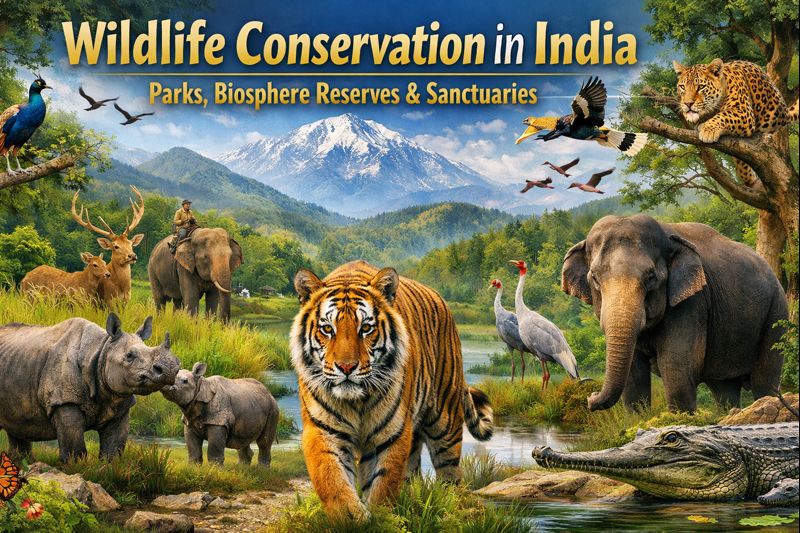
India, a land of incredible diversity, is home to a breathtaking array of wildlife, from the majestic Bengal tiger to the elusive snow leopard. This rich natural heritage makes wildlife conservation in India not just a goal, but a crucial mission for the nation and the world. The country’s vast landscapes, ranging from towering Himalayan peaks to dense tropical rainforests and expansive deserts, provide a unique sanctuary for countless species. Protecting these varied ecosystems ensures that future generations can witness the wonder of nature’s untouched beauty.
The journey of wildlife conservation in India began centuries ago, rooted in ancient traditions that revered all forms of life. However, it gained significant momentum in recent decades with the establishment of a robust network of protected areas. These areas include National Parks, Wildlife Sanctuaries, Bird Sanctuaries, and Biosphere Reserves, each playing a vital role in safeguarding biodiversity. These zones are not just fences around forests; they are living laboratories where nature thrives and delicate balances are maintained, ensuring the survival of endangered species.
-
India is recognized as one of the mega-diverse countries globally.
-
The nation’s diverse geography supports a wide range of flora and fauna.
-
Wildlife conservation in India is a key focus for ecological balance.
-
A network of protected areas forms the backbone of these efforts.
1. National Parks of India
National Parks are the jewels in the crown of wildlife conservation in India. These are large, government-protected areas designed to preserve the entire ecosystem, including all its plants, animals, and geological features. Human activities like forestry, grazing, and cultivation are strictly prohibited within their boundaries to maintain their pristine state. These parks offer a safe haven for some of the country’s most iconic and endangered species, attracting researchers and tourists alike. The focus here is on absolute preservation and minimal human interference.
The legal framework for National Parks in India is strong, ensuring that these areas remain undisturbed. Each park is managed with specific conservation goals, often centered around a flagship species like the tiger or rhinoceros. The strict regulations within these parks contribute significantly to their success in safeguarding biodiversity. Many of these parks have become global symbols of successful wildlife conservation in India.
Iconic Destinations:
-
Jim Corbett National Park (Uttarakhand): Jim Corbett National Park is India’s first national park, established in 1936. It is famous for its Bengal tigers and diverse birdlife.
-
Kaziranga National Park (Assam): A UNESCO World Heritage Site, renowned for its one-horned rhinoceros population. It also hosts tigers, elephants, and wild water buffalo.
-
Ranthambore National Park (Rajasthan): Known for its magnificent tigers that can be easily spotted in their natural habitat, often near the historic Ranthambore Fort.
-
Gir National Park (Gujarat): The last refuge for the majestic Asiatic lions in the world, playing a critical role in their survival.
Complete List of National Parks (State-wise Table)
India currently has 106 National Parks, covering a total area of 44,378 sq km, which is about 1.35% of the country’s geographical area. This extensive network is a testament to the nation’s commitment to wildlife conservation in India.
| State/UT | Number of National Parks | Prominent National Parks |
| Andaman & Nicobar Islands | 9 | Campbell Bay, Mahatma Gandhi Marine, Rani Jhansi Marine, Saddle Peak |
| Andhra Pradesh | 3 | Papikonda, Rajiv Gandhi (Rameswaram), Sri Venkateswara |
| Arunachal Pradesh | 2 | Mouling, Namdapha |
| Assam | 7 | Dibru-Saikhowa, Kaziranga, Manas, Nameri, Orang, Raimona, Dehing Patkai |
| Bihar | 1 | Valmiki |
| Chhattisgarh | 3 | Indravati, Kanger Valley, Guru Ghasidas (Sanjay) |
| Goa | 1 | Mollem |
| Gujarat | 4 | Blackbuck (Velavadar), Gir, Marine (Gulf of Kutch), Vansda |
| Haryana | 2 | Kalesar, Sultanpur |
| Himachal Pradesh | 5 | Great Himalayan, Inderkilla, Khirganga, Pin Valley, Simbalbara |
| Jharkhand | 1 | Betla |
| Karnataka | 5 | Anshi (Kali), Bandipur, Bannerghatta, Kudremukh, Nagarahole (Rajiv Gandhi) |
| Kerala | 6 | Anamudi Shola, Eravikulam, Mathikettan Shola, Periyar, Pambadum Shola, Silent Valley |
| Madhya Pradesh | 11 | Bandhavgarh, Kanha, Kuno, Madhav, Mandla Plant Fossils, Pench, Sanjay, Satpura, Van Vihar, Panna, Dinosaur Fossils |
| Maharashtra | 6 | Chandoli, Gugamal, Nawegaon, Pench (Jawaharlal Nehru), Sanjay Gandhi (Borivali), Tadoba Andhari |
| Manipur | 1 | Keibul Lamjao (Floating Park) |
| Meghalaya | 2 | Balphakram, Nokrek Ridge |
| Mizoram | 2 | Murlen, Phawngpui Blue Mountain |
| Nagaland | 1 | Intanki |
| Odisha | 2 | Bhitarkanika, Simlipal |
| Rajasthan | 5 | Mukundra Hills, Desert, Keoladeo Ghana, Ranthambore, Sariska |
| Sikkim | 1 | Khangchendzonga |
| Tamil Nadu | 5 | Guindy, Gulf of Mannar Marine, Indira Gandhi (Annamalai), Mudumalai, Mukurthi |
| Telangana | 3 | Kasu Brahmananda Reddy, Mahavir Harina Vanasthali, Mrugavani |
| Tripura | 2 | Clouded Leopard, Bison (Rajbari) |
| Uttar Pradesh | 1 | Dudhwa |
| Uttarakhand | 6 | Corbett, Gangotri, Govind, Nanda Devi, Rajaji, Valley of Flowers |
| West Bengal | 6 | Buxa, Gorumara, Jaldapara, Neora Valley, Singalila, Sundarbans |
| Jammu & Kashmir | 4 | Dachigam, Kishtwar, Kazinag, Salim Ali (City Forest) |
| Ladakh | 1 | Hemis (Largest in India) |
2. Wildlife Sanctuaries of India
Wildlife Sanctuaries are another cornerstone of wildlife conservation in India, designed to protect specific species or a group of animals within a defined geographical area. While National Parks focus on entire ecosystems, sanctuaries often have a more targeted approach. Some human activities like regulated tourism, grazing, and timber collection might be permitted, provided they do not harm the wildlife. This flexibility allows for broader community involvement in conservation efforts.
These sanctuaries act as crucial corridors and buffer zones for larger protected areas, allowing animals to move freely and find new habitats. Their role in wildlife conservation in India is immense, as they protect a wider variety of lesser-known species and often serve as breeding grounds. Many sanctuaries are critical for the survival of endangered birds and reptiles, complementing the work done in national parks.
Iconic Destinations:
-
Periyar Wildlife Sanctuary (Kerala): Famous for its elephants and a tiger reserve, also known for its beautiful Periyar Lake.
-
National Chambal Sanctuary (MP/Rajasthan/UP): A tri-state sanctuary dedicated to the conservation of the critically endangered Gharial (Indian alligator), red-crowned roof turtle, and Ganges river dolphin.
-
Karakoram Wildlife Sanctuary (Ladakh): One of the highest wildlife sanctuaries in the world, home to the elusive snow leopard and Tibetan antelope.
-
Sariska Wildlife Sanctuary (Rajasthan): A tiger reserve known for its successful tiger relocation program, located in the Aravalli Hills.
Complete List of Wildlife Sanctuaries (State-wise Table)
India boasts over 560 Wildlife Sanctuaries, covering approximately 3.72% of the country’s geographical area. This extensive network showcases the commitment to diverse wildlife conservation in India. Due to the sheer number, providing an exhaustive list is challenging, but here are some notable examples by state to illustrate their spread and importance.
| State/UT | Prominent Wildlife Sanctuaries | Key Species Protected |
| Andhra Pradesh | Coringa, Kolleru, Rollapadu | Estuarine crocodiles, Pelicans, Great Indian Bustard |
| Assam | Amchang, Chakrashila, Pobitora | Hoolock Gibbon, Golden Langur, One-horned Rhinoceros |
| Bihar | Gautam Buddha, Kaimur, Vikramshila Gangetic Dolphin | Sloth bear, Antelopes, Gangetic Dolphins |
| Chhattisgarh | Achanakmar, Barnawapara, Udanti Sitanadi | Tigers, Wild Buffalo, Leopard |
| Gujarat | Barda, Jessore Sloth Bear, Shoolpaneshwar | Asiatic Lions, Sloth Bears, Various Antelopes |
| Himachal Pradesh | Chail, Manali, Renuka | Himalayan Black Bear, Snow Leopard, Sambar |
| Jammu & Kashmir | Gulmarg, Hirapora, Overa Aru | Himalayan Brown Bear, Musk Deer, Leopard |
| Karnataka | Bhadra, Biligiri Ranganatha Hills, Dandeli-Anshi | Tigers, Elephants, Gaur |
| Kerala | Idukki, Muthanga, Neyyar | Elephants, Tigers, Travancore Tortoise |
| Madhya Pradesh | Bori, Kuno Palpur, Pachmarhi | Tigers, Leopards, Wolves |
| Maharashtra | Bhimashankar, Great Indian Bustard, Radhanagari | Giant Squirrel, Great Indian Bustard, Gaur |
| Odisha | Bhitarkanika (Mangroves), Gahirmatha Marine | Saltwater Crocodiles, Olive Ridley Turtles |
| Rajasthan | Mount Abu, Ramgarh Vishdhari, Tal Chhapar | Sloth Bear, Leopards, Blackbuck |
| Tamil Nadu | Kalakkad, Mudumalai, Point Calimere | Nilgiri Tahr, Elephants, Blackbuck |
| Uttar Pradesh | Chandra Prabha, Hastinapur, Katarniaghat | Leopard, Swamp Deer, Gharial |
| Uttarakhand | Askot Musk Deer, Govind Pashu Vihar, Kedarnath | Musk Deer, Snow Leopard, Himalayan Monal |
| West Bengal | Buxa Tiger Reserve, Lothian Island, Sunderbans | Tigers, Estuarine Crocodiles, Birds |
| Ladakh | Changthang | Snow Leopard, Tibetan Wild Ass, Black-necked Crane |
3. Bird Sanctuaries of India
India’s diverse ecosystems, from wetlands and lakes to coastal areas, provide ideal habitats for a spectacular variety of avian life. Bird Sanctuaries are specially designated areas focused on the protection and conservation of both resident and migratory bird species. These sanctuaries are crucial for wildlife conservation in India, particularly for preserving critical breeding grounds and feeding sites for thousands of birds that travel across continents. The annual arrival of migratory birds transforms these sites into vibrant spectacles, drawing birdwatchers from around the globe.
Many bird sanctuaries are located around significant water bodies, which are vital for waterfowl and waders. Protecting these habitats is not just about birds; it also helps maintain the health of the associated wetland ecosystems. The efforts in these sanctuaries are a key part of the broader wildlife conservation in India, helping to monitor environmental health indicators through bird populations.
Iconic Destinations:
-
Keoladeo Ghana Bird Sanctuary (Rajasthan): A UNESCO World Heritage Site, this wetland is one of the most important bird breeding and feeding grounds globally, famous for the Siberian Crane (though now rare).
-
Chilika Lake Bird Sanctuary (Odisha): Asia’s largest brackish water lagoon, a massive haven for migratory birds during winter, including flamingos and various ducks.
-
Ranganathittu Bird Sanctuary (Karnataka): The largest bird sanctuary in Karnataka, formed by islands on the Cauvery River, famous for Painted Storks, Spoonbills, and Pelicans.
-
Salim Ali Bird Sanctuary (Goa): Located on the Chorao Island, accessible by ferry, it is a key mangrove habitat for numerous estuarine birds and local species.
Complete List of Bird Sanctuaries (State-wise Table)
India has a vast number of bird sanctuaries, protecting diverse avian habitats. Here is a selection of prominent ones across different states, demonstrating their importance for wildlife conservation in India.
| State | Prominent Bird Sanctuaries | Key Bird Species / Habitat Type |
| Andhra Pradesh | Atapaka, Pulicat Lake, Nelapattu | Pelicans, Flamingos, Storks |
| Assam | Deepor Beel, Panidihing | Migratory waterfowl, Adjutant Storks |
| Bihar | Kanwar Lake, Kusheshwar Asthan | Resident and migratory aquatic birds |
| Gujarat | Nal Sarovar, Porbandar, Thol Lake | Flamingos, Pelicans, Cranes, Ducks |
| Karnataka | Gudavi, Mandagadde, Ranganathittu | Painted Storks, Spoonbills, Herons |
| Kerala | Kadalundi, Kumarakom, Thattekad | Waterfowl, Kingfishers, Cormorants |
| Maharashtra | Great Indian Bustard, Mayani, Karnala | Bustards, Flamingos, Raptors |
| Odisha | Chilika Lake, Nalabana | Flamingos, Geese, Ducks, Waders |
| Rajasthan | Keoladeo Ghana, Sambhar Lake | Siberian Cranes, Waterfowl, Waders |
| Tamil Nadu | Koonthankulam, Vedanthangal, Vettangudi | Pelicans, Ibis, Egrets, Storks |
| Uttar Pradesh | Okhla, Patna, Saman | Migratory ducks, Geese, Cranes |
| West Bengal | Raiganj (Kulick), Chintamoni Kar | Open-billed Storks, Herons, Kingfishers |
4. Biosphere Reserves of India
Biosphere Reserves represent the highest level of comprehensive wildlife conservation in India, integrating both natural and cultural preservation. These are internationally recognized areas that aim to balance the conservation of biological diversity with sustainable use by local communities. They are designated under UNESCO’s Man and the Biosphere (MAB) Programme and consist of three zones: a core zone (strictly protected), a buffer zone (research, education, tourism), and a transition zone (sustainable human activities). This multi-zone approach highlights the holistic nature of conservation.
These reserves are crucial for protecting vast ecosystems and promoting a harmonious relationship between humans and nature. They support scientific research, environmental education, and sustainable development practices that benefit both wildlife and local populations. The concept of Biosphere Reserves is a testament to the advanced thinking behind wildlife conservation in India.
Iconic Destinations:
-
Nilgiri Biosphere Reserve (Tamil Nadu/Kerala/Karnataka): India’s first biosphere reserve, a biodiversity hotspot with diverse habitats, home to Nilgiri Tahr, Lion-tailed Macaque, and elephants.
-
Sundarbans Biosphere Reserve (West Bengal): The largest mangrove forest in the world, famous for its Royal Bengal Tigers and a unique estuarine ecosystem.
-
Nanda Devi Biosphere Reserve (Uttarakhand): A high-altitude reserve encompassing the Valley of Flowers and Nanda Devi National Parks, protecting alpine flora and fauna like the snow leopard and Himalayan musk deer.
-
Great Rann of Kutch Biosphere Reserve (Gujarat): One of the largest seasonal saline wetlands, known for the Indian Wild Ass and diverse migratory bird populations.
The 18 Biosphere Reserves of India
As of 2025, India has 18 designated Biosphere Reserves, with 12 of them recognized by UNESCO under its MAB Programme. This network represents the pinnacle of wildlife conservation in India, combining ecological protection with sustainable human development.
| # | Name of Biosphere Reserve | States/UTs Covered | Key Ecosystem Type | UNESCO MAB Status |
| 1 | Nilgiri | Tamil Nadu, Kerala, Karnataka | Western Ghats (Forest, Mountains) | Yes (First in India) |
| 2 | Nanda Devi | Uttarakhand | Western Himalayas (High Altitude Mountains) | Yes |
| 3 | Nokrek | Meghalaya | Eastern Himalayas (Sub-tropical Forest) | Yes |
| 4 | Great Nicobar | Andaman & Nicobar Islands | Islands, Coastal, Tropical Evergreen Forest | Yes |
| 5 | Gulf of Mannar | Tamil Nadu | Coastal, Marine (Coral Reefs, Sea Grass) | Yes |
| 6 | Manas | Assam | Eastern Himalayas (Tropical Forest, Grassland) | Yes |
| 7 | Sundarbans | West Bengal | Gangetic Delta, Mangrove Forest | Yes |
| 8 | Simlipal | Odisha | Deccan Peninsula (Tropical Moist Deciduous Forest) | Yes |
| 9 | Pachmarhi | Madhya Pradesh | Semi-Arid, Hills (Central Highlands) | Yes |
| 10 | Achanakmar-Amarkantak | Chhattisgarh, Madhya Pradesh | Maikal Hills (Deciduous Forest) | Yes |
| 11 | Great Rann of Kutch | Gujarat | Desert, Seasonal Saline Wetland | No |
| 12 | Cold Desert | Himachal Pradesh | Western Himalayas (Alpine, Arid Cold) | No |
| 13 | Seshachalam Hills | Andhra Pradesh | Eastern Ghats (Tropical Dry Deciduous Forest) | No |
| 14 | Agasthyamalai | Kerala, Tamil Nadu | Western Ghats (Tropical Evergreen Forest) | Yes |
| 15 | Khangchendzonga | Sikkim | Eastern Himalayas (Alpine, Sub-Alpine Forest) | Yes |
| 16 | Panna | Madhya Pradesh | Tropical Dry Deciduous Forest | Yes |
| 17 | Dibru-Saikhowa | Assam | Brahmaputra Valley (Riverine Forest, Wetland) | No |
| 18 | Sikkim: Khangchendzonga | Sikkim | High Altitude Mountains | Yes |
Wildlife Conservation in India: A Vital Subject at Doon Defence Dreamers
For students aiming to join the Indian Armed Forces, understanding the geography and ecological wealth of the nation is a key part of their preparation. Doon Defence Dreamers, widely regarded as the best NDA coaching in Dehradun, ensures that every cadet masters the complexities of Wildlife Conservation in India. Since the UPSC syllabus for NDA and CDS exams places heavy emphasis on environmental geography, the academy provides specialized lectures on National Parks and Biosphere Reserves. This holistic approach helps future officers develop a deep respect for the land they are destined to protect. By connecting classroom learning with the strategic importance of biodiversity, the institute prepares students not just for an exam, but for a life of responsible leadership.
The success of this methodology is reflected in the incredible milestones the academy has achieved. The commitment to excellence and disciplined training has made it a top choice for aspirants across the country. Below are some of the most notable achievements of the academy in recent times:
-
Historic Selection Record: The academy recently celebrated over 710+ written selections in the NDA/NA (II) 2025 exam, marking one of the highest success rates in India.
-
Rapid Officer Production: In just the last two years, more than 752 aspirants have been guided to successful careers as commissioned officers.
-
SSB Mastery: Achieved a record-breaking 35 SSB recommendations within a single month for the NDA 155 batch across various selection boards.
-
Global Recognition: The institute was honored with the Jagran Achiever Award 2025 in Shanghai, China, for excellence in defense education.
-
Pioneering Technology: Recognized as India’s first defense academy to use AI-powered tools for 24×7 doubt-solving and personalized student performance tracking.
-
Empowering Women: Made history by having 6 female candidates recommended for the SSB on the same day, showcasing a strong commitment to gender inclusivity in the forces.
Frequently Asked Questions (FAQs)
1. What are the main types of protected areas in India?
India has four main types: National Parks, Wildlife Sanctuaries, Bird Sanctuaries, and Biosphere Reserves, each designed to protect different ecosystems and species.
2. How are National Parks different from Wildlife Sanctuaries?
National Parks have stricter rules with almost no human activity allowed, while Wildlife Sanctuaries permit limited activities like regulated tourism or grazing.
3. What is the role of Biosphere Reserves in conservation?
Biosphere Reserves protect large ecosystems and promote a balance between wildlife conservation and sustainable use by local communities.
4. How many National Parks and Wildlife Sanctuaries are there in India?
As of 2025, India has 106 National Parks and more than 560 Wildlife Sanctuaries across the country.
5. Why is wildlife conservation important for NDA aspirants?
It is a key part of environmental geography in the NDA and CDS syllabus, helping candidates build strong general knowledge and national awareness.