1. Introduction: Why World AIDS Day Is Observed
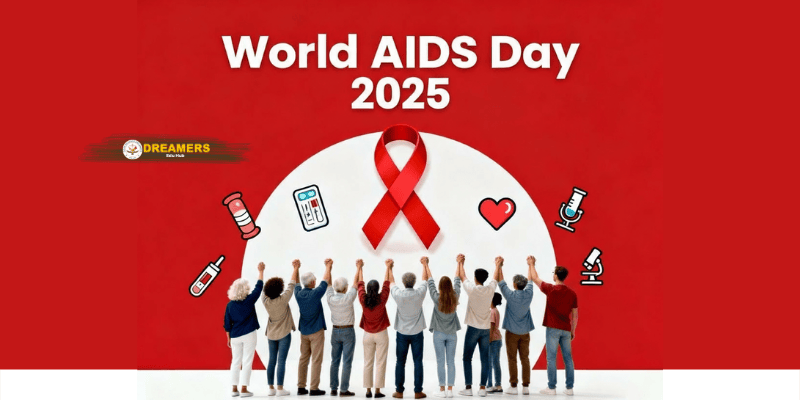
Every year on 1 December, the world observes World AIDS Day. This is a special global health day dedicated to people who are living with HIV, to those who have lost their lives to AIDS, and to everyone working to stop the spread of this disease.
The main purpose of World AIDS Day is:
-
To create HIV AIDS awareness among people.
-
To remind governments and societies that HIV is still a serious health issue.
-
To show support and respect for people living with HIV.
Even today, many people are confused about HIV and AIDS. Some are afraid to talk about it. Some still believe in myths and wrong information. That is why World AIDS Day is so important. It gives us a chance to talk openly, learn the facts and fight ignorance and stigma together.
2. History of World AIDS Day: How It Started
HIV and AIDS were first identified in the early 1980s. At that time, the disease was new, there was no treatment, and many people were dying. There was also a lot of fear because people did not know how HIV spread.
To focus the world’s attention on this growing crisis, health experts and communicators came up with the idea of World AIDS Day. The first World AIDS Day was observed on 1 December 1988. From that year onwards:
-
World AIDS Day became the first ever global health day focused on one disease.
-
Different countries started organizing events, marches and campaigns to create HIV AIDS awareness.
-
Over time, schools, colleges, NGOs, hospitals, media and communities also joined in.
Today, World AIDS Day is recognized all over the world. It is not just a date; it is a symbol of unity against HIV, and a reminder that no one should be left alone in this fight.
3. Themes and Changing Focus of World AIDS Day

Every year, World AIDS Day is observed with a specific theme. This theme changes each year to highlight different parts of the global fight against HIV. For World AIDS Day 2025, UNAIDS has given the theme “Overcoming disruption, transforming the AIDS response.” In simple words, this means the world has to deal with all the problems that disturb HIV services and then rebuild the response in a stronger and fairer way.
“Overcoming disruption” points to the many challenges that break or slow down HIV work. In some places, funding for HIV programmes is going down. In others, clinics are far away or short-staffed, medicines do not always reach on time, or people face poverty, conflict, or displacement. Many groups – such as young people, women, LGBTQ+ communities and people who use drugs – still face stigma, discrimination, or even harsh laws. All these disruptions make it harder for people living with HIV to get testing, treatment and support.
“Transforming the AIDS response” means we cannot just patch up the old system; we need real change. This includes giving stable and fair funding, strengthening public health systems, supporting community-based organisations that work at the ground level, and removing unfair rules or practices that keep people away from care. It also means putting human rights, dignity and equality at the centre of every HIV programme, so that no group is left behind.
In previous years, World AIDS Day themes have focused on:
-
Ending inequality in treatment and care
-
Supporting communities and people at higher risk
-
Protecting the human rights and dignity of people living with HIV
-
Highlighting the role of youth, women and different regions of the world
The purpose of having a theme is simple:
-
It gives a clear direction to HIV AIDS awareness campaigns
-
It helps governments, NGOs, schools and colleges plan their activities with focus
-
It reminds everyone that HIV is not only a medical issue, but also a social, economic and human rights issue
No matter what the yearly theme is – including “Overcoming disruption, transforming the AIDS response” – the heart of World AIDS Day stays the same: respect for every person, honest awareness, strong prevention and compassionate care.
4. Understanding HIV and AIDS in Simple Words
To understand World AIDS Day, we must clearly understand two important words: HIV and AIDS.
-
HIV stands for Human Immunodeficiency Virus.
-
“Human” means it infects human beings.
-
“Immunodeficiency” means it weakens the immune system, which protects us from disease.
-
“Virus” means it is a type of germ that multiplies inside the body.
-
-
AIDS stands for Acquired Immunodeficiency Syndrome.
-
“Acquired” means a person gets it during their life; they are not born with AIDS.
-
“Immunodeficiency” again refers to a weak immune system.
-
“Syndrome” means a group of signs and symptoms.
-
When a person has HIV for a long time and does not get proper treatment, their immune system becomes very weak. At that stage, they may develop serious infections and certain cancers. This advanced stage of infection is called AIDS.
Important points:
-
A person who has HIV does not automatically have AIDS.
-
With early testing, regular check-ups and good treatment, many people with HIV live long and healthy lives and never reach the AIDS stage.
-
HIV AIDS awareness should always explain this difference, so that people understand that HIV is a manageable health condition with proper care.
5. How HIV Spreads – and How It Does NOT Spread
One of the biggest goals of World AIDS Day is to teach people clearly how HIV spreads and how it does not spread. Wrong ideas create fear and stigma. Correct knowledge creates safety and kindness.
5.1 How HIV Spreads
HIV is present in certain body fluids of a person who has the virus. These include:
-
Blood
-
Semen and pre-seminal fluid
-
Vaginal fluids
-
Rectal fluids
-
Breast milk
HIV can be passed from one person to another mainly in these ways:
-
Unprotected sex (without a condom) with a person who has HIV.
-
Sharing needles or syringes that have blood from someone with HIV (for example, while injecting drugs).
-
From mother to baby during pregnancy, childbirth or breastfeeding, if the mother is not on proper treatment.
-
Unsafe blood transfusions or use of unsterilized medical instruments in places where blood is not tested or tools are not cleaned properly.
5.2 How HIV Does NOT Spread
HIV does not spread through normal daily activities. You cannot get HIV from:
-
Hugging or shaking hands
-
Sharing food or water
-
Using the same toilet or bathroom
-
Sitting next to someone in class or on a bus
-
Sharing cups, plates, or clothes
-
Coughing or sneezing
-
Mosquito or insect bites
This is a very important part of HIV AIDS awareness. When people know the real routes of transmission, they can protect themselves without being afraid of normal contact with friends, classmates or colleagues who are living with HIV.
6. Prevention: How to Protect Yourself and Others
A big message of World AIDS Day is that HIV is preventable. Simple and consistent steps can reduce the risk a lot.
6.1 Safer Sex Practices
-
Use condoms correctly every time you have sex.
-
Avoid multiple sexual partners, or at least know your partner’s health status.
-
Talk openly about testing and protection with your partner.
6.2 Never Share Needles or Sharp Items
-
Do not share needles, syringes or any sharp equipment that can carry blood.
-
Make sure medical injections, tattoos, piercings and other procedures are done with new or properly sterilized instruments.
6.3 Testing and Early Knowledge
-
If someone has taken a risk, they should get tested for HIV instead of living in fear.
-
Many health centres and NGOs organize free or low-cost testing, especially around World AIDS Day.
-
Knowing your own status is an act of responsibility and self-care.
6.4 Preventing Mother-to-Child Transmission
-
Pregnant women can get tested for HIV as a routine part of antenatal care.
-
If a pregnant woman is HIV-positive, doctors can give medicine that greatly reduces the chance of the baby getting HIV.
All these measures, when understood and followed, make HIV AIDS awareness practical, not just theoretical.
7. Treatment and Life With HIV Today
When HIV was first discovered, there was no treatment and many people died. Today, the situation is very different. Modern medicine has changed the picture.
7.1 Antiretroviral Therapy (ART)
People with HIV are treated with combination medicines called antiretroviral therapy (ART). These medicines:
-
Reduce the amount of virus in the blood.
-
Help the immune system become stronger.
-
Lower the risk of developing AIDS.
-
Reduce the chance of passing HIV to others.
With proper treatment and regular follow-up, many people living with HIV:
-
Can work, study, marry and have families.
-
Can live for many years, almost like people without HIV.
7.2 Why Testing and Early Treatment Matter
The sooner a person knows they have HIV, the sooner they can start treatment. Early treatment means:
-
Better health and quality of life.
-
Lower risk of serious infections and complications.
-
Less worry and more control over the future.
World AIDS Day highlights that HIV is no longer a “death sentence.” With ART, support and HIV AIDS awareness, people can lead full and meaningful lives.
8. Myths vs Facts: Breaking Stigma Around HIV and AIDS
Even with all the progress in science, there is still a lot of stigma around HIV. Stigma means negative attitudes, blaming and rejecting people because of their health condition.
8.1 Common Myths
-
Myth: Only “bad” or “immoral” people get HIV.
-
Fact: HIV is a virus. It does not judge who you are. Anyone can get HIV if they are exposed to the virus.
-
-
Myth: You can know someone has HIV just by looking at them.
-
Fact: A person with HIV may look completely healthy. Only an HIV test can tell their status.
-
-
Myth: People living with HIV should not work, study or live with others.
-
Fact: With normal social contact and proper treatment, people with HIV can safely live, work and study with everyone else.
-
-
Myth: HIV always leads quickly to death.
-
Fact: With ART, people can live long, productive lives.
-
8.2 Why Stigma Is Dangerous
Stigma is dangerous because:
-
It makes people afraid to get tested.
-
It stops people from starting or continuing treatment.
-
It causes emotional pain, loneliness and depression.
World AIDS Day and HIV AIDS awareness programs try to break these myths. When we treat people with HIV with respect and support, we help control the disease and protect public health.
9. Role of Youth, Schools and Colleges in Awareness
Young people play a key role in World AIDS Day and in the fight against HIV. They are active, connected through social media and able to change attitudes in families and communities.
Schools, colleges and institutes can:
-
Arrange talks and workshops on HIV basics, prevention and stigma.
-
Organize poster-making, essay writing, quiz and street play competitions based on HIV AIDS awareness.
-
Display red ribbons, the symbol of solidarity with people living with HIV.
-
Invite healthcare workers or counsellors to speak honestly with students.
For coaching institutes and academies preparing students for competitive exams or defence services, World AIDS Day is also a chance to:
-
Teach students responsibility towards their own health.
-
Encourage discipline in personal choices.
-
Build sensitivity and respect for every human being, including those living with HIV.
When youth understand the importance of HIV AIDS awareness, they can spread the message to friends, families and future workplaces.
10. World AIDS Day at Doon Defence Dreamers: Building Responsible Future Officers
For Doon Defence Dreamers (Best CDS Coaching Institute in Dehradun), which trains young aspirants for NDA and other defence exams, World AIDS Day is not only a health-related date. It is also a day to shape the mindset and character of future officers.
In the Armed Forces, an officer is expected to:
-
Take care of their own physical and mental health.
-
Look after the well-being of their team.
-
Make decisions based on facts, not on fear, rumours or bias.
By observing World AIDS Day inside the campus, Doon Defence Dreamers can:
-
Conduct short, clear sessions on HIV basics, prevention and myths in simple language.
-
Connect HIV AIDS awareness with values like responsibility, leadership and empathy.
-
Explain that a real officer does not laugh at or insult someone who is sick. Instead, a real officer supports, protects and guides others.
-
Share real-life examples of how modern defence forces care about health, hygiene and awareness of diseases, including HIV.
This way, World AIDS Day at Doon Defence Dreamers becomes a part of overall officer-like qualities (OLQs):
discipline, courage, emotional stability, social adaptability and a strong sense of duty towards society.
When NDA aspirants learn to talk about HIV without shame and to stand against stigma, they are already behaving like mature, responsible leaders of tomorrow.
11. Conclusion: What World AIDS Day Teaches Us
World AIDS Day is not just about one day of events, speeches and slogans. It teaches us some deep and lasting lessons:
-
Know the facts: Understanding HIV and AIDS clearly is the first step.
-
Protect yourself and others: Safe habits and informed choices save lives.
-
Support, don’t judge: People living with HIV deserve respect, care and equal opportunities.
-
Speak up against stigma: Silence and shame only make the problem worse.
-
Stay committed all year: Awareness, prevention and kindness should continue beyond 1 December.
When we observe World AIDS Day with sincerity, we move closer to a world where:
-
No one is afraid to get tested.
-
Everyone who needs treatment can get it.
-
Children and adults living with HIV can live with dignity.
-
HIV AIDS awareness is strong enough to defeat fear and misinformation.
That is the real goal of World AIDS Day—to bring together knowledge, compassion and action, so that future generations can live in a world where HIV is no longer a threat and every person’s life is valued.
Frequently Asked Questions (FAQs) About World AIDS Day and HIV
1. What is World AIDS Day and when is it observed?
World AIDS Day is a global health day observed every year on 1 December. It is dedicated to raising awareness about HIV and AIDS, remembering people who have died from AIDS-related illnesses, and showing support for people living with HIV. It also encourages governments and communities to continue working on prevention, testing and treatment.
2. Why is World AIDS Day important even today?
World AIDS Day is important because HIV has not disappeared. New infections still happen every year, and many people do not know their HIV status. There is also a lot of stigma, shame and fear around HIV. This day helps to spread correct information, promote HIV AIDS awareness, and remind everyone that people living with HIV deserve respect and equal rights.
3. What is the difference between HIV and AIDS?
-
HIV (Human Immunodeficiency Virus) is the virus that enters the body and weakens the immune system.
-
AIDS (Acquired Immunodeficiency Syndrome) is the advanced stage of HIV infection, when the immune system becomes very weak and the person starts getting serious infections or certain cancers.
A person can have HIV for many years without developing AIDS, especially if they start treatment early and take their medicines regularly.
4. Can HIV be cured completely?
Right now, there is no complete cure for HIV. However, there is very effective treatment called antiretroviral therapy (ART). With ART, the amount of virus in the body becomes very low, the immune system becomes stronger, and the person can live a long, healthy and productive life. So HIV is manageable, even if it is not fully curable yet.
5. How can I protect myself from HIV?
You can reduce your risk of HIV by:
-
Using condoms correctly every time you have sex.
-
Avoiding the sharing of needles, syringes or blades.
-
Making sure injections, tattoos and piercings are done with new or sterilized equipment.
-
Getting tested if you think you may have taken a risk.
-
For pregnant women with HIV, taking proper treatment to protect the baby.
Good HIV AIDS awareness plus these safe habits can protect both you and others.
6. Can I live, study or work with someone who has HIV?
Yes, absolutely. HIV does not spread through casual daily contact. You can safely:
-
Sit next to them in class or at work
-
Share a workspace
-
Shake hands, hug or talk
-
Use the same toilet, door handles or furniture
People living with HIV should be treated with the same respect and kindness as anyone else.
7. What can students and youth do on World AIDS Day?
Students and young people can play a big role in World AIDS Day by:
-
Learning the basic facts about HIV and AIDS.
-
Participating in rallies, poster competitions, speeches or street plays on HIV AIDS awareness.
-
Wearing the red ribbon as a symbol of support.
-
Speaking politely and correcting friends when they make jokes or spread myths about HIV.
Even small actions can help build a society that is more informed, more supportive and less fearful.