
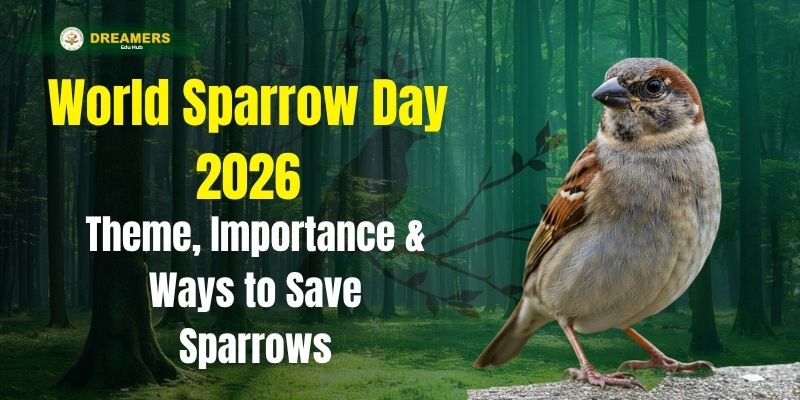
World Sparrow Day is an international day dedicated to the tiny house sparrow and other common urban birds. It is observed every year on 20 March to create awareness about the sharp decline in sparrow numbers and to encourage people to protect these familiar birds.
In this context, world sparrow day 2026 will again remind the world that even common birds need care and attention. Once taken for granted, sparrows are now missing from many towns and cities, which makes this day a symbol of concern for everyday biodiversity and the health of local ecosystems.
Why Sparrows Are Special for Humans and Cities?
Sparrows are among the most familiar birds in human history. They live close to homes, farms, markets and city streets. Their presence shows that an area still has enough food, safe nesting spaces and a basic ecological balance. The cheerful chirping of sparrows has always been part of morning and evening life in many countries.
On world sparrow day 2026, the focus will again be on how much these small birds contribute: they eat insects, disperse seeds, and act as indicators of environmental quality. Their decline is not only a loss of a species, but also a sign that urban spaces are becoming less friendly to simple forms of life.
World Sparrow Day 2026: Date and Basic Details
-
Date: 20 March 2026 (Friday)
-
Type of day: International environment and awareness day
-
Main bird: House sparrow (Passer domesticus) and other small urban birds
-
Key aim: To highlight the threats faced by sparrows and to promote conservation actions
History and Origin of World Sparrow Day
How and When World Sparrow Day Started?
World Sparrow Day was first observed on 20 March 2010. It was started in India but quickly became a global event, because sparrow decline is a problem in many countries. The idea was to dedicate one fixed day to talk about sparrows, share scientific information and start local conservation efforts.
By the time world sparrow day 2026 arrives, this campaign will have completed 16 years. In this period, awareness has grown, more people have noticed the absence of sparrows and many small conservation projects have started in colonies, schools and cities.
People and Organisations Behind the Campaign
The main initiative for World Sparrow Day came from the Nature Forever Society (NFS), an Indian organisation founded by conservationist Mohammed Dilawar. NFS began its work in Nashik, Maharashtra, after noticing a clear decline in sparrow numbers due to urbanisation.
World Sparrow Day is now supported by NFS in collaboration with the Eco-Sys Action Foundation in France and many other national and local groups across the world. Their combined efforts have turned a local concern into a global movement, which world sparrow day 2026 will carry forward.
Global Aim of World Sparrow Day
The global aim of world sparrow day 2026 can be understood through three core ideas:
| Aim | Simple Meaning |
|---|---|
| Awareness | Make people notice the decline of sparrows and understand why it is serious |
| Appreciation of common birds | Show that even ordinary, non-glamorous birds are important for ecosystems |
| Local conservation action | Encourage small, practical steps to help sparrows in homes, schools and cities |
Instead of focusing only on rare or “famous” wildlife, world sparrow day 2026 will again highlight the importance of small, often ignored birds that live closest to humans.
Why Sparrow Population Is Declining?
Loss of Habitat and Nesting Places
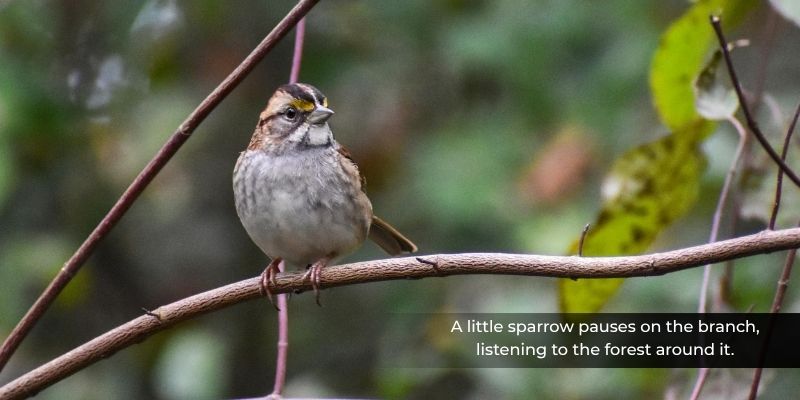
One of the main reasons for sparrow decline is the loss of nesting sites. Traditional houses with tiled roofs, small holes and open eaves provided ideal spaces for sparrows to build nests. Modern construction with glass, concrete, sealed walls and limited gaps has reduced safe places for nesting.
As cities grow vertically and old structures disappear, sparrows struggle to find ledges, crevices or ventilators where nests can be safely built. World sparrow day 2026 will again draw attention to this hidden problem of “homeless” birds in modern buildings.
Pollution, Noise and Mobile Towers
Urban environments are full of air pollution, dust and heavy traffic noise. While direct scientific proof about mobile towers and sparrow decline is still discussed, several studies and reports have raised concerns about electromagnetic radiation and its possible impact on small birds.
Constant noise also makes it harder for sparrows to communicate and protect their nests. Poor air quality can affect their health and food sources. These combined pressures reduce survival rates, especially for chicks. On world sparrow day 2026, such complex urban threats will be an important part of the discussion.
Changes in Food Habits and Urban Lifestyle
Earlier, sparrows found plenty of grains near homes, flour mills, cattle sheds, small shops and open markets. With packaged food, sealed storage and fewer open grain shops, the availability of spilled grains has fallen.
In many cities, people feed less leftover grain to birds or shift to concrete yards without plants. Fewer insects due to pesticide use and habitat loss also reduce natural food for sparrow chicks. In this way, changing human lifestyle directly affects sparrow survival, which world sparrow day 2026 will once again highlight.
World Sparrow Day 2026: Theme and Message
Expected Theme of World Sparrow Day 2026
Recent years have seen themes like “I Love Sparrows” in 2025 and other awareness-based slogans which focus on emotional connection and everyday action for sparrows.
While the official theme for world sparrow day 2026 may be announced closer to the date, it is likely to continue this pattern: combining love for sparrows with clear messages on conservation, urban planning and citizen involvement.
What the Theme Teaches About Nature and Cities?
Whatever the exact slogan, the theme of world sparrow day 2026 will send some common messages:
-
Cities must be designed not only for vehicles and buildings, but also for birds and trees.
-
Common birds like sparrows, pigeons and mynas are early warning signs of environmental change.
-
Small actions – like keeping water bowls, planting native shrubs or putting up nest boxes – can create “mini-habitats” in dense urban areas.
Through these ideas, world sparrow day 2026 will attempt to connect daily city life with nature conservation.
Role of Schools, Homes and Communities in 2026
Schools, families and local communities are central to the success of world sparrow day 2026. They can:
-
Observe sparrows in the neighbourhood and record sightings
-
Hold small awareness talks and drawing or essay competitions
-
Work with local authorities to protect green spaces and avoid unnecessary tree cutting
Such local effort can turn the global message of world sparrow day 2026 into real, visible change in streets, colonies and campuses.
How to Celebrate World Sparrow Day 2026 in Everyday Life?
Simple Ways to Help Sparrows at Home (Water, Grains, Nests)
Celebrating world sparrow day 2026 does not always require large events. Simple home-based steps can make a difference for sparrows:
| Action at Home | How It Helps Sparrows |
|---|---|
| Keeping a clean water bowl | Provides safe drinking water during heat and dry weather |
| Offering grains (bajra, wheat, rice) | Gives reliable food, especially where natural sources are scarce |
| Hanging simple nest boxes | Replaces lost natural nesting spaces on modern buildings |
| Growing small plants or shrubs | Attracts insects and offers cover from predators |
When many households follow similar practices, entire localities become more welcoming to sparrows, which is exactly what world sparrow day 2026 aims to promote.
Activities for Schools and Students on World Sparrow Day 2026
Schools can use world sparrow day 2026 as an outdoor classroom. Nature walks, bird-watching sessions and basic identification of common birds help students connect with local biodiversity. Short films about sparrows, storytelling sessions and project work on urban birds can also deepen understanding.
Students can prepare simple posters on topics such as “Why sparrows are disappearing” or “How to help sparrows in the city.” Science and environment clubs may take the lead in setting up bird-feeding corners or nest-box walls on the campus.
Social Media and Awareness Campaigns for Sparrows
In 2026, social media will continue to play a strong role in spreading the message of world sparrow day 2026. Photographs of sparrows, short informative posts and small videos can reach thousands of viewers within a short time.
Campaigns with hashtags related to world sparrow day can encourage people to share their own observations, local stories and small conservation efforts. This helps build a community feeling that sparrows are a shared responsibility, not just a concern for experts or NGOs.
World Sparrow Day 2026: Saving Small Birds, Saving Our Future
Why Protecting Sparrows Matters for the Environment?
Sparrows are part of a larger ecological network. They eat insects, weed seeds and food scraps, and in turn become food for larger birds and animals. When sparrows disappear from an area, it often means that something in the local environment has gone wrong – either in terms of pollution, habitat structure or food availability. Also, platforms like Wildlife Discoveries play an important role by sharing stories, photos and facts about wildlife, which helps people understand how small birds like sparrows are connected to the health of the entire ecosystem.
By focusing on world sparrow day 2026, conservation efforts do not only protect one species; they improve the overall quality of urban and rural habitats. Cleaner air, more plants and safer structures for sparrows are also beneficial for humans, making cities and villages healthier places for everyone.
Learning Respect for All Small Creatures
Many people feel excited about big animals such as tigers, elephants or whales. However, true ecological understanding begins when respect is extended to small creatures as well: sparrows, butterflies, frogs and earthworms. World sparrow day 2026 is an opportunity to teach this deeper respect.
When children grow up seeing sparrows as friends and neighbours rather than background noise, they are more likely to care about nature as adults. This emotional connection may become the strongest base for long-term conservation.
World Sparrow Day 2026 as a Step Towards Greener Cities
Finally, world sparrow day 2026 can be seen as a step towards greener, healthier and more humane cities. A city where sparrows can find food, water and nesting spaces is usually a city where trees still stand, pollution is controlled and people care about their surroundings.
By observing world sparrow day 2026 with sincerity – in homes, schools, offices and online spaces – society can move a little closer to that kind of city. Saving sparrows may look like a small act, but it is also a way of saving the shared future of both people and nature.
Doon Defence Dreamers Message for World Sparrow Day
On World Sparrow Day, Doon Defence Dreamers (the best CDS Coaching in Dehradun) gives a simple but powerful message: a true defender of the nation also protects its environment. Sparrows are small, but their decline is a big warning about how rapidly cities and villages are changing. At DDD, mentors remind cadets that clean air, green trees and healthy birds are as important for national security as strong borders and modern weapons.
By learning to care for sparrows, planting trees, keeping water bowls for birds and respecting all forms of life, defence aspirants develop sensitivity, responsibility and discipline. The World Sparrow Day message links love for nature with love for the nation, teaching that saving small birds today helps protect India’s ecological future tomorrow.